
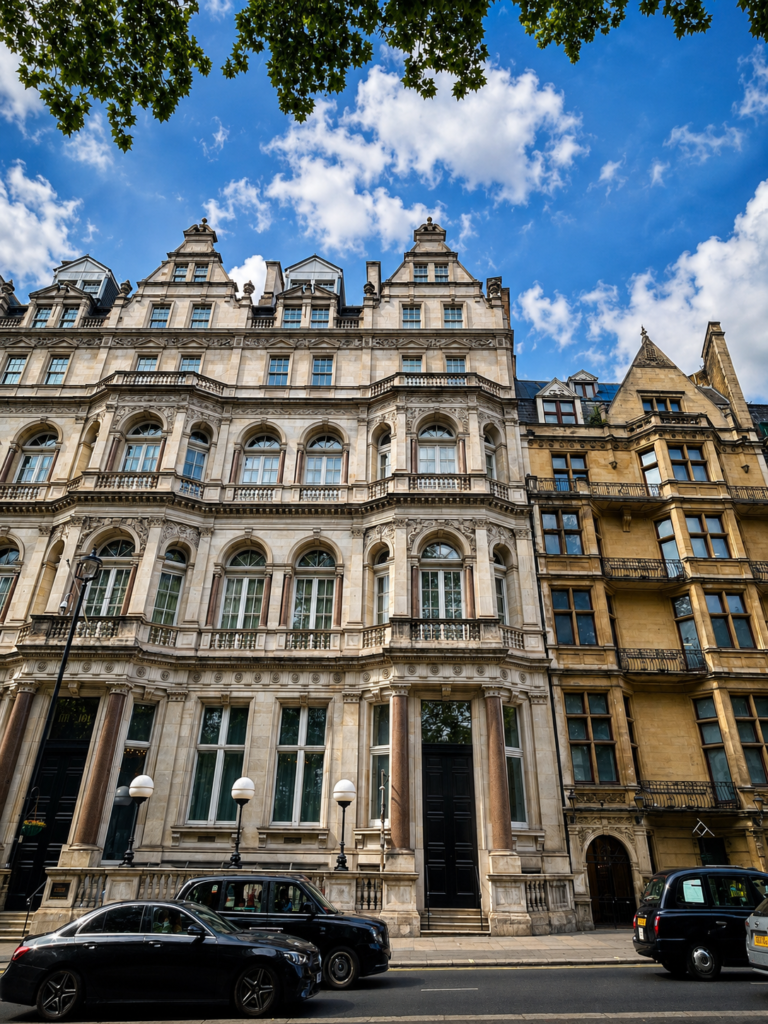
Some of London’s most memorable architecture isn’t a famous landmark at all—it is woven into the streets between them.
Architectural Treasures That Make London Fascinating
London feels like a living timeline. Gothic windows, Victorian townhouses, Renaissance Revival façades, carved entrances and decorative ironwork can all appear within the same walk.
What Makes London’s Architecture So Fascinating?
London combines centuries of architectural styles within the same streetscape.
Gothic churches, Victorian townhouses, Renaissance Revival façades, historic masonry and decorative ironwork can appear within a short walk, making the city especially rewarding for photographers, history lovers and travelers who enjoy looking beyond the major landmarks.
London is often celebrated for iconic landmarks such as Buckingham Palace, Big Ben and Tower Bridge.
Yet some of the city’s most interesting architectural treasures aren’t found on postcards.
They’re tucked into side streets, hidden above eye level and woven into the everyday fabric of the city.
During my first visit, grand façades, elegant Victorian townhouses, Gothic church windows, hand-carved stonework and ornate iron details transformed ordinary walks into part of the sightseeing experience.
Visit London’s official London architecture guide highlights that same variety, from Gothic and Victorian landmarks to Art Deco, Brutalist and contemporary buildings.
London Architecture at a Glance
What Is Renaissance Revival Architecture in London?
Renaissance Revival architecture uses classical forms and decorative details inspired by European Renaissance design, often creating grand façades meant to communicate prestige and permanence.
One of the first styles that caught my attention while walking through central London was elaborate Renaissance Revival architecture.
These buildings often feature arched windows, decorative balustrades, carved stone ornamentation, classical columns and dramatic rooflines.
Some examples also reflect French Renaissance influences through steep roofs and highly ornamented façades.
What fascinated me most was the craftsmanship visible even from across the street.
Cornices, columns and carved stone details show how much visual emphasis was placed on a building’s exterior.
Standing beneath these façades, I found myself thinking less about a building as one object and more about the individual design choices that create its character.
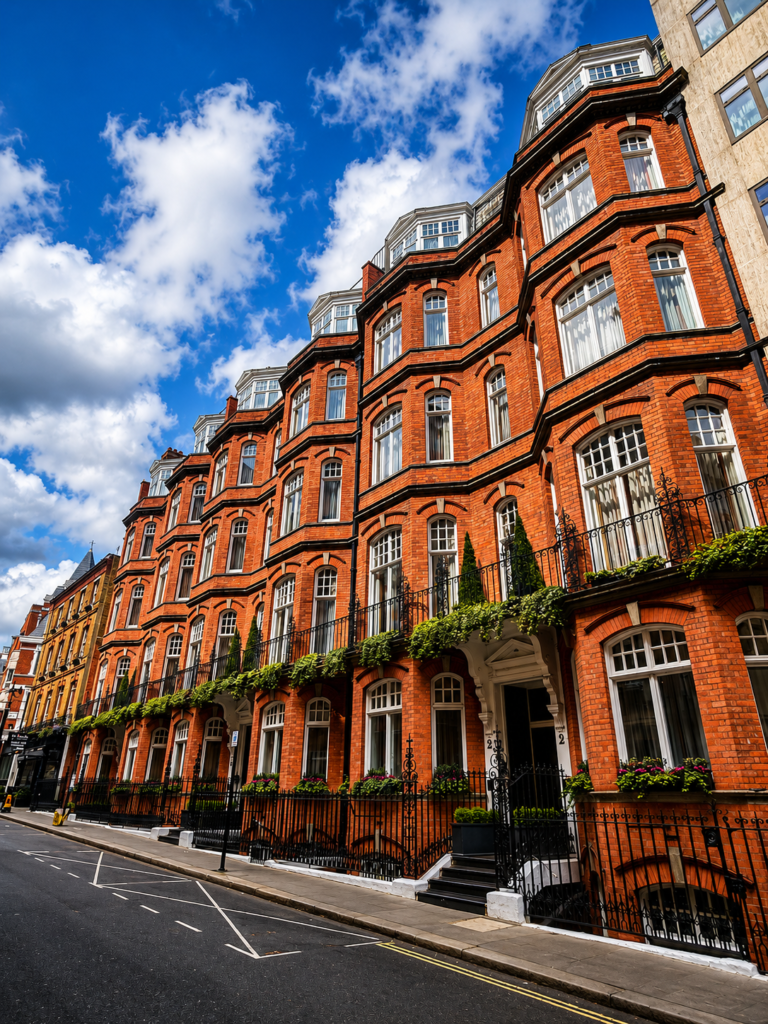
Repeating bay windows, balconies and ironwork create a strong visual rhythm along London’s Victorian streets.
Why Is Victorian Architecture So Visible in London?
London expanded dramatically during the Victorian period, leaving the city with extensive residential, civic, commercial and transportation architecture from the 19th century.
A completely different architectural personality appears in London’s Victorian residential streets.
Rows of red-brick townhouses create a strong visual rhythm through repeating bay windows, balconies, railings and decorative brickwork.
These buildings may feel less monumental than London’s grand stone structures, but they possess an elegance of their own.
The repeating architectural patterns create harmony, while smaller details—from window surrounds to wrought iron—reward anyone willing to pause and look more closely.
For photographers, these streets are particularly useful for studying repetition, symmetry and the way neighboring buildings form one larger composition.
What Makes Gothic Architecture Easy to Recognize?
Pointed arches, tall windows, stone tracery and an emphasis on verticality are some of the most recognizable characteristics of Gothic architecture.
Some of the most captivating architectural details I discovered appeared on London’s churches.
Gothic design naturally draws the eye upward.
Pointed arches and tall windows emphasize height, while intricate stone tracery divides expanses of glass into decorative patterns.
What struck me was how easily this craftsmanship could disappear into the background when I was focused only on reaching my next destination.
Looking more closely revealed layers of stonework and decorative detail that made the building itself feel like a work of art.
Visit London’s current guide to London churches and cathedrals is a useful starting point if Gothic and religious architecture especially interest you.
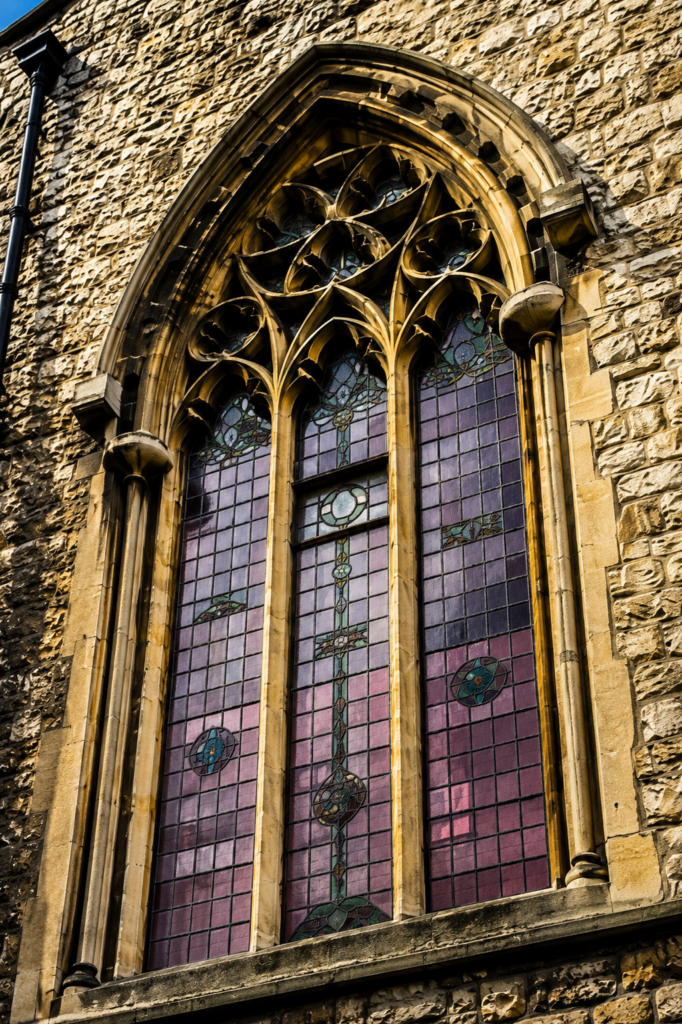
Pointed arches, tall windows and stone tracery naturally draw the eye upward.
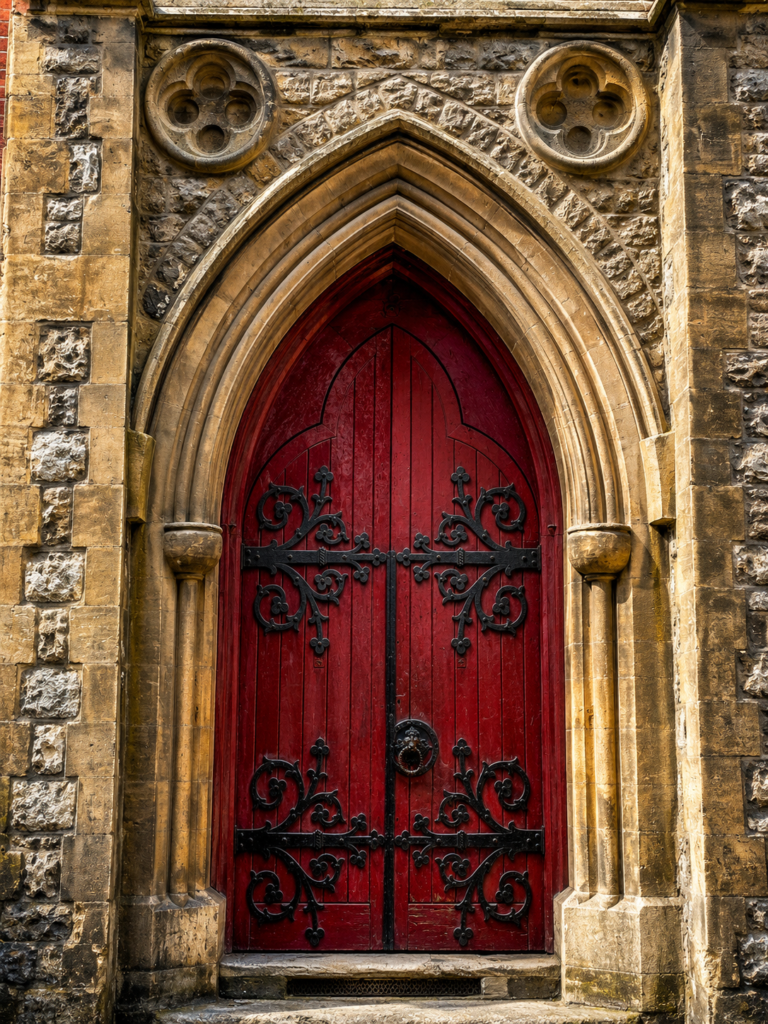
Doorways concentrate color, stonework, carving and metal details into one compact architectural subject.
Why Are London Doorways Worth Photographing?
Historic doorways often concentrate several architectural elements into one small area, making them ideal subjects for detail photography.
One lesson London taught me is that some of the city’s most fascinating architectural details exist right at eye level.
This Gothic-style doorway is a perfect example.
The pointed arch, carved stonework, decorative quatrefoils and hand-forged iron hinges transform a functional entrance into something much more visually interesting.
The red door immediately draws attention, but the surrounding stonework is what made me stop and study the scene.
Architectural beauty isn’t always found in broad skylines.
It may be concentrated within a doorway that hundreds of people walk past in a day.
What Architectural Details Reveal Historic Craftsmanship?
Stone masonry, ironwork, carved ornament, brick patterns and carefully proportioned arches are some of the details that reveal how much craftsmanship went into historic London buildings.
Another feature that fascinated me was the level of attention devoted even to functional architectural elements.
This Romanesque-inspired archway combines rusticated stone, decorative ironwork, carved ornamentation and carefully proportioned brickwork.
Every element feels intentional.
The more I explored London, the more I realized that the city’s beauty isn’t limited to famous landmarks.
It appears in doors, windows, stone carvings, railings and countless other details waiting to be noticed.
The V&A Architecture Collection is an excellent resource for travelers who want to understand architectural styles and design more deeply.
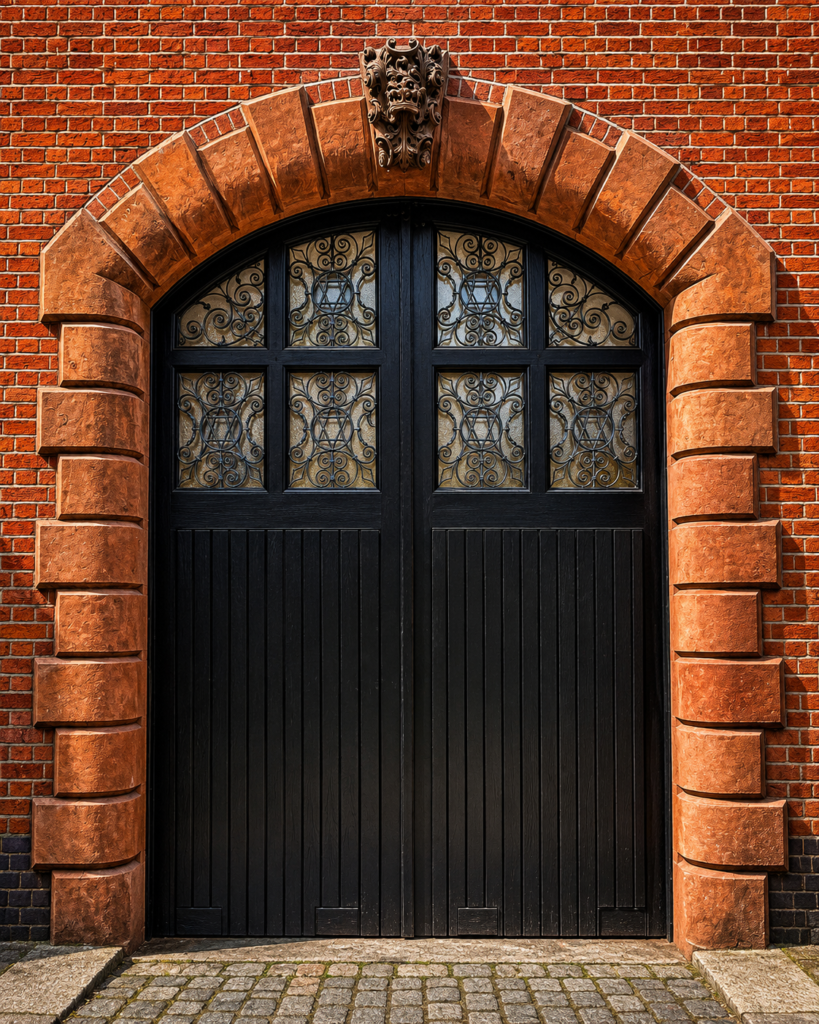
Stone, brick and decorative ironwork show how functional architectural elements can also be deeply ornamental.
Why Does London Feel Like an Open-Air Architecture Museum?
London feels like an open-air architecture museum because buildings from many different eras remain visible within the same cityscape.
A short walk can reveal Gothic ecclesiastical architecture, Victorian residential buildings, Renaissance Revival façades, decorative ironwork, historic stone masonry, stained or decorative glass, carved portals and contemporary buildings beside older structures.
London hasn’t developed with one unified architectural identity.
Instead, centuries of rebuilding, expansion and changing design preferences have created visible layers.
That contrast is part of what made simply walking through the city so interesting for me.
How Can You Spot Architectural Details While Walking Through London?
Scan each building from street level to roofline rather than looking only straight ahead.
For more practical photography techniques, my London Architecture Photography: 6 Easy Tips guide focuses specifically on composition, reflections, repeating patterns, doorways and other ways to photograph architectural details.
Do You Need to Know Architecture to Enjoy London’s Buildings?
No. You don’t need to identify every architectural style to enjoy or photograph London’s buildings.
I was drawn first to shapes, textures, colors and craftsmanship.
Learning more about architectural terminology adds useful context, but curiosity is enough to begin.
If a doorway, window or façade makes you stop, photograph it.
You can research the style later if you want to know more.
Where Should First-Time Visitors Look for London Architecture?
You don’t need to build a separate architecture itinerary because interesting buildings appear throughout central London.
Areas around Westminster, Kensington, Victoria, Covent Garden, Mayfair and the City of London all provide opportunities to see different architectural periods while visiting other attractions.
Many of the details in this article came from simply paying attention during normal sightseeing rather than traveling specifically to photograph one building.
For a broader overview of significant buildings, use the Visit London architecture guide.
For the larger trip, my First-Time London Travel Guide connects architecture with more of the attractions, parks and practical planning from my first visit.
London Architecture FAQ
What architectural styles can you see in London?
London includes architecture from many periods and styles, including Norman, Gothic, Georgian, Victorian, Renaissance Revival, Art Deco, Brutalist and contemporary design.
Is London good for architecture photography?
Yes. The mixture of historic and contemporary architecture, decorative details and different building materials makes London especially rewarding for architectural photography.
Where can you see Victorian architecture in London?
Victorian architecture appears throughout London in residential streets, railway stations, museums, churches, bridges and commercial buildings.
What should photographers look for on London buildings?
Look for doorways, windows, balconies, ironwork, stone carvings, arches, decorative brickwork, stained glass, rooflines and repeating architectural patterns.
Do you need a professional camera for architecture photography in London?
No. A smartphone is enough to photograph many architectural details, particularly doorways, windows, carvings and street-level subjects.
Where can you learn more about architecture while visiting London?
The V&A holds Britain’s national architecture collection and is a useful place to explore architectural drawings, fragments, models and design history. Visit London also maintains a guide to significant architecture across the city.
Go Deeper Into London’s Architecture and Photography
Why London’s Architectural Details Matter
London’s architecture became one of my favorite unexpected subjects because it turned the walks between major attractions into part of the experience.
A doorway, a row of windows, a carved stone figure or a decorative iron railing could stop me just as quickly as a famous landmark.
The city feels layered rather than uniform.
Gothic architecture can sit within walking distance of Victorian streets, Renaissance Revival façades and contemporary buildings.
For photographers, history lovers and curious travelers, that means there is always something else to notice.
The most memorable discoveries aren’t always the landmarks everyone travels to see. They can be the architectural treasures hiding between them.
Have a favorite architectural detail from London? Share it in the comments below. I’d love to hear what caught your eye while exploring the city.
About Angela
Angela Addington is the travel photographer and writer behind Lenses & Latitudes. She shares firsthand destination guidance and practical photography advice for independent and solo travelers, women over 50, road-trippers and weekend explorers. Learn more about Angela.