
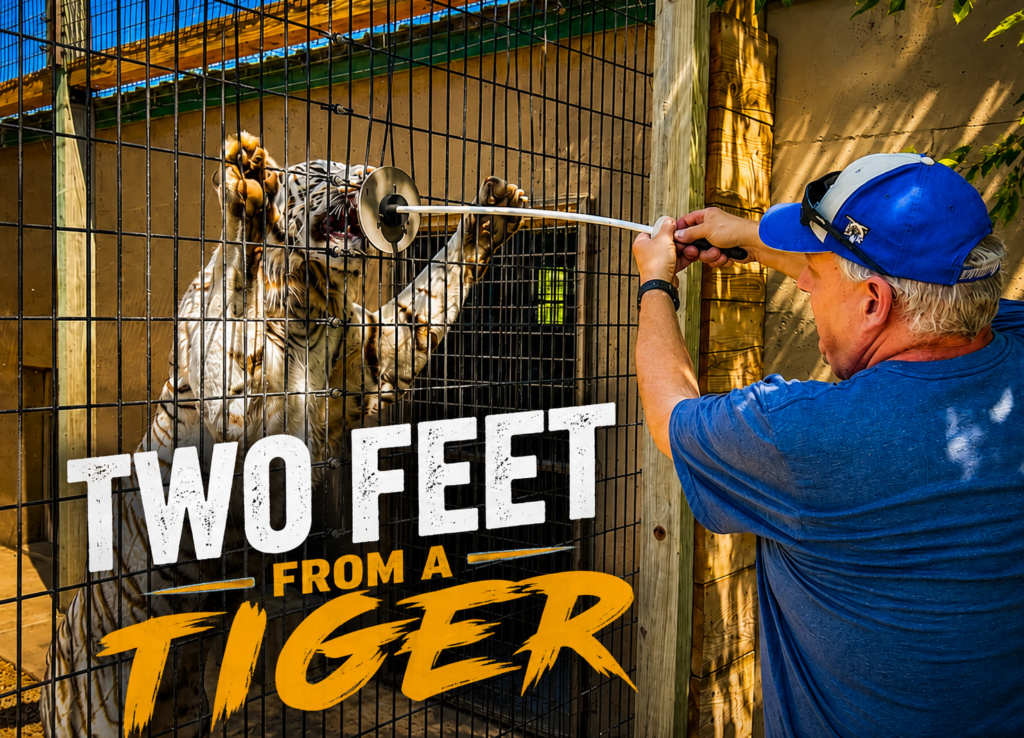
Standing only a few feet from a tiger became one of the defining moments of my first day at Tanganyika Wildlife Park.
Two Feet From a Tiger: My First Day at Tanganyika Wildlife Park
I arrived expecting close wildlife encounters. I left thinking much more deeply about what makes an animal experience meaningful, educational and responsible.
From a keeper-led tiger feeding to giraffes, rhinos, lorikeets and lemurs, Day 1 showed me why Tanganyika became one of the main reasons we planned this Midwest road trip.
Day 1 highlight: A scheduled big-cat experience put me just feet from a tiger—followed only a few hours later by hand-feeding giraffes and interacting with rhinos.
Is Tanganyika Wildlife Park Worth Visiting?
Yes—especially if close, keeper-led wildlife encounters and learning about animals are important parts of how you travel.
Tanganyika Wildlife Park near Wichita is more interactive than a traditional walk-through zoo. My first day included animal feedings, keeper conversations and premium encounters with a tiger, giraffes and rhinos.
What stood out wasn’t simply how close I could get to the animals. The keepers continually added context about behavior, care, individual personalities and conservation.
That combination is what made the visit memorable for me.
What Makes an Animal Experience Ethical?
Close contact alone does not make an animal experience ethical.
When I evaluate ethical animal experiences, I look beyond whether visitors can feed or touch an animal.
I want to know who controls the interaction, whether trained keepers are involved, what guests learn about the species, how animal welfare is addressed and whether conservation is part of the larger mission.
During my Tanganyika visit, the interactions I experienced were structured and keeper-led. Staff gave instructions, controlled the pace of each encounter and used the time to explain animal behavior, individual personalities and conservation challenges.
Tanganyika also points to professional accreditation and outside animal-welfare oversight as part of its care framework.
Why I am careful with the word “ethical”: No single certification, encounter or visitor observation settles every question about wildlife tourism. Instead of simply assigning a label, I look for concrete indicators travelers can evaluate for themselves.
About My Tanganyika Visit
Tanganyika Wildlife Park hosted our two-day visit and several premium animal experiences during our June 2026 Midwest road trip.
Hosted experiences never guarantee positive coverage. All observations, photographs and recommendations in this article reflect my firsthand experience.
I paid close attention not only to how memorable the encounters were, but also to how staff managed them and how animal care, education and conservation were discussed throughout the day.
Our First Day at Tanganyika Wildlife Park
Arriving at Tanganyika Wildlife Park
We arrived early, giving ourselves time to check in and get oriented before our first scheduled experience.
Breakfast was available inside the park, which let us start slowly instead of immediately racing toward the first animal habitat.
One of my first views after entering was a group of giraffes across the landscape.
That first look set the tone for the day. Tanganyika felt compact enough to navigate easily while still creating immersive animal spaces.
We had reached the Wichita experience I had been anticipating for months.
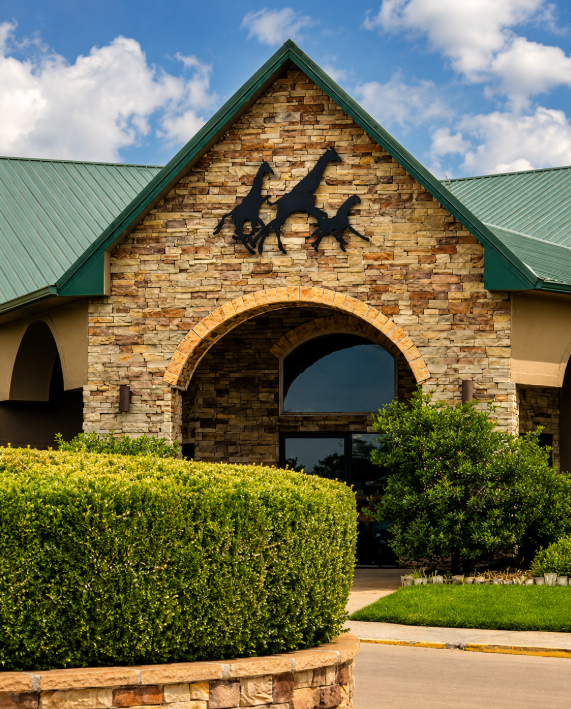
Tanganyika Wildlife Park sits in Goddard, just outside Wichita.
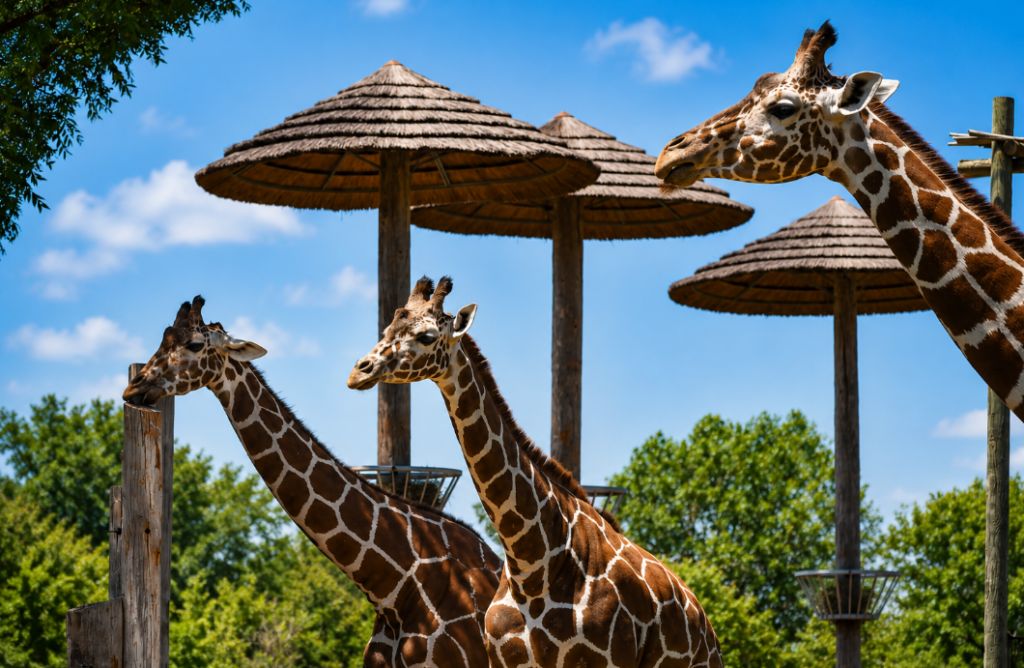
Giraffes were among the first animals we saw as our day began.
More Interactive Than I Expected
I’ve visited many zoos and wildlife attractions, but Tanganyika immediately felt more interaction-focused.
The park’s design encourages guests to spend time around animal feedings, keeper demonstrations and small-group experiences instead of simply moving from enclosure to enclosure.
That distinction mattered to me because the best moments became conversations as much as photographs.
I wanted to understand what I was seeing—not simply stand close enough for a memorable picture.
Lorikeets Made the Morning Feel Almost Private
One of our early stops was the lorikeet habitat.
With small cups of nectar in hand, we entered and quickly found ourselves surrounded by colorful birds landing on our arms and shoulders.
The park was still quiet, so there was no pressure to rush through the experience.
That gave us time to watch the birds behave, take photographs and simply enjoy the moment.
It became an early example of something I would notice repeatedly: interaction felt more meaningful when we weren’t treating it as a race to the next animal.
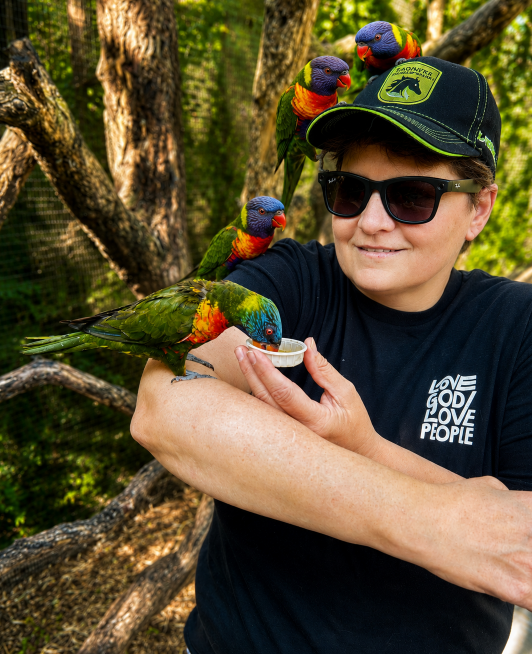
The lorikeet feeding was one of several animal experiences included in our day.
The People Behind the Encounters Matter
Many of our premium experiences were guided by Caelin, and her approach changed the way I experienced the park.
She didn’t simply move us into position for an interaction and recite a few facts.
She talked about individual animal personalities, behavior, care and conservation while answering questions throughout the encounter.
That matters when assessing responsible wildlife tourism.
The difference between a photo opportunity and an educational wildlife experience often comes down to what visitors understand when they walk away.
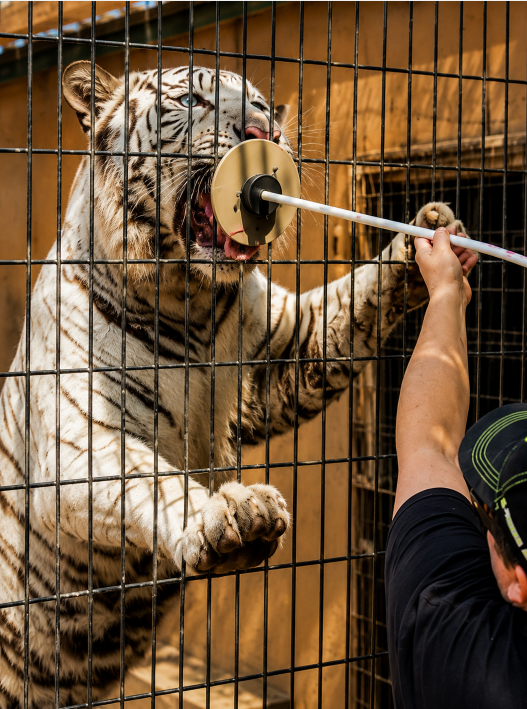
A long feeding pole maintained separation while putting us close enough to appreciate the tiger’s scale and power.
Standing Two Feet From a Tiger
I’ve always loved big cats, but photographs had never prepared me for their physical presence.
During our scheduled experience, we went behind the public viewing area with a keeper and learned more about the tiger before participating in the feeding.
We used a long pole with food attached to the end while the tiger remained on the opposite side of the barrier.
When he rose onto his hind legs only a few feet away, the scale of the animal became impossible to miss.
I felt the pull travel through the pole as he took the food.
It lasted only a moment, but it gave me a physical sense of his power that no photograph could communicate.
My reaction afterward was immediate: I wanted to experience it again.
The Keeper Conversation Added the Context
The close-up moment with the tiger was unforgettable, but the educational portion mattered just as much.
Tanganyika’s current tiger experience continues to pair pole feeding with information from the care team about the animals and the conservation pressures wild tigers face.
That is an important distinction when evaluating ethical wildlife encounters.
A dramatic photograph may be what people notice first. The larger question is whether the encounter helps visitors better understand the animal afterward.
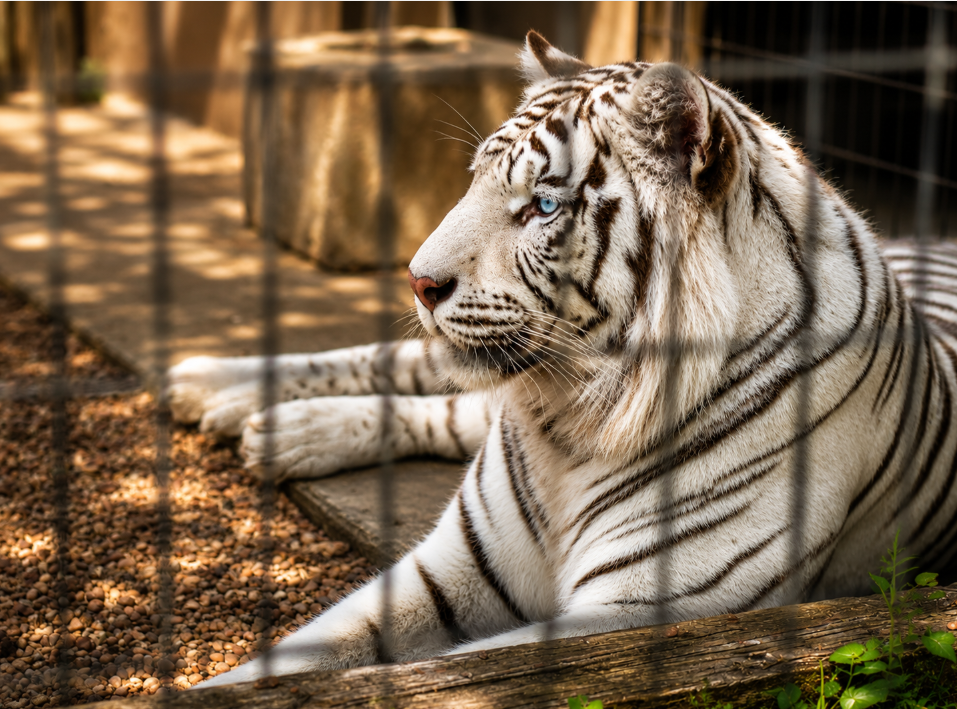
The tiger encounter combined close observation with information from the animal care team.
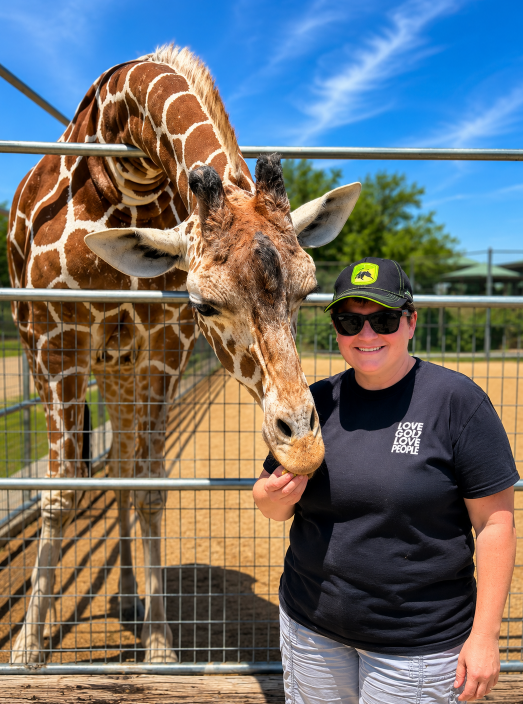
Standing beside a giraffe gives you a very different appreciation for its size.
Hand-Feeding Giraffes at Eye Level
Standing beneath a giraffe changes your sense of scale immediately.
The animals gracefully lowered their long necks toward the food in our hands, bringing us close enough to notice individual expressions and personalities.
Some approached quickly. Others were content to stay farther away.
One leaned over my shoulder toward the food in my hand, creating one of my favorite photographs from the entire trip.
And yes—their long prehensile tongues are every bit as memorable as people say.
Not Every Animal Interacted the Same Way
One thing I appreciated was being able to watch the giraffes respond differently to the activity around them.
Some were highly interested in the feeding. Others stayed at a distance.
That variability is worth noticing when thinking about responsible animal encounters.
Animals are individuals. An experience shouldn’t require every animal to behave the same way merely because visitors are present.
For me, those quieter observations were just as valuable as the close-contact moments.
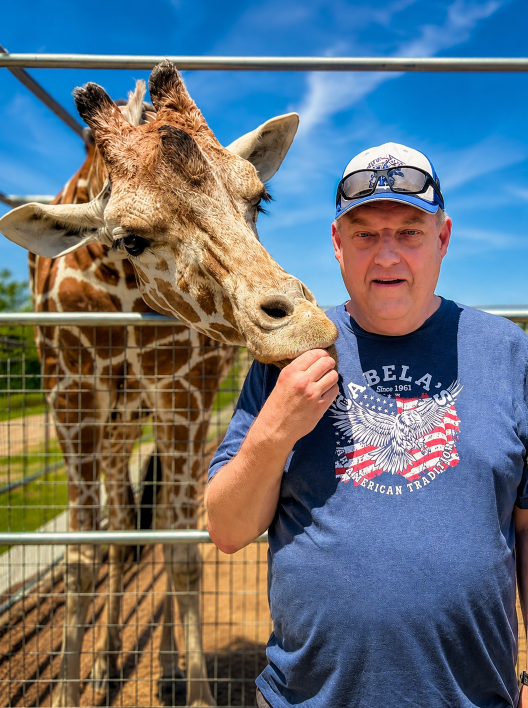
Individual behavior became part of what made the encounters interesting to watch.
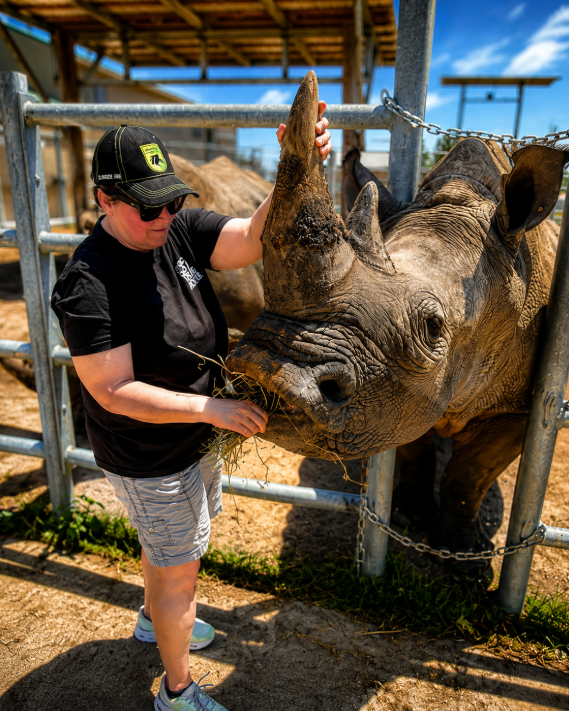
The rhino encounter changed several assumptions I had about these enormous animals.
Discovering the Gentle Side of Rhinos
I expected the rhinos to be intimidating.
Instead, the encounter gave me time to observe three enormous animals at much closer range than I had ever experienced before.
We fed them and, under staff direction, were able to touch and scratch them.
The texture of their skin wasn’t quite what I expected, and seeing their faces at close range made them feel much more individual than the distant rhino silhouettes I had photographed at other parks.
The experience changed the way I thought about them.
They stopped being simply massive, prehistoric-looking animals and became individuals whose behavior I wanted to understand better.
Why Close Encounters Can Matter
Tanganyika’s stated mission is to inspire wildlife stewardship through connections between people and animals.
The park has also been studying whether those close encounters actually influence conservation attitudes and behavior after visitors leave.
That question interests me because it gets to the heart of why ethical animal experiences should be about more than access.
If the only thing I remember is that I touched a rhino, the encounter has limited educational value.
If I leave more interested in rhino behavior, threats facing wild populations and the importance of conservation, the experience has done something more meaningful.
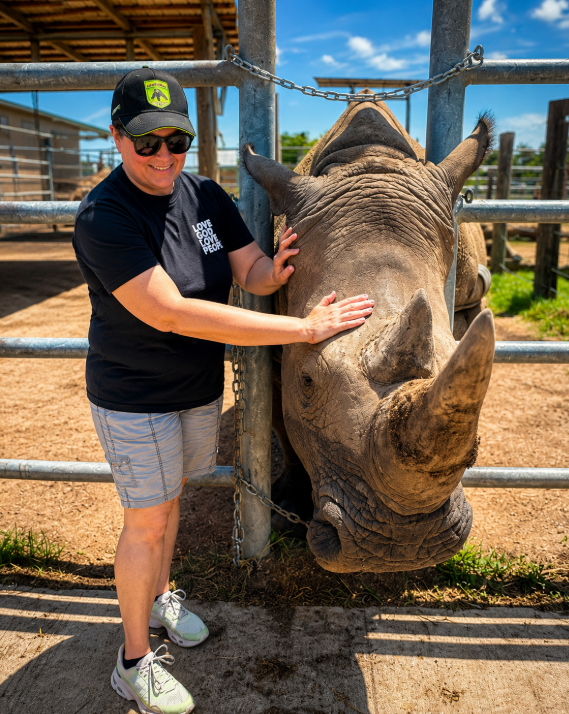
Tanganyika uses close encounters as part of its broader conservation-education approach.

The park’s relatively compact layout made it easy to revisit favorite areas throughout the day.
A Wildlife Park That Doesn’t Feel Overwhelming
Tanganyika isn’t enormous, and I consider that an advantage.
Paths flow naturally between habitats, and we could spend more time watching animals instead of crossing huge distances simply to reach the next exhibit.
Morning also gave us some of the day’s best activity.
As the Kansas temperature climbed, some animals naturally became less active.
I didn’t view that as a disappointment. It was a reminder that animals have their own rhythms and don’t exist on a visitor’s timetable.
The Lemurs Completely Won Me Over
I arrived expecting big cats and giraffes to dominate my camera roll.
The lemurs quickly complicated that prediction.
Their energy, curiosity and expressive faces made them endlessly fun to photograph.
They became one of the biggest surprises of the day and another reminder that the animals you expect to love most aren’t always the ones that stay with you.
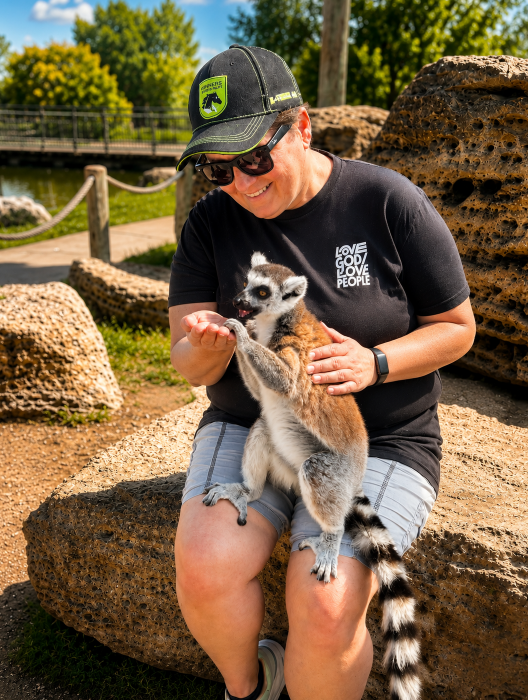
Ring-tailed lemurs became one of my most enjoyable surprises of the day.
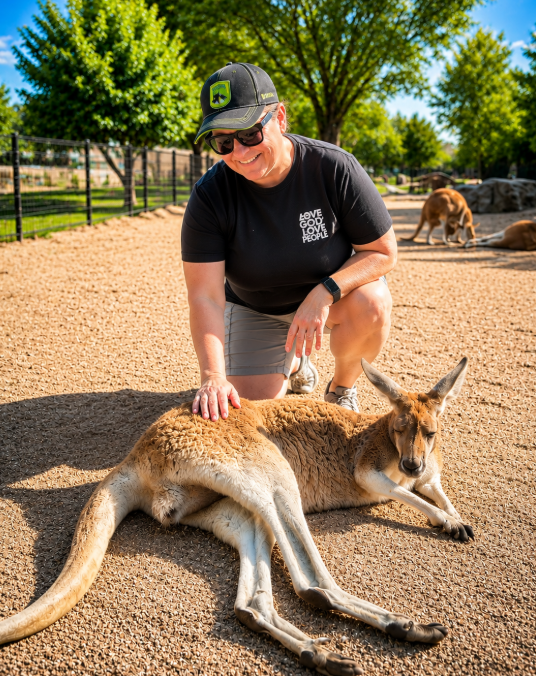
The Kangaroo Walkabout offered another quieter style of wildlife interaction.
Not Every Encounter Needed to Be Dramatic
The tiger feeding created adrenaline. The giraffes made us laugh. The rhinos challenged my expectations.
The kangaroo area offered something quieter.
Experiences like this helped balance the day because interaction wasn’t limited to a series of scheduled premium events.
We could slow down, observe and enjoy being around the animals without every moment needing to become the “big” moment.
What I Would Look for Before Booking Any Wildlife Encounter
Tanganyika gave me a useful framework for thinking more critically about hands-on wildlife tourism.
Keeper Supervision
Guests should not control the encounter. Trained animal-care staff should establish where visitors stand, what they may do and how the experience proceeds.
Education, Not Just Access
A responsible experience should teach visitors something about the animal, its behavior, care or conservation—not simply provide a photograph.
Animal Welfare Standards
Look for transparent information about professional accreditation, veterinary care, enrichment and outside welfare evaluation.
Individual Behavior
Pay attention to whether animals are treated as individuals rather than props expected to perform identically for each group.
Conservation Context
Ask whether the organization connects visitor experiences to conservation action, endangered species or wildlife stewardship.
Transparency
A facility discussing animal care openly gives travelers more information to evaluate than one relying only on emotional marketing.
Why I Looked Beyond the Encounters Themselves
Tanganyika’s close-contact model naturally raises questions travelers should ask when researching responsible wildlife tourism.
The park states that its animal-care program includes professional accreditation and outside welfare review, and its conservation work is supported through the Tanganyika Wildlife Foundation.
It also describes its visitor interactions as part of a larger goal of encouraging wildlife stewardship.
Those details do not mean travelers should stop asking questions.
They are useful evidence to consider alongside what visitors observe for themselves.
During my two-day assignment, I paid particular attention to the role of keepers, the educational content surrounding interactions and how individual animals behaved during the encounters.
Photograph the Experience Without Interfering With It
Being close to an animal can make it tempting to concentrate entirely on the photograph. I recommend doing the opposite.
Listen First
Follow the keeper’s instructions before thinking about composition. The animal experience takes priority over the photograph.
Photograph Behavior
Don’t wait only for eye contact. Feeding, movement, body language and keeper interaction often tell a stronger story.
Include Scale
A person in the frame can communicate the size of a giraffe, rhino or tiger far better than a tight portrait alone.
Watch the Background
Shift your position slightly when possible to remove distracting fences, signs or people from the edge of the frame.
Use Burst Mode Carefully
Short bursts can help capture a tongue, paw movement or feeding moment without filling your camera roll with hundreds of nearly identical frames.
Put the Camera Down
Take the photographs you want, then spend part of the encounter watching without a screen between you and the animal.
This Park Is Best for Travelers Who Want More Than Passive Viewing
Wildlife Lovers
The park offers repeated opportunities to spend time close to a variety of species rather than viewing everything from a distance.
Families
Included feedings and keeper demonstrations add activity throughout the day and can help children stay engaged.
Photographers
The smaller scale and interactive encounters create opportunities for portraits, details and behavior-focused wildlife photography.
Responsible Wildlife Travelers
If you research ethical animal experiences carefully, Tanganyika provides welfare, conservation and accreditation information you can examine before deciding whether the park fits your standards.
Experiential Travelers
This is particularly well suited to visitors who would rather participate, ask questions and learn than simply walk past exhibits.
Multi-Day Visitors
One day gave us a remarkable introduction, but our second day showed me why this park benefits from more time.
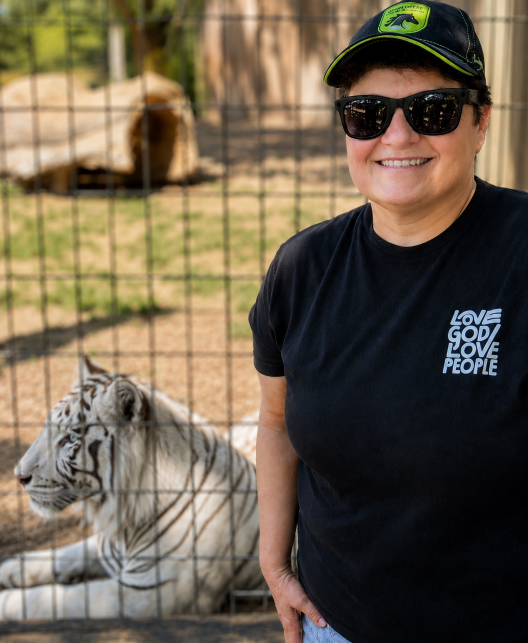
Day 1 delivered the kind of wildlife experiences that had inspired this road trip in the first place.
Would I Visit Tanganyika Wildlife Park Again?
Yes—and fortunately, we already had a second full day planned.
The tiger encounter alone would have made Day 1 memorable.
Adding giraffes, rhinos, lorikeets, lemurs and keeper conversations turned it into one of the strongest wildlife days I’ve experienced while traveling.
More importantly, I left wanting to know more—not only about the animals but about how close encounters can be used responsibly to encourage conservation interest.
Day 2 would give me another opportunity to look at Tanganyika from that perspective.
Frequently Asked Questions
Is Tanganyika Wildlife Park worth visiting?
Yes. I especially recommend it to wildlife lovers who want interactive, keeper-led experiences rather than a purely observational zoo visit.
Does Tanganyika Wildlife Park offer ethical animal experiences?
Tanganyika provides several concrete indicators travelers can evaluate when researching ethical animal experiences, including keeper-supervised interactions, conservation education, professional accreditation and outside animal-welfare review. I recommend evaluating those factors alongside your own standards for responsible wildlife tourism.
Can you feed a tiger at Tanganyika Wildlife Park?
Tanganyika offers a scheduled tiger feeding experience in which participants use a feeding pole while separated from the animal by a barrier. The experience is led by the animal care team and includes information about tiger care and conservation.
Can you feed giraffes and rhinos at Tanganyika?
Yes. Giraffe and rhino interactions are among the park’s hands-on wildlife experiences, and several feeding encounters are included with current park admission.
Is Tanganyika Wildlife Park only for families with children?
No. I visited as an adult with my brother and found the keeper conversations, photography opportunities and premium encounters just as compelling for adults.
Is one day enough at Tanganyika Wildlife Park?
You can have a very full experience in one day, but after visiting for two days I believe a longer visit allows more time for premium encounters, keeper programs, photography and repeat visits to favorite animals.
Day 1 Was Only the Beginning
Our second day brought another big-cat experience, a penguin encounter and more time to look beyond the novelty of getting close to animals.
Tanganyika — Day 2
See why spending a second full day changed the way I evaluated the park and its animal experiences.
Where We Stayed
Hotel at Old Town gave us a comfortable Wichita home base between two long wildlife days.
See the Full Road Trip
Follow the complete nine-day, eight-state journey that brought us to Kansas.
About Angela
Angela Addington is the travel photographer and writer behind Lenses & Latitudes. She shares firsthand destination guidance and practical photography advice for independent and solo travelers, women over 50, road-trippers and weekend explorers. Learn more about Angela.

Pingback: Public at the Brickyard: The Perfect Ending to a Day of Adventure in Wichita - Lenses and Latitudes
Pingback: Why One Day Isn’t Enough at Tanganyika Wildlife Park - Lenses and Latitudes
Pingback: Georgia Safari Conservation Park: What to Expect
Pingback: Your Best Stories Begin Outside Your Comfort Zone - Lenses and Latitudes
Pingback: Take the Picture—Even If No One Else Understands Why - Lenses and Latitudes