
A second day at Tanganyika gave us time to stop counting encounters and start paying closer attention to the animals, keepers and conservation story.
Why One Day Isn’t Enough at Tanganyika Wildlife Park
Day 1 gave me unforgettable wildlife encounters. Day 2 gave me something deeper: more time to observe individual animals, revisit favorite habitats, talk with keepers and think more carefully about what responsible wildlife tourism should look like.
The moment that stayed with me: A scheduled snow leopard interaction didn’t happen because the animal wasn’t interested. The plan changed instead.
Is One Day Enough at Tanganyika Wildlife Park?
One full day can give you an excellent Tanganyika experience, but two days allowed us to slow down, repeat favorite interactions, add premium encounters and observe more than we could during a single visit.
On Day 1, we wanted to see everything.
On Day 2, we already knew the park. Instead of moving quickly from one experience to another, we revisited giraffes, rhinos, lemurs and lorikeets, added a lion feeding and Penguin Meet & Greet, and spent more time simply watching animal behavior.
That slower pace transformed the experience.
Why Ethical Animal Experiences Require More Than Close Contact
The quality of a wildlife experience should not be judged only by how close a visitor gets to an animal.
When I research ethical animal experiences, I want to know what happens when an animal behaves differently than expected.
Does the visitor experience remain the priority, or does the plan change?
I also look at keeper involvement, educational content, animal welfare standards, enrichment, conservation work and whether guests are encouraged to understand the animals rather than simply photograph them.
My second day at Tanganyika gave me more opportunities to observe those details because we were no longer focused entirely on the excitement of seeing the park for the first time.
About Our Two-Day Visit
Tanganyika Wildlife Park hosted our two-day visit and several premium wildlife experiences during our June 2026 Midwest road trip.
Hosted experiences never guarantee positive coverage. All opinions, photographs and recommendations reflect what I personally experienced during the assignment.
Because close-contact wildlife tourism deserves careful consideration, I also paid attention to how encounters were managed, what keepers communicated and what happened when an animal did not participate as expected.
Returning to Tanganyika Wildlife Park
We Stopped Trying to See Everything
Our first day had been full of discovery.
On the second morning, we already knew the paths, understood the park layout and had favorite animals we wanted to see again.
That changed our pace.
We returned to the giraffes. We spent more time around the rhinos. We revisited Lemur Island and the lorikeets.
Instead of asking, “What haven’t we seen yet?” we could ask, “Where do we want to spend more time?”
That was a much better way to experience the park.
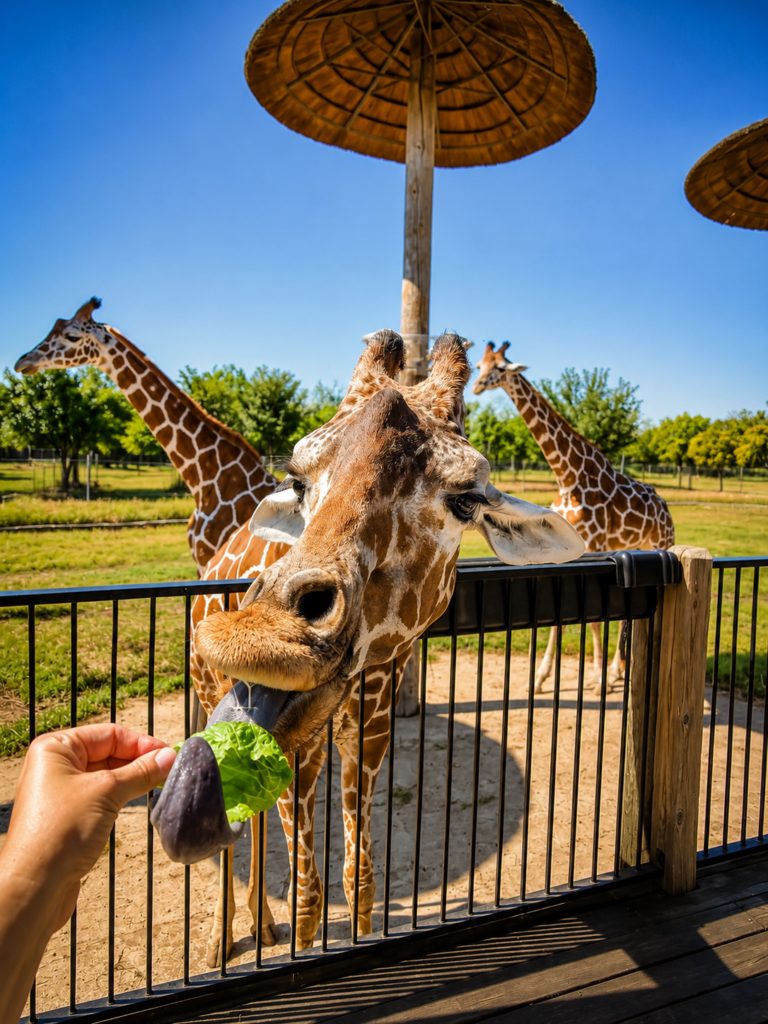
Returning to favorite animals felt completely different once we were no longer trying to cover the whole park at once.
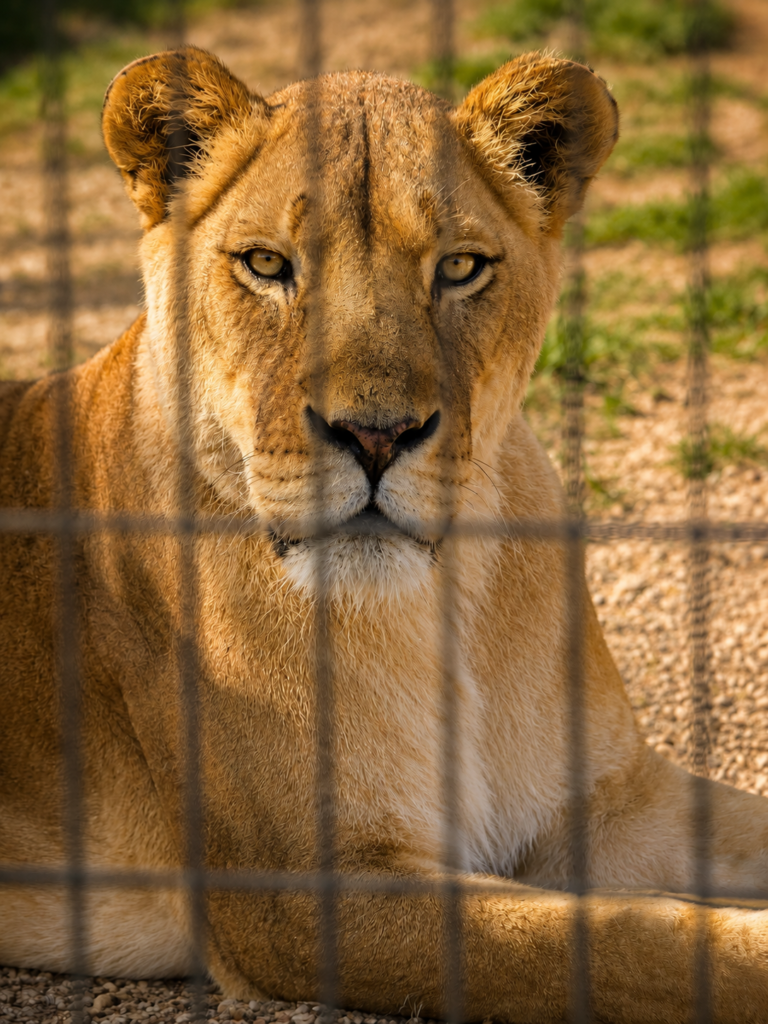
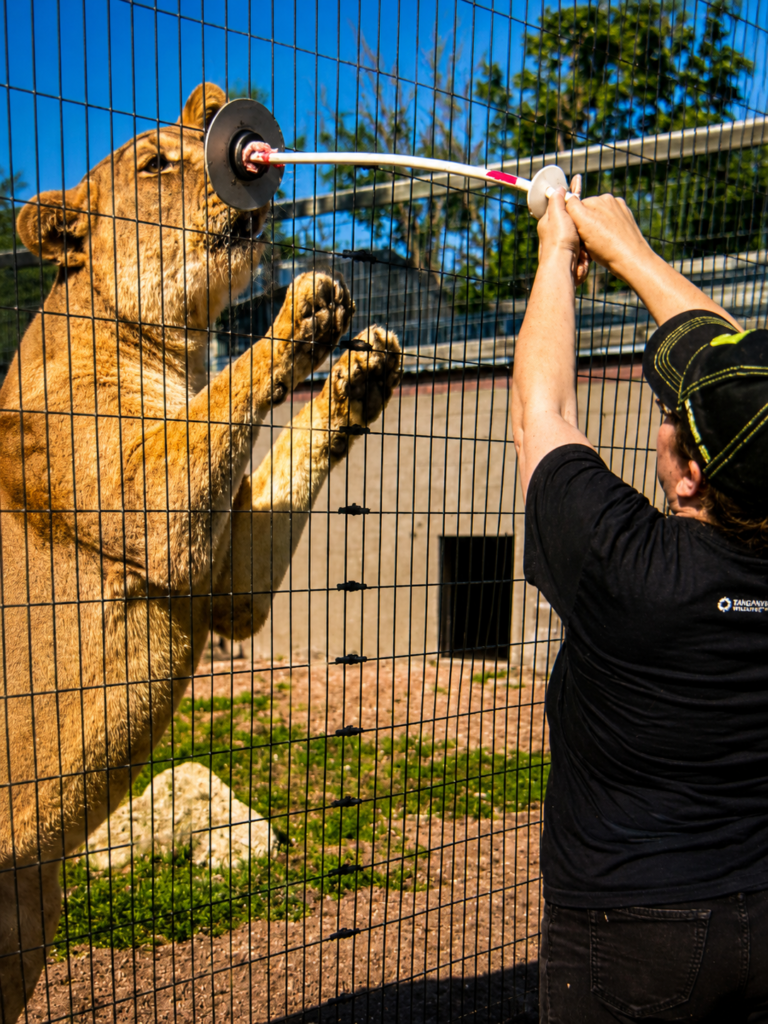
Our second big-cat experience involved a lioness—but the most important moment came from the animal we did not feed.
Day 2 Put Us Behind the Scenes Again
After feeding a tiger on Day 1, I wondered whether another big-cat encounter could feel as memorable.
This time, our experience included a lioness.
Standing only a few feet from another apex predator was still extraordinary. The physical power of these animals does not become ordinary simply because you’ve had a similar experience the day before.
But the part I remember most happened before the lion feeding began.
The Snow Leopard Wasn’t Interested—and the Plan Changed
Our scheduled experience also included a snow leopard, but the animal wasn’t interested in participating that morning.
The weather had become warm, and the snow leopard simply did not engage with the planned feeding.
The keeper did not try to manufacture the experience for us. Instead, the plan changed and we continued with the lioness.
That moment mattered to me more than a perfectly executed itinerary would have.
When travelers talk about ethical animal experiences, this is the kind of detail worth paying attention to: what happens when an animal doesn’t cooperate with the human schedule?
In our case, we didn’t get the snow leopard encounter.
I was completely fine with that.
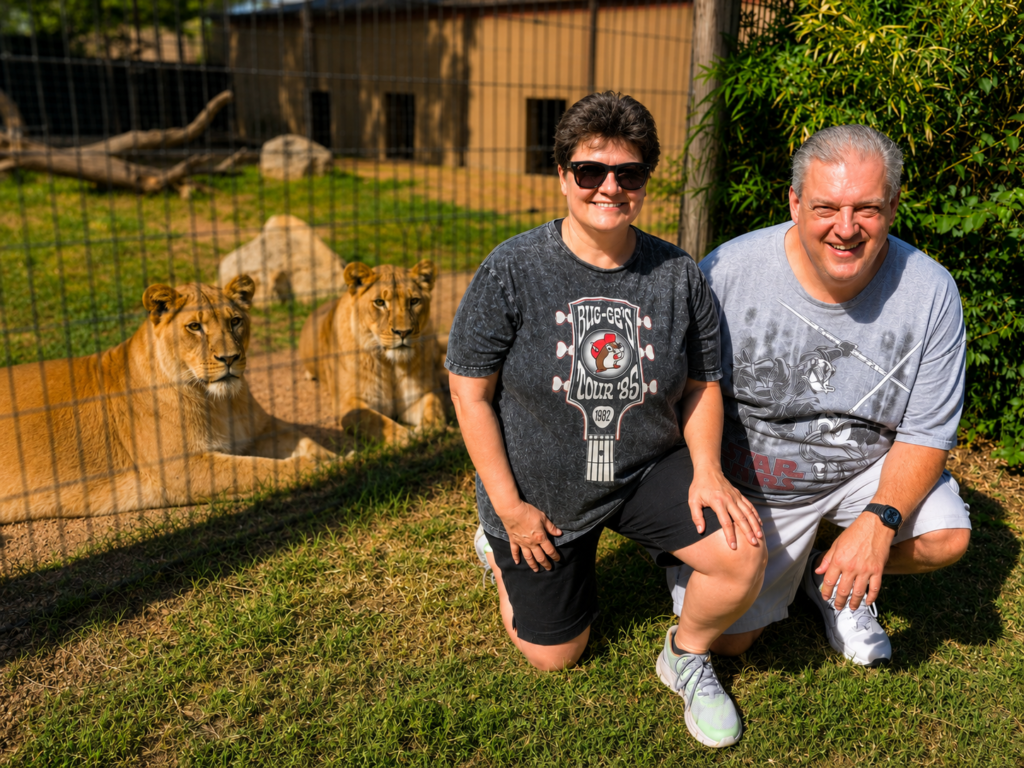
The lioness experience remained calm, controlled and educational throughout our visit.
Close Enough to Appreciate the Power
The lion feeding followed a structure similar to our tiger encounter from Day 1.
Food was presented using a long feeding stick while we remained separated from the animal.
Even after seeing a tiger at close range, the size and strength of the lioness were impressive.
The experience wasn’t only about proximity. The keeper conversation helped place what we were seeing into a larger context of individual animal behavior and care.
Then Two Penguins Stole the Show
The big cats were dramatic.
The penguins were pure personality.
Our Penguin Meet & Greet took place behind the scenes in a smaller room where Caelin introduced us to the animals and talked about their care before the closer interaction began.
We sat together at floor level rather than standing around an enclosure.
That changed the perspective immediately.
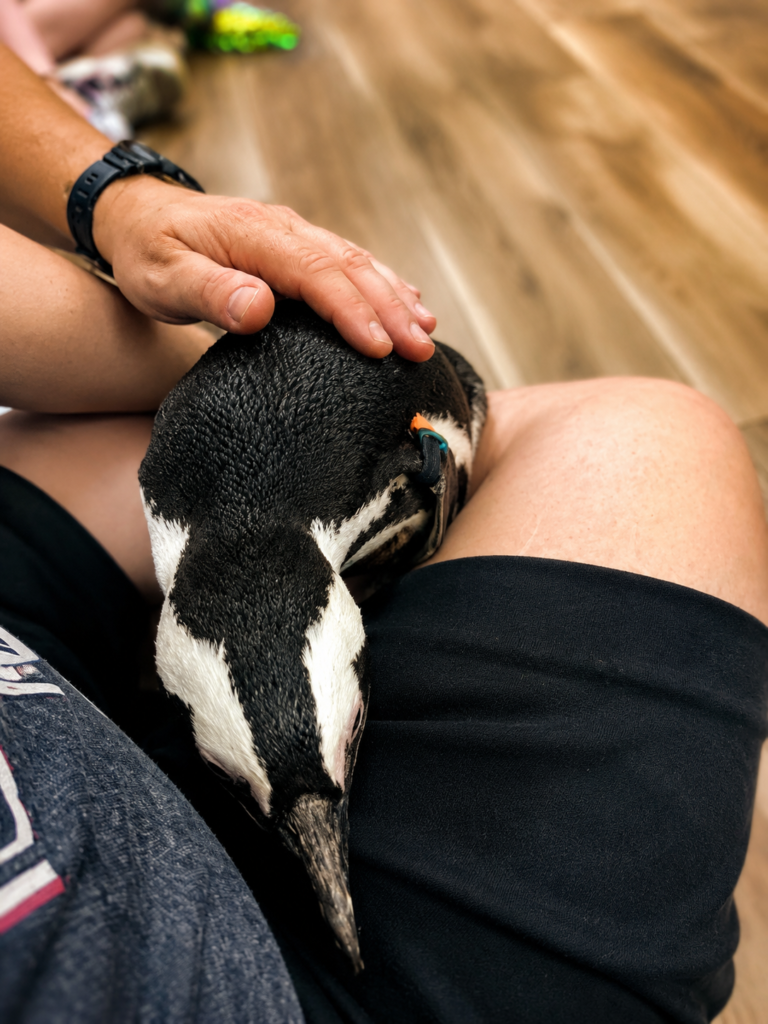
OG climbing into my lap became one of the most memorable moments of our second day.
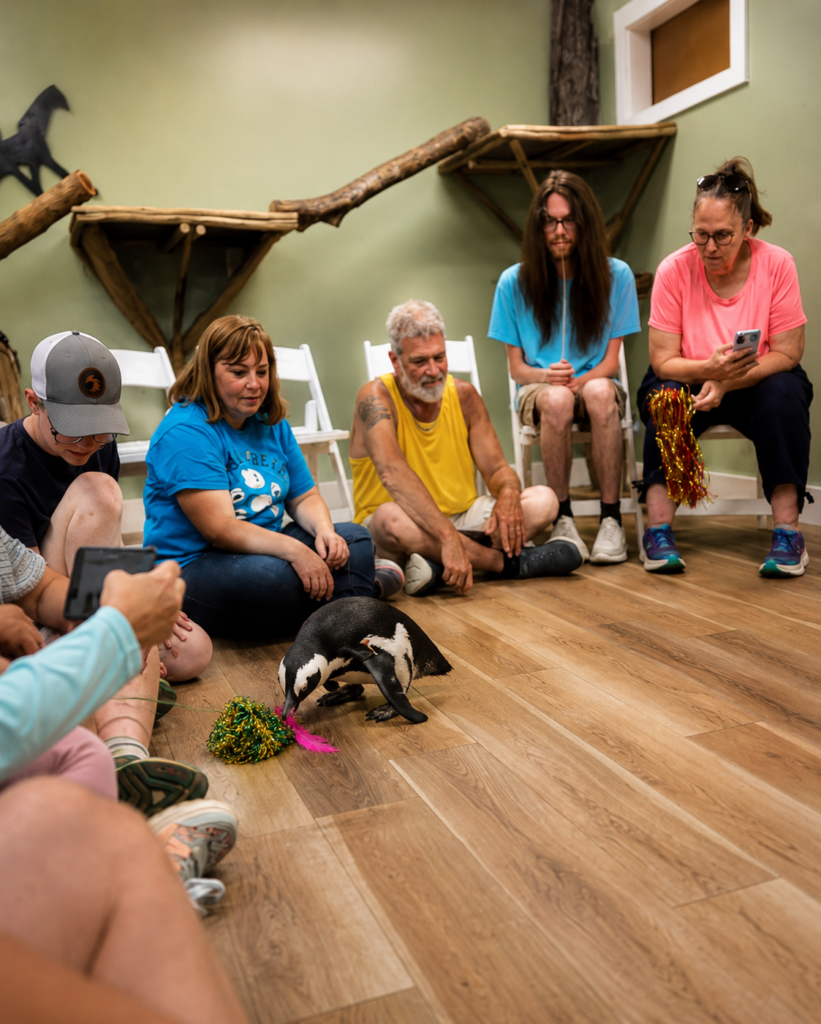
Watching the penguins interact with enrichment items added another dimension to the encounter.
Learning Their Personalities Was Half the Fun
OG was the first penguin introduced to our group.
After individual photos, he was given space to wander around the room. Hearing his tiny feet move across the floor immediately had everyone smiling.
Kryptonite later joined the interaction.
We also watched the penguins respond to enrichment items, including peacock feathers and wand-style toys.
The most memorable moment for me came when OG climbed into my lap.
I couldn’t have planned that moment, and that is precisely why I remember it so clearly.
Enrichment and Education Matter in Responsible Wildlife Encounters
Close animal encounters naturally create exciting photographs, but photography shouldn’t be the only measure of their value.
During the penguin experience, learning about the animals and watching them engage with enrichment gave us more context than a quick posed photograph would have provided.
That is one of the questions I now ask when considering ethical wildlife encounters:
Does the experience help me better understand the animal, or does it merely put the animal close enough for a picture?
The most meaningful interactions we had at Tanganyika did both—they created memorable proximity while giving keepers time to talk about the animals themselves.
Repeating Encounters Let Us Notice More
We fed giraffes again, spent more time with rhinos, revisited Lemur Island and returned to the lorikeets.
Repeating those experiences did not make them less special.
It gave us time to notice more.
On a first visit, your attention naturally goes to the novelty of what is happening.
On a return visit, you begin noticing individual behavior, keeper routines, changing light and the differences between one animal and another.
That was one of the biggest benefits of having two days.

A slower second day gave us more time for observation beyond the scheduled encounters.
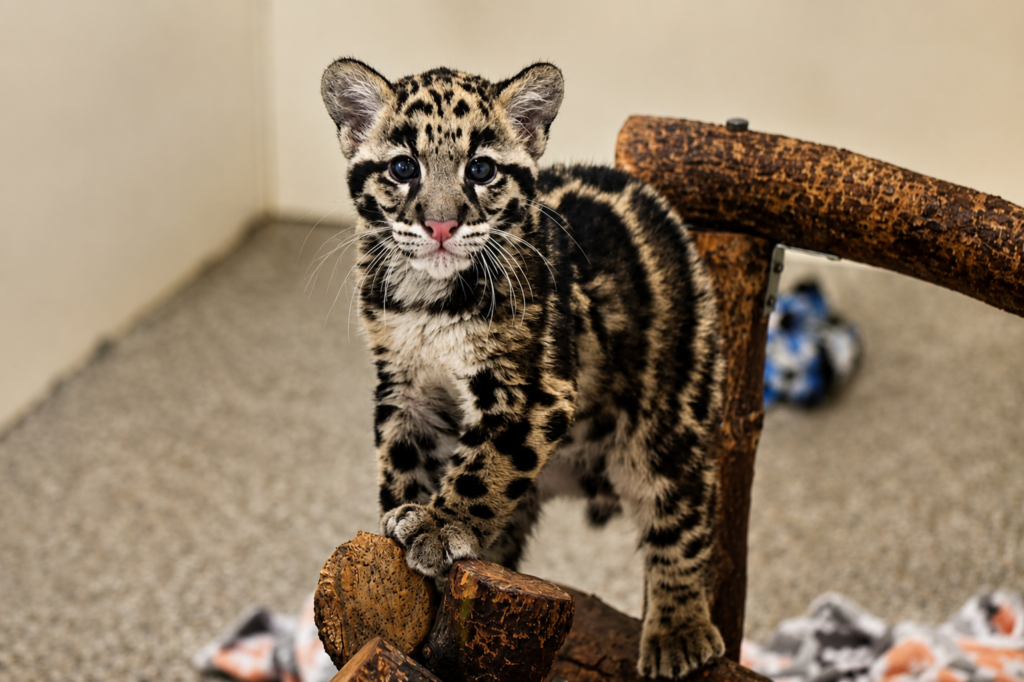
Knowing the park better gave me more time to concentrate on animal portraits and details.
My Wildlife Photography Improved on Day 2
I carried my DSLR with a longer lens on our second day, but the equipment wasn’t the only reason my photography improved.
I already knew the layout.
I knew which areas I wanted to revisit, where backgrounds were cleaner and which animals I wanted to spend more time photographing.
That familiarity let me concentrate on behavior and composition rather than simply documenting what I saw for the first time.
At the same time, many Tanganyika encounters take place at close enough range that a phone can still produce strong photographs.
A Second Day Gave Me More to Evaluate
There is no single question that determines whether a wildlife experience meets every traveler’s ethical standards. These are the factors I paid closer attention to during our second day.
What Happens When an Animal Doesn’t Participate?
The snow leopard encounter changed when the animal was not interested. That gave me more information than a perfectly executed schedule would have.
Who Controls the Interaction?
Our premium experiences were structured and guided by staff rather than being directed by visitors.
What Do Guests Learn?
The strongest encounters included information about individual animals, behavior, care and broader conservation issues.
Is Behavior More Than a Performance?
Watching the penguins engage with enrichment gave us a different type of interaction than simply posing beside an animal.
What Standards Can Travelers Examine?
Professional accreditation and third-party welfare review give travelers concrete information they can research rather than relying solely on promotional language.
Does the Experience Lead Somewhere?
Tanganyika says its goal is to turn meaningful animal connections into greater interest in wildlife stewardship and conservation action.
Conservation Became More Personal
I expected photographs and memorable animal encounters. I did not expect the conservation side of the trip to stay with me as strongly as it did.
Throughout both days, keeper conversations repeatedly came back to the animals themselves—their personalities, care and the pressures facing wildlife beyond the park.
That made conservation feel less abstract.
Reading that a species faces challenges in the wild is one thing.
Hearing those issues discussed while looking at an individual animal creates a different emotional connection.
Somewhere between the big cats, giraffes, rhinos, lemurs and penguins, wildlife conservation became more personal to me.
That may have been the most important thing I took home.
How I Would Plan a Tanganyika Wildlife Park Visit
Arrive Early
Starting early gives you more time to learn the layout and can also mean more animal activity before the hottest part of the day.
Allow a Full Day
Even without a second day, I would avoid trying to fit Tanganyika into a short sightseeing window.
Consider a Premium Experience
Keeper-led experiences added context and access that made our visit meaningfully different from a traditional walk-through zoo day.
Repeat Favorite Areas
Animal behavior changes throughout the day. Returning to a favorite habitat can produce a completely different experience.
Ask Questions
The keepers were one of the strongest parts of our visit. Use the opportunity to learn rather than focusing only on photographs.
Don’t Overschedule
Leave room to watch the animals. The second day taught me that lingering often produced better memories than rushing.

Cooling off after another full wildlife day was a welcome change of pace.
Cooling Off After Two Full Days Outdoors
Our June 2026 Tanganyika package also included an overnight at Hampton Inn by Hilton Goddard and access to Blast Off Bay Indoor Waterpark.
After another long day outdoors in the Kansas heat, the waterpark was exactly the kind of low-key ending we needed.
We floated the lazy river, cooled off in the pool and relaxed after two very active wildlife days.
Packages and hotel inclusions can change, so I would verify current options directly with Tanganyika before planning around a specific lodging or waterpark benefit.
Two Days Didn’t Cure My Curiosity
Before the trip, I assumed two days would be plenty.
By the end of Day 2, I was already looking at what I had not experienced.
Tanganyika currently offers an Ultimate Animal Adventure Weekend built around multiple premium wildlife experiences and concierge-style planning.
The exact experiences can vary by season and availability, but options may include penguins, otters, pygmy hippos, capybaras, sloths, giraffes, rhinos and big cats.
Swimming with penguins remains particularly high on my list.
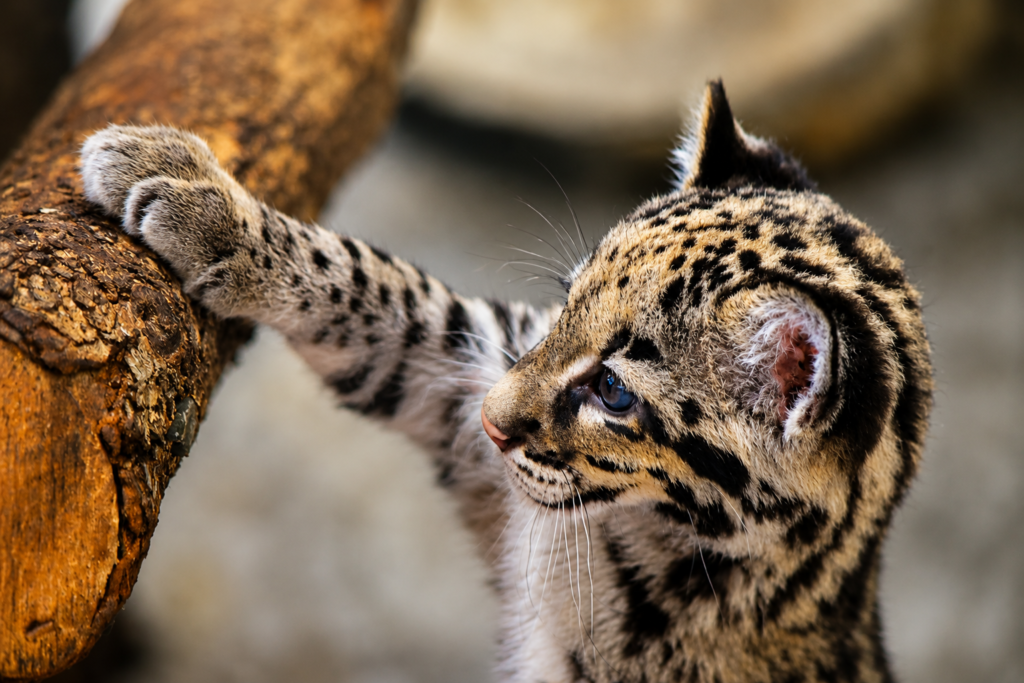
Two full days left me with more reasons to return rather than a feeling that I had finished the park.
Why I Would Choose Two Days Again
Day 1 gave me extraordinary encounters. Day 2 gave me perspective.
The second visit let us stop treating the park like a checklist.
We saw animals at different times, repeated experiences we loved, took better photographs and spent more time listening to the people caring for them.
Most importantly, I had more opportunities to notice how the park responded when animals behaved according to their own rhythms rather than ours.
For travelers researching ethical animal experiences, that kind of observation matters.
Tanganyika didn’t leave me feeling that I had checked another attraction off a list.
It left me wanting to learn more.
Frequently Asked Questions
Is one day enough at Tanganyika Wildlife Park?
One full day can provide an excellent visit, but two days gave us more time for premium experiences, repeat animal encounters, photography and slower observation without trying to fit everything into one schedule.
Why spend two days at Tanganyika Wildlife Park?
Animals behave differently throughout the day, and a second visit lets you return to favorite habitats, add premium experiences and spend more time learning from keepers instead of concentrating only on seeing everything once.
Does Tanganyika offer ethical animal experiences?
Tanganyika provides several factors travelers can evaluate when researching ethical animal experiences, including keeper-led interactions, professional accreditation, outside welfare oversight, conservation education and experiences that can change when an animal does not participate. Travelers should consider those factors alongside their own standards for responsible wildlife tourism.
What happened when the snow leopard did not want to participate?
During our June 2026 Big Cat Feeding experience, the snow leopard was not interested in the planned interaction. The encounter changed rather than the animal being pushed to participate, and we continued with the lioness portion of the experience.
What is the Penguin Meet & Greet like?
Our experience was a small-group, keeper-led interaction that included education, individual photographs, time observing the penguins and supervised close interaction. Two penguins named OG and Kryptonite participated during our visit.
Do you need a professional camera at Tanganyika?
No. I used a DSLR and longer lens on Day 2, but many of the animal experiences take place close enough that a modern phone can capture excellent photographs as well.
Two Days at Tanganyika Completed the Wichita Wildlife Chapter
From here, our road trip moved toward Oklahoma—but the Wichita cluster includes more than the park itself.
Start With Tanganyika Day 1
Read about the tiger, giraffe and rhino encounters that introduced us to the park.
Public at the Brickyard
See where we walked for dinner after our first full day at Tanganyika.
See the Full Journey
Return to the complete nine-day road trip through eight states.
About Angela
Angela Addington is the travel photographer and writer behind Lenses & Latitudes. She shares firsthand destination guidance and practical photography advice for independent and solo travelers, women over 50, road-trippers and weekend explorers. Learn more about Angela.
Great content! Keep up the good work!
Pingback: Factory Obscura: Where Curiosity Comes to Life in Oklahoma City - Lenses and Latitudes
Pingback: Step Back in Time at Arkansas’s Most Beautiful Historic Bed & Breakfast - Lenses and Latitudes
Pingback: Why Dugan’s Pub Is Little Rock’s Most Authentic Taste of Ireland - Lenses and Latitudes