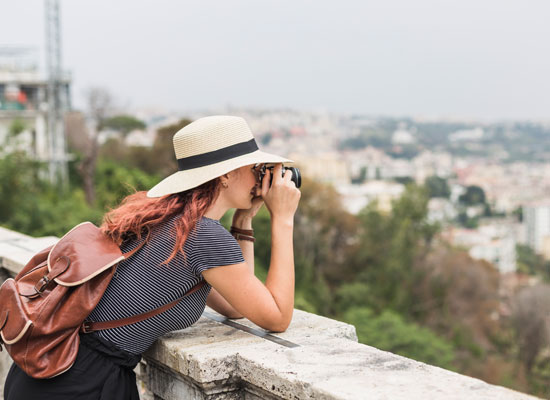
Hyde Park Through a Photographer’s Lens
Hyde Park offers much more than wide lawns and famous landmarks. Gardens, flowers, wildlife, mature trees and small visual details make it one of London’s most rewarding places to slow down with a camera.
Flowers, gardens, trees, wildlife and details
The Rose Garden
Early summer
Smartphone or camera
At least 1–2 hours
Slow down and look closer
Is Hyde Park a Good Place for Photography in London?
Absolutely. Hyde Park offers gardens, seasonal flowers, mature trees, wildlife, winding pathways and small architectural details that work well for both smartphone and dedicated-camera photography.
When most visitors think of Hyde Park, they picture one of London’s most famous green spaces—a place to stroll, picnic or step away from the city’s busy streets.
As a photographer, I quickly discovered something more.
Hyde Park is a place where gardens, remarkable trees, flowers, wildlife and small moments of nature continually compete for attention.
On my first day exploring London, the park became one of my favorite surprises.
The official Royal Parks Hyde Park guide is useful for current opening information, maps, gardens, monuments and visitor updates.
Hyde Park Photography at a Glance
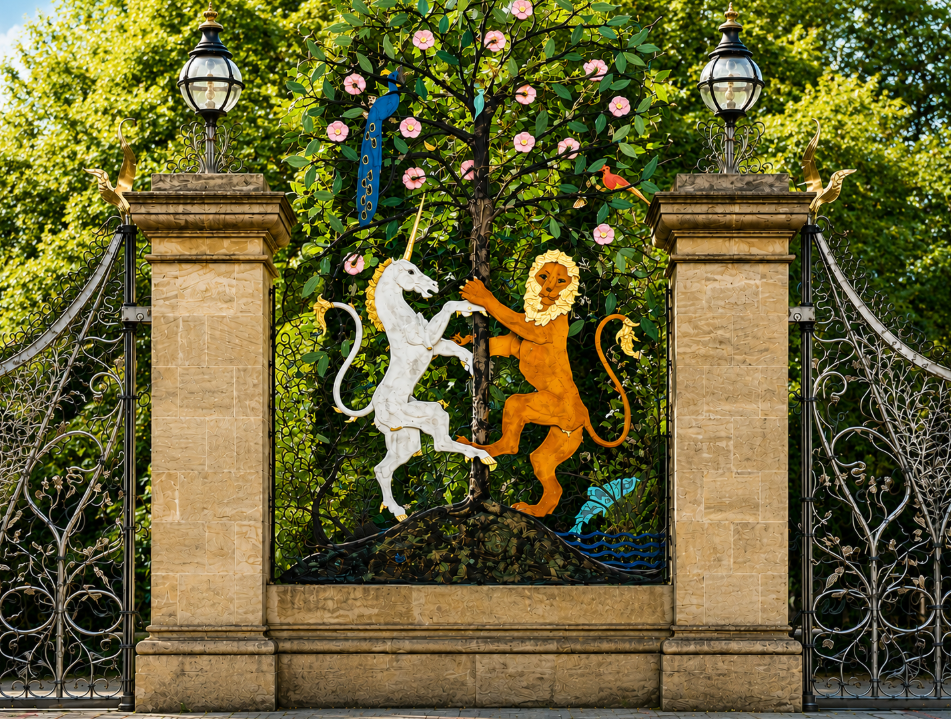
Canada Gate belongs to The Green Park, but it became one of the decorative details that caught my attention on my route toward Hyde Park.
Starting the Walk Near Hyde Park Corner
One of the first decorative details that caught my attention on my route toward Hyde Park was an ornate set of gates.
Important location note: The photograph here is of Canada Gate, which belongs to nearby The Green Park, rather than an entrance to Hyde Park itself.
Canada Gate stands near Buckingham Palace and forms a grand entrance into The Green Park.
The gilded metalwork, heraldic details and elaborate craftsmanship immediately caught my eye.
It was an early reminder that London rewards photographers who pay attention to the transitions between parks, streets and monuments rather than focusing only on major attractions.
The Royal Parks explains that Canada Gate was installed in the early 20th century as part of the memorial to Queen Victoria and was a gift from Canada.
Hyde Park itself also has significant gateways and monuments near Hyde Park Corner, including the Queen Elizabeth Gate and Apsley Gate.
Is Hyde Park’s Rose Garden Worth Visiting?
Yes. Hyde Park’s Rose Garden is one of the park’s best areas for photographers, particularly if you enjoy flowers, pathways, color and smaller nature details.
A short walk brought me into the Rose Garden, one of the most photogenic corners I encountered in Hyde Park.
The winding pathways, carefully maintained flower beds and mature trees create opportunities for both wider garden scenes and close-up photography.
What struck me most wasn’t a single flower or feature—it was the atmosphere.
The garden felt calm despite being surrounded by one of the world’s busiest cities.
According to The Royal Parks, the Rose Garden opened in 1994 and was designed by Colvin and Moggridge Landscape Architects.
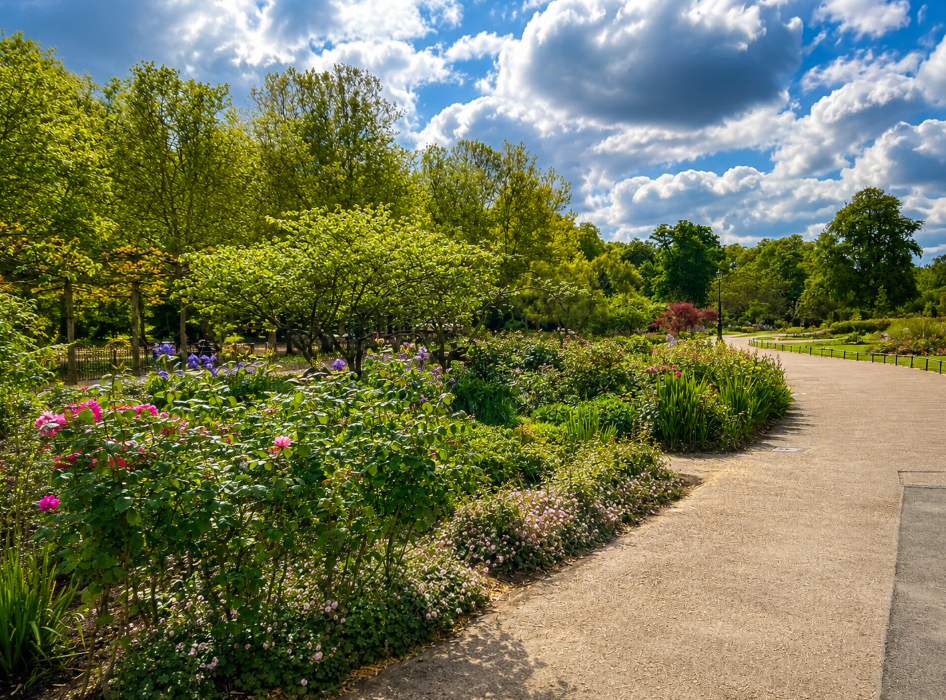
Curving garden paths create natural leading lines and help pull the viewer into a scene.
When Is the Best Time to Photograph Hyde Park’s Rose Garden?
Early summer is the best time for the main rose display, although flowers and seasonal planting can provide photographic interest beyond peak bloom.
The Royal Parks identifies early summer as the best period for roses, with many continuing to bloom until the first frosts.
The beds also receive spring and summer seasonal displays.
That means the Rose Garden can still be worthwhile outside peak rose season, but photographers hoping for abundant rose blooms should favor early summer.
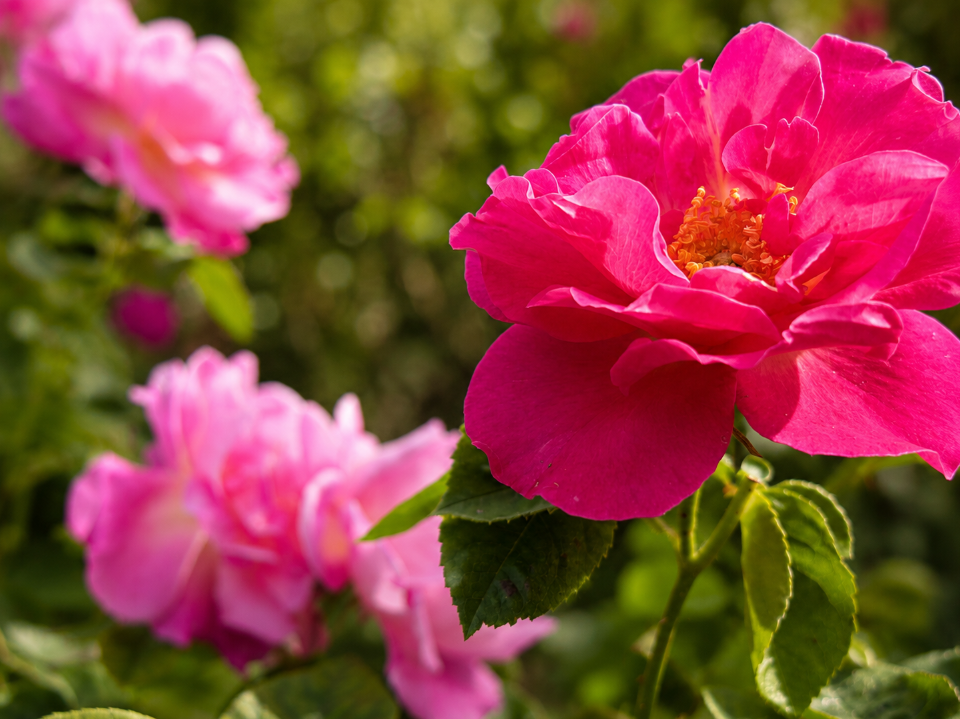
A single flower can become a strong travel photograph when color, perspective and surrounding detail work together.
Look Beyond London’s Famous Landmarks
Some of the most memorable London photographs can come from quiet places rather than famous landmarks.
Many travel photographers understandably focus on attractions such as Big Ben, Buckingham Palace and Tower Bridge.
Hyde Park reminded me that a London photo collection doesn’t have to consist entirely of recognizable icons.
A vibrant rose bloom caught my attention among the garden beds.
The rich color contrasted beautifully against the surrounding greenery and demonstrated why gardens remain one of my favorite places to slow down and observe.
The challenge with flower photography isn’t simply documenting the bloom.
It’s finding a perspective, composition or surrounding detail that helps the viewer notice it differently.
Use Color and Layers in Garden Photography
Combining a sharp foreground subject with softer flowers or foliage behind it is an easy way to create depth in a garden photograph.
One of the joys of exploring the Rose Garden was discovering how different flowers complemented one another.
The striking purple allium blooms stood out against a backdrop of pink roses, creating one of my favorite color combinations of the day.
Their unusual shape added texture and visual interest that immediately drew my eye.
Photographers often talk about visual layers, and this scene offered exactly that: a sharp foreground subject supported by a softer, colorful background.
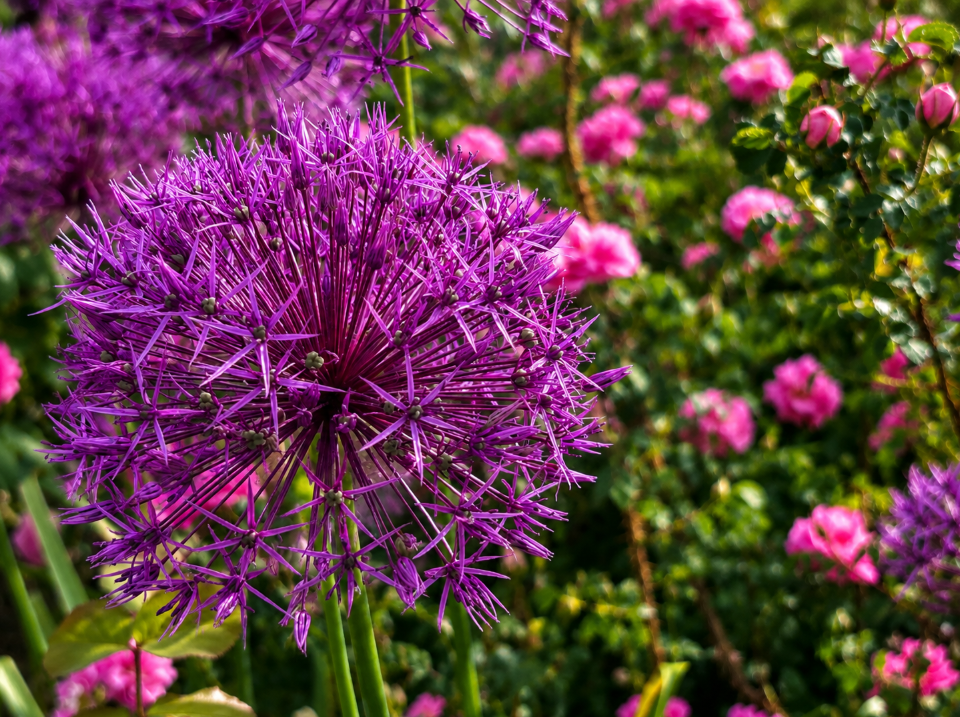
Purple alliums against softer surrounding color create texture, contrast and visual depth.
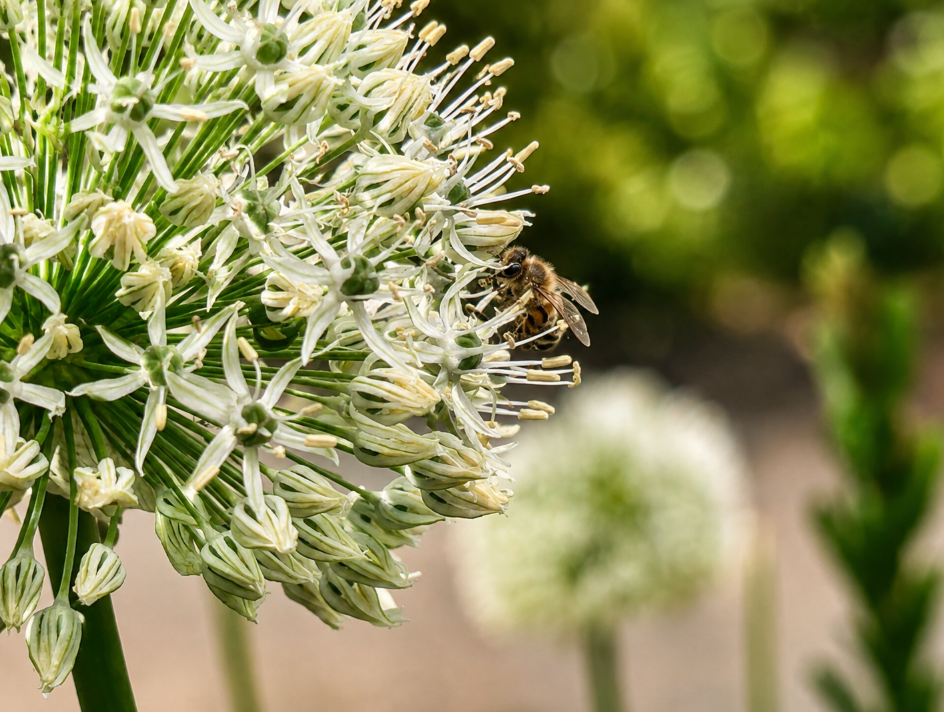
A small wildlife moment can turn a static flower image into a much stronger nature story.
Photograph the Wildlife Most Visitors Walk Past
Hyde Park is useful for close-up nature photography because flowers and mature planting attract insects, birds and other wildlife.
One lesson travel photography continually teaches me is that small subjects can tell surprisingly memorable stories.
While walking through the garden, I noticed a bee carefully working its way through the blossoms of an ornamental allium.
It would have been easy to walk past without noticing, but moments like this often become some of my favorite photographs from a trip.
These tiny scenes are a reminder that Hyde Park isn’t simply a landscaped backdrop.
It is also a living green space with ecological activity happening throughout the park.
The Royal Parks maintains areas of Hyde Park specifically with wildlife and biodiversity in mind, including more naturalized planting and wildflower areas.
Finding a Hidden Green Cathedral Beneath the Trees
Some of Hyde Park’s most atmospheric photographs can come from its mature trees rather than its better-known monuments or gardens.
Perhaps my favorite discovery of the day wasn’t a flower at all.
Tucked among the greenery stood an extraordinary weeping tree whose cascading branches created a natural room beneath the canopy.
Stepping beneath it felt like entering a hidden green cathedral.
The massive limbs twisted overhead while filtered sunlight moved across the ground below.
Identification note: I haven’t assigned a species to this tree because I did not independently identify it during my visit.
What mattered photographically was its structure: low cascading branches, filtered light and the feeling of entering a space hidden inside the larger park.
It’s the kind of place many visitors could pass without stopping, yet for a photographer it was impossible for me to ignore.
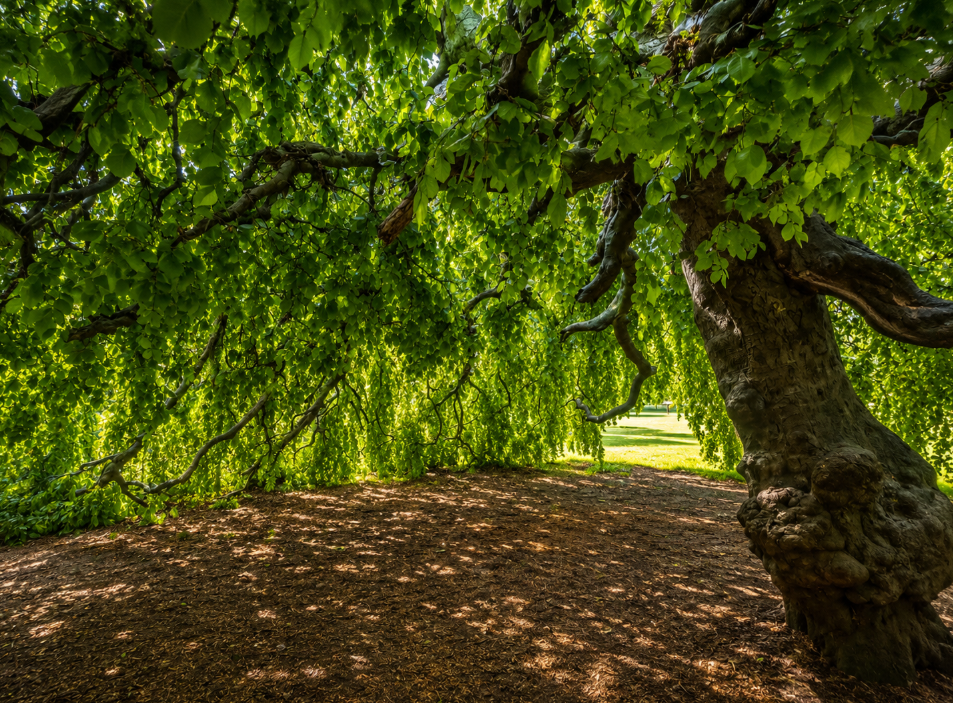
Low cascading branches and filtered light created one of my favorite unexpected photographs in Hyde Park.
Photography Tips for Hyde Park
Do You Need a Professional Camera to Photograph Hyde Park?
No. Hyde Park is an excellent place for smartphone photography as well as dedicated cameras.
A phone works particularly well for wider garden scenes, flowers, paths and spontaneous details because it is quick to use while walking.
If your phone has a telephoto setting, it can help isolate flowers or wildlife without moving too close.
Portrait mode can also be useful for separating a flower from a softer background, although I prefer to check the edges carefully because artificial blur can sometimes look unnatural around petals and leaves.
How Long Should Photographers Spend in Hyde Park?
Allow at least one to two hours if photography is part of your visit, and longer if you want to explore beyond the Rose Garden.
Hyde Park is large enough that trying to photograph everything quickly can work against the very thing that makes it rewarding: noticing smaller details.
If you’re combining Hyde Park with other London attractions, choose one or two areas of the park rather than trying to cover every path.
What Else Can Photographers See in Hyde Park?
Beyond the Rose Garden, Hyde Park offers the Serpentine, monuments, fountains, meadows, wildlife and historic routes such as Rotten Row.
The Royal Parks recommends the Rose Garden for a quieter visit and also highlights the Dell, Serpentine, Diana Memorial Fountain, Speakers’ Corner and numerous monuments throughout the park.
Browse current attractions and visitor information through the official Hyde Park things-to-do guide.
For more firsthand London planning resources, visit my First-Time London Travel Guide.
If you particularly enjoy photographing architecture, murals and unusual visual details while traveling, my Street Art Maps and Photo Spots by Destination guide brings those photography-focused resources together.
Hyde Park Photography FAQ
Is Hyde Park good for photography?
Yes. Hyde Park provides opportunities for garden, flower, wildlife, tree, landscape and detail photography within one central London park.
Where is the best place to photograph flowers in Hyde Park?
The Rose Garden near Hyde Park Corner is one of the best choices. It combines roses with herbaceous planting, pathways, trees, pergola features and seasonal flower displays.
When do the roses bloom in Hyde Park?
The Royal Parks identifies early summer as the best time to see the roses, although many continue flowering until the first frosts.
Is Hyde Park free to visit?
Yes. Hyde Park itself is free to enter, although individual events or activities held within the park may charge admission.
What time does Hyde Park open?
The Royal Parks currently lists Hyde Park’s pedestrian gates as open from 5 a.m. until midnight. Check current information before your visit because access can be affected by major events or temporary closures.
Can you photograph Hyde Park with a phone?
Yes. A smartphone is more than enough for garden paths, flowers, trees, landscapes and many of the smaller details that make Hyde Park interesting to photograph.
How much time should photographers allow?
Allow at least one to two hours for a relaxed photography-focused visit. Give yourself longer if you want to explore several areas of the park.
Hyde Park Through a Photographer’s Lens
Hyde Park may be one of London’s most famous parks, but from a photographer’s perspective it is far more than a patch of green in the middle of the city.
It’s a place where garden paths, wildlife, flowers, mature trees and small unexpected details coexist within a single walk.
Some of my favorite photographs weren’t subjects I had planned before arriving.
They came from noticing how a path curved through the garden, how one flower stood against another, how a bee moved between blooms and how a tree created its own hidden room beneath the branches.
Whether you’re carrying a professional camera or simply using your phone, Hyde Park offers endless opportunities to slow down, observe and discover beauty in places many people overlook.
Those quiet discoveries are often where the most memorable photographs are waiting.
Build Hyde Park Into Your London Photography Plans
About Angela
Angela Addington is the travel photographer and writer behind Lenses & Latitudes. She shares firsthand destination guidance and practical photography advice for independent and solo travelers, women over 50, road-trippers and weekend explorers. Learn more about Angela.