
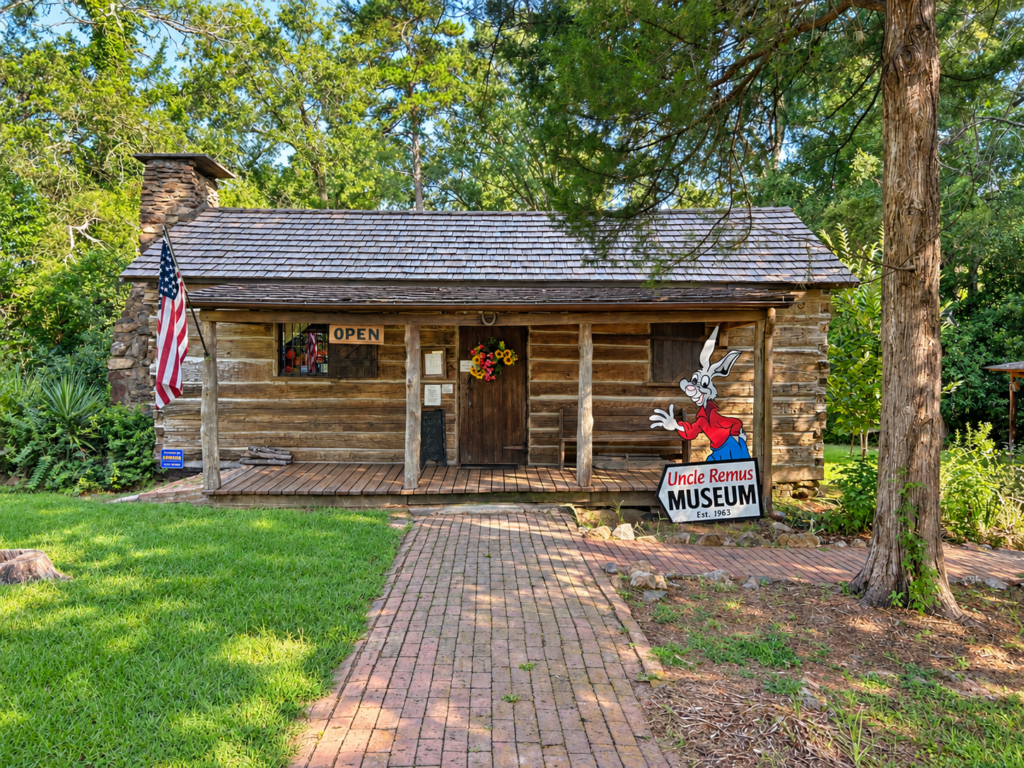
Uncle Remus Museum: A Small Museum With a Much Larger Story
Inside a small cabin in Turner Park, the Uncle Remus Museum explores Joel Chandler Harris, Turnwold Plantation and the African American oral traditions that shaped the stories he later published.
Is the Uncle Remus Museum in Eatonton Worth Visiting?
Yes—especially if you are interested in Georgia history, literature, African American folklore or the complicated origins of the Uncle Remus stories.
The museum is small, but its exhibits and docent interpretation provide valuable context about Eatonton native Joel Chandler Harris, his years at Turnwold Plantation and the African American oral traditions that influenced his writing.
After driving past the museum several times—and noticing the large Uncle Remus mural and historical markers around Eatonton—I finally decided it was time to learn more about the stories and their connection to this small Georgia community.
Located in Turner Park, the Uncle Remus Museum is housed in a small cabin surrounded by tall trees.
Although the museum has only a few compact areas, its thoughtfully arranged exhibits tell a much larger story about Harris, his work and the people whose storytelling traditions influenced it.
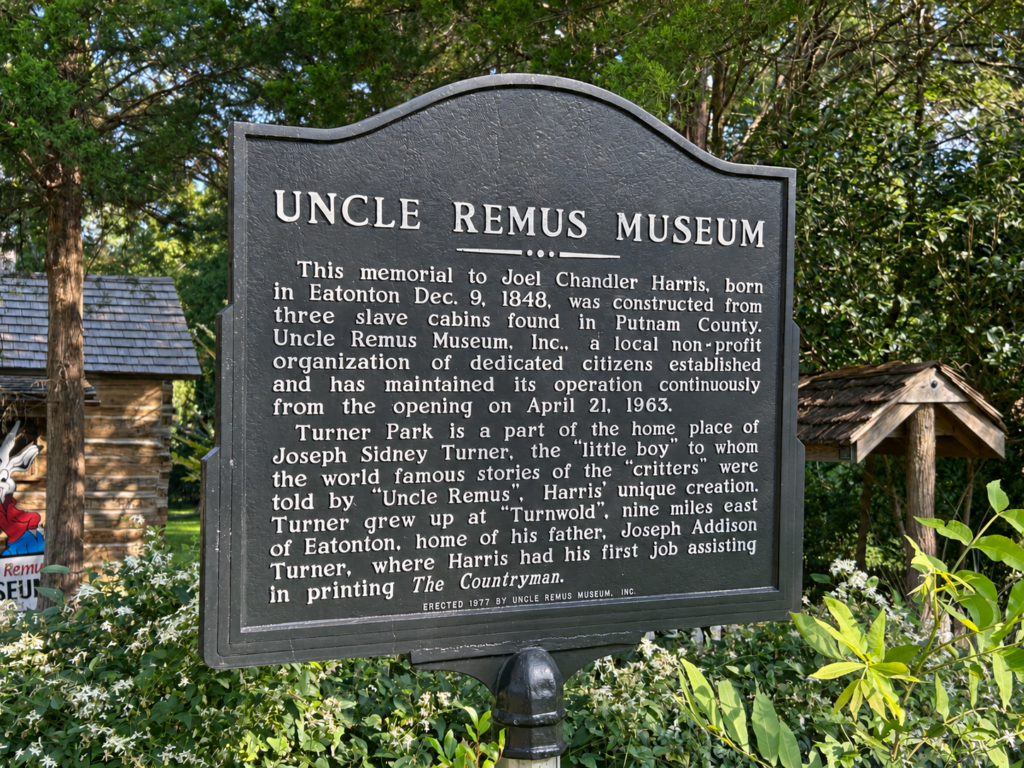
A historical marker outside the museum introduces visitors to its connection with Joel Chandler Harris, Turnwold and Eatonton.
The Museum Begins With Its Place in Eatonton
The museum’s location is part of the story.
It sits in Turner Park in the community where Joel Chandler Harris was born and near the landscape that shaped his early life.
Historical markers and exhibits begin connecting visitors to Harris, Turnwold Plantation and the literary history before they even enter the cabin.
For me, this was a visit about finally understanding something I had passed many times without fully knowing its significance.
Quick Planning: Uncle Remus Museum in Eatonton
Hours and admission details can change, so check the museum’s official visitor information page before making a special trip.
What Is the Uncle Remus Museum?
The Uncle Remus Museum is a small history and literary museum in Eatonton devoted to the life and work of Joel Chandler Harris and the cultural history surrounding the Uncle Remus stories.
The museum uses historic storytelling, period artifacts, photographs, documents and character displays to explain Harris’s formative years in Putnam County and the influence of Turnwold Plantation on his later writing.
It also includes a section devoted to Joseph Addison Turner, Harris’s employer and mentor, who introduced him to the printing trade and encouraged his education.
Who Was Joel Chandler Harris?
Joel Chandler Harris was a white journalist and author born in Eatonton in 1845 who became best known for publishing the Uncle Remus stories.
As a teenager, Harris became a printer’s apprentice for Joseph Addison Turner at Turnwold Plantation near Eatonton.
Turner published a newspaper called The Countryman and helped Harris develop his writing and journalism skills.
Those years at Turnwold became important not only because of Harris’s education but also because of the African American oral traditions he encountered there.
For additional historical background, the New Georgia Encyclopedia biography of Joel Chandler Harris provides a useful overview of his life and literary career.
Where Did the Uncle Remus Stories Come From?
The Uncle Remus stories drew heavily from African American oral traditions that Harris heard from enslaved storytellers while living and working at Turnwold Plantation.
Historical sources identify enslaved people including George Terrell, Old Harbert and Aunt Crissy among the storytellers Harris listened to.
The animal tales they shared were part of a much older African American storytelling tradition with roots extending back to African folklore.
Harris later adapted and published those traditions through his fictional Uncle Remus narrator.
That history is important because the stories did not originate solely with Harris; they grew from oral traditions developed, preserved and shared within African American communities.
The literary legacy remains complicated. Harris helped bring these folktales to a wide national and international readership, while scholars and writers have also criticized the way a white author profited from and reshaped African American cultural traditions.
The museum gave me more context for understanding that complexity rather than presenting the stories without their historical background.
You can learn more through the New Georgia Encyclopedia’s history of the Uncle Remus tales.
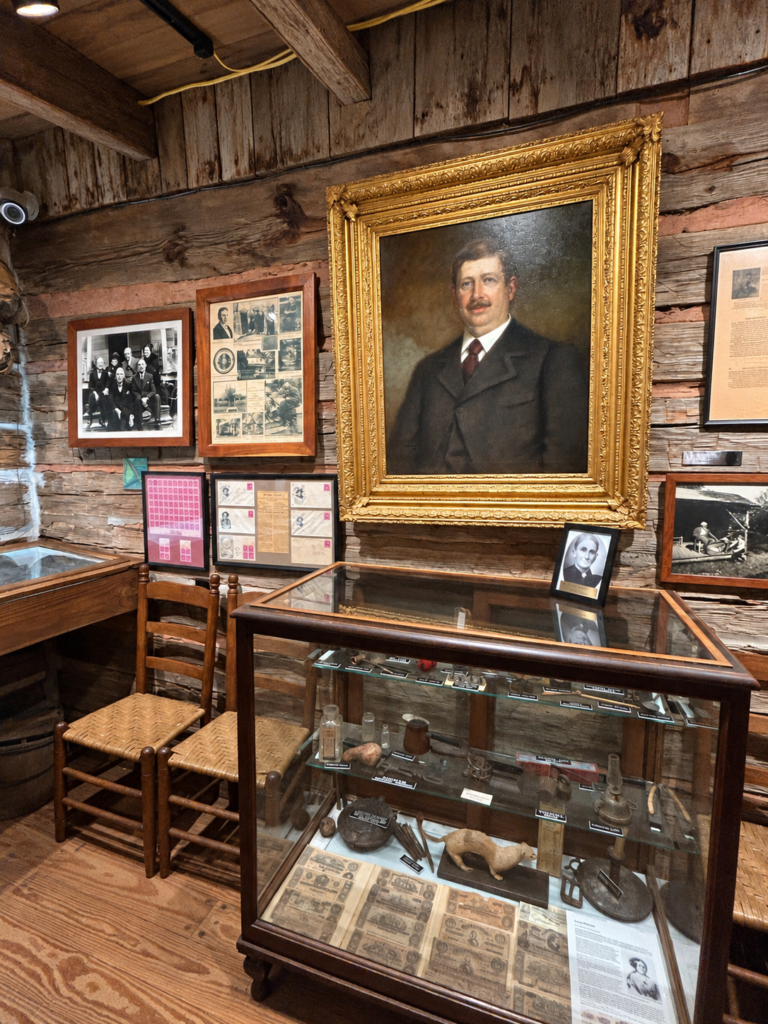
A portrait of Joel Chandler Harris overlooks photographs, documents and period artifacts inside the museum.
What Will You See Inside the Uncle Remus Museum?
Visitors see exhibits covering Joel Chandler Harris, the Uncle Remus stories, Turnwold Plantation and Joseph Addison Turner.
Although the museum is compact, the displays use the available space effectively.
A docent guided me through the museum and shared as much history as I wanted to hear.
Having someone available to explain the displays made the visit much more useful than simply walking through and looking at artifacts on my own.
The front room was especially memorable, with a large mural and beautifully crafted shadow boxes containing wooden carvings of familiar “critters” from the Uncle Remus tales.
Another section focuses on Harris’s life, while the Joseph Addison Turner Office and Library Wing explores Turner’s influence on Harris’s education and career.
Is the Uncle Remus Museum Guided?
A docent can guide visitors through the museum and provide additional historical context.
That was an important part of my experience.
Because this history involves literature, slavery, oral tradition and changing interpretations of the Uncle Remus stories, being able to ask questions made the compact museum feel much more substantial.
The museum also offers group tours and individual storytelling sessions by advance arrangement.
What Can You See Outside the Museum?
Turner Park contains character statues, historical displays and a preserved blacksmith area that extend the visit beyond the museum cabin.
Visitors can take photographs with wooden statues representing characters from the stories.
Turner Park also provides a peaceful setting for a short walk before or after touring the museum.
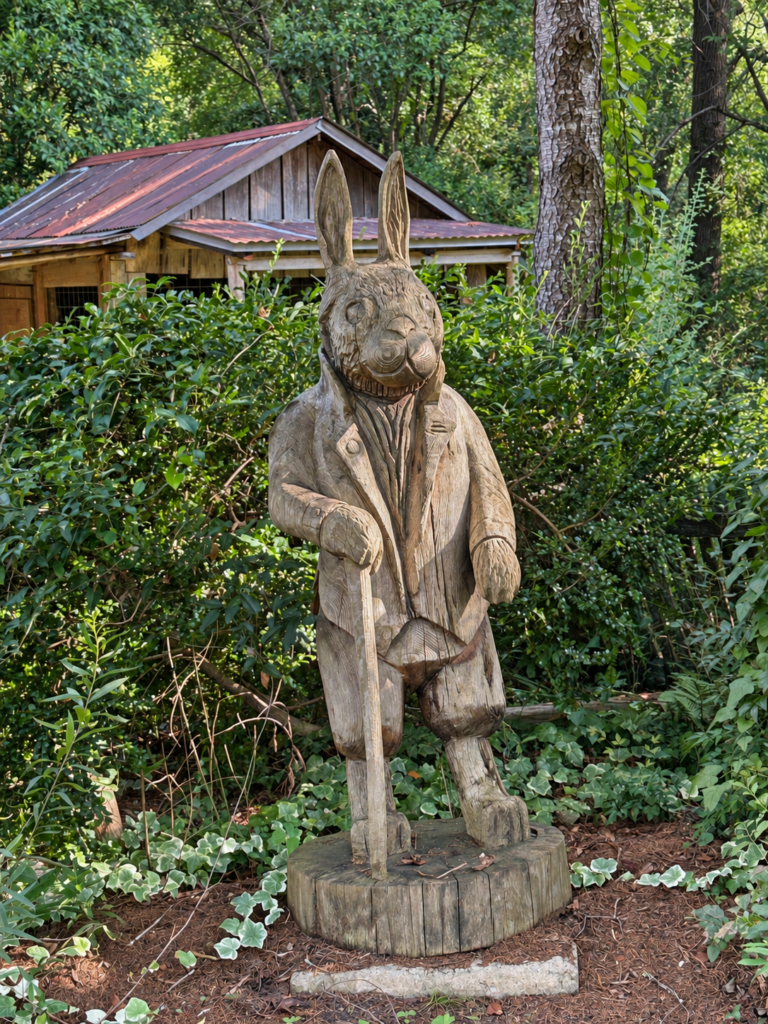
Wooden character statues provide photo opportunities around the museum grounds.
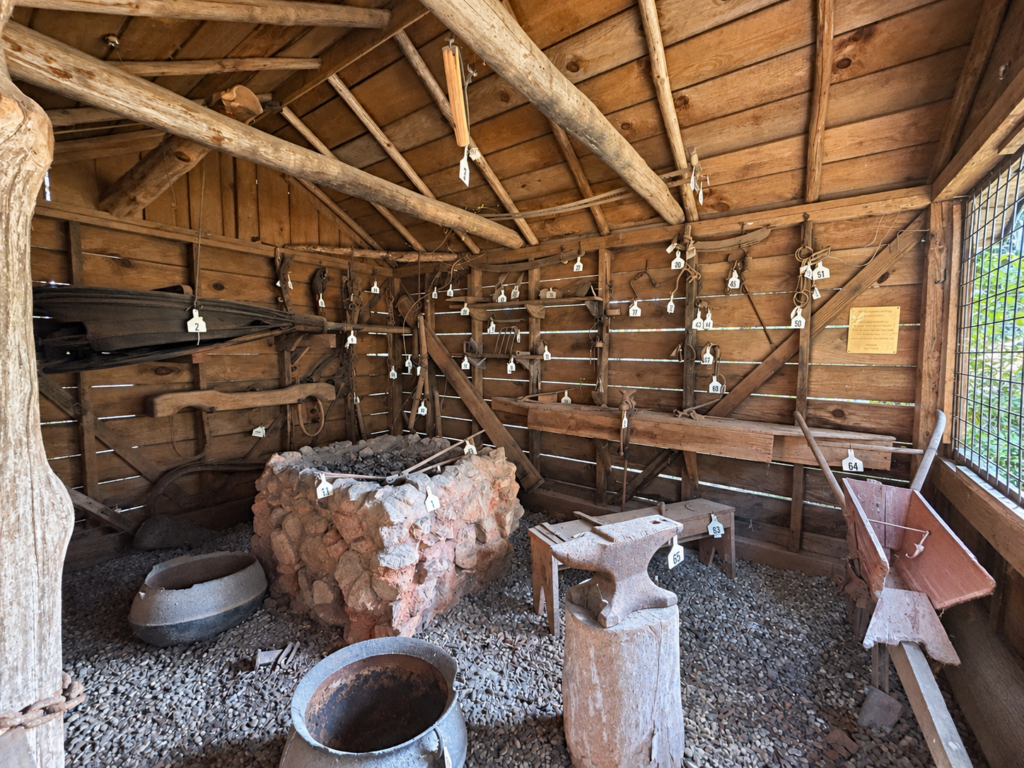
The blacksmith display in Turner Park contains an extensive collection of historic tools and equipment.
What Is the Blacksmith Exhibit in Turner Park?
The park includes a preserved blacksmith display containing historic tools and equipment.
It adds another glimpse into the types of trades and material culture associated with an earlier period of Putnam County history.
How Long Should You Spend at the Uncle Remus Museum?
I recommend allowing approximately one hour for the museum itself and additional time to explore Turner Park.
The building is small enough that you could move through it more quickly, but I would not rush.
The value of the visit comes from reading the exhibits, listening to the docent and taking time to understand the connections among Harris, Turnwold and the oral traditions behind the stories.
Admission and Hours
The museum also currently offers a family rate for five family members. Prices, seasonal schedules and operations can change, so verify details on the official visitor page before your trip.
Severe or threatening weather can also affect operations.
Is the Uncle Remus Museum Accessible?
The museum currently lists accessibility for visitors with mobility impairments.
Free parking and public restrooms are also available.
If you have specific accessibility needs, contacting the museum before your visit is the best way to confirm arrangements for the building and grounds.
Who Will Enjoy the Uncle Remus Museum?
What Else Can You Do in Eatonton?
The Uncle Remus Museum is easy to combine with other stops around downtown Eatonton and Georgia Lake Country.
Uncle Remus Museum FAQ
Where is the Uncle Remus Museum?
The Uncle Remus Museum is located at 214 S. Oak Street in Turner Park, Eatonton, Georgia 31024.
Who was Joel Chandler Harris?
Joel Chandler Harris was a white journalist and author born in Eatonton in 1845. He became best known for publishing the Uncle Remus stories after hearing African American folktales during his years at Turnwold Plantation.
Did Joel Chandler Harris create the Brer Rabbit stories?
Harris adapted and published the stories, but many of their plots and traditions originated in African and African American folklore. He heard animal tales from enslaved African American storytellers at Turnwold and later reworked those oral traditions into his published Uncle Remus collections.
How long does it take to visit the Uncle Remus Museum?
I recommend approximately one hour for the museum, plus additional time if you want to walk through Turner Park and explore the outdoor displays.
How much is admission to the Uncle Remus Museum?
Current admission is $5 for adults, $4 for seniors and students with ID, $3 for children ages 5–12, and free for children age 4 and under. Verify current pricing before visiting.
Is parking free at the Uncle Remus Museum?
Yes. The museum currently provides free parking.
Are tours available?
Yes. Docent-led interpretation is available, and group tours or individual storytelling sessions can be arranged through the museum.
Is the Uncle Remus Museum worth visiting?
Yes. The museum is small, but it provides valuable historical context about Joel Chandler Harris, Turnwold Plantation, Eatonton and the African American storytelling traditions behind the Uncle Remus tales.
Is the Uncle Remus Museum Worth Visiting?
The Uncle Remus Museum is worth visiting because it adds context to a piece of Georgia literary history that is much more complicated than the familiar characters alone suggest.
I had driven past the museum several times, but going inside helped me understand why Eatonton is so closely connected to Joel Chandler Harris and why the African American storytelling traditions he encountered at Turnwold are essential to understanding the Uncle Remus stories.
The docent-guided experience was particularly valuable.
Instead of simply viewing objects in a small cabin, I was able to ask questions and learn more about the people, places and historical circumstances behind what I was seeing.
If you are exploring Eatonton or Georgia Lake Country, allow an hour for the museum and additional time for Turner Park.
Then continue your day with my Georgia Lake Country Weekend Guide for more nearby places to visit.
About Angela
Angela Addington is the travel photographer and writer behind Lenses & Latitudes. She shares firsthand destination guidance and practical photography advice for independent and solo travelers, women over 50, road-trippers and weekend explorers. Learn more about Angela.


Pingback: The Tipsy Turtle Eatonton GA: A Local Favorite