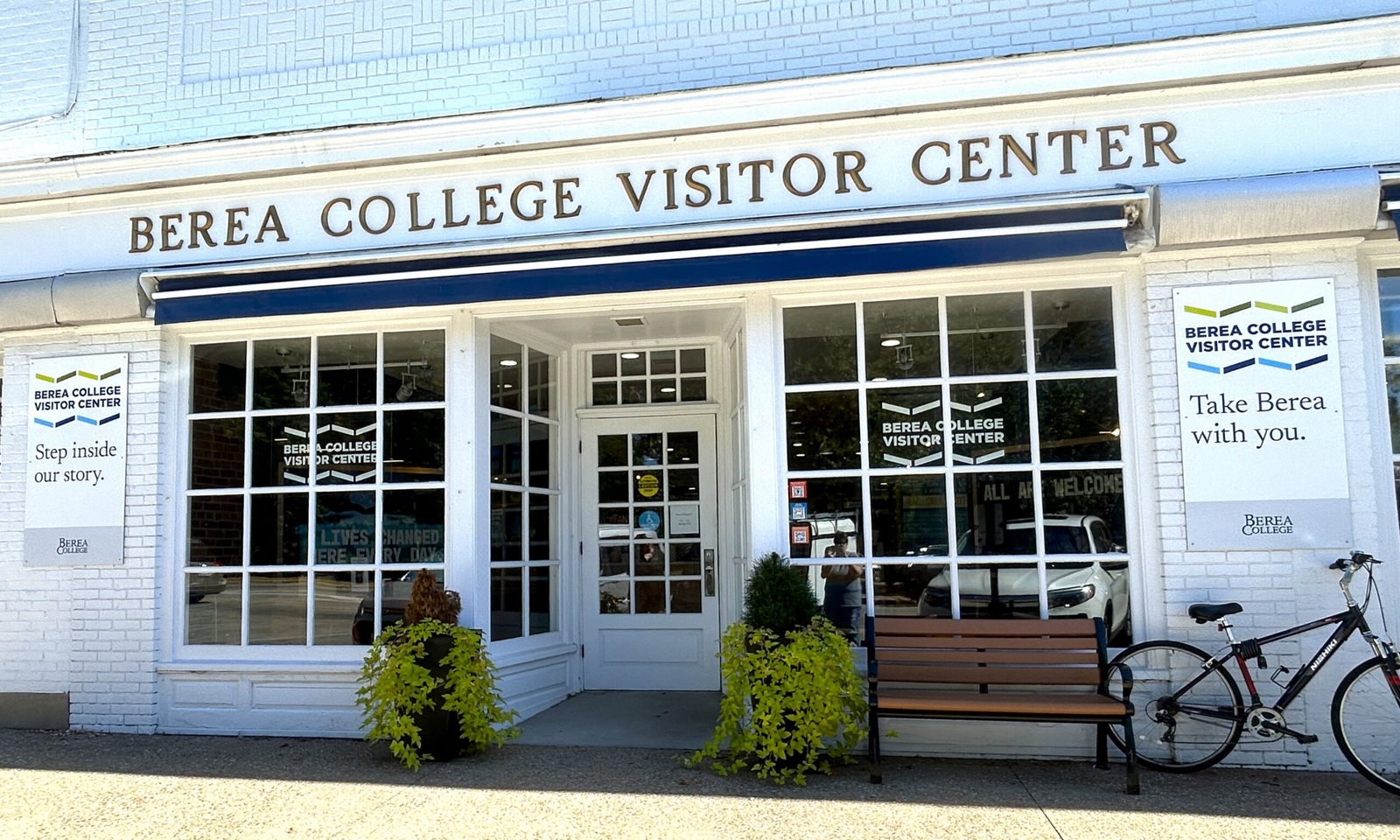
The Berea College Visitor Center in College Square was transformed in 2026.
Inside the New Berea College Visitor Center: More Than You Might Expect
Why this newly transformed space in Berea, Kentucky, deserves a stop—and why I left wanting to discover more.
I went to Berea College for one reason: to see the newly transformed Visitor Center that opened in August 2026.
What I didn’t expect was just how much I would learn about this remarkable Kentucky institution.
You don’t have to be a student, a prospective student or a college parent to find something worthwhile at Berea College.
If you’re visiting Berea—or even passing through—make time to stop at the Visitor Center. It’s an excellent place to begin.
A Visitor Center That Makes You Want to Learn More
I’ve known about Berea College for years, but my recent visit introduced me to traditions, programs and places that surprised me.
I toured the new Visitor Center, explored the Student Craft production studios, stepped inside the Loyal Jones Appalachian Center and visited the campus library.
I came away with an even longer list of reasons to return.
Located in College Square in downtown Berea, the reimagined Berea College Visitor Center opened on August 3, 2026.
The redesign was intended to bring the college’s story to life and give visitors a deeper connection to its mission.
And I have to say, I was incredibly impressed.
This isn’t just somewhere to pick up a brochure or ask for directions.
The center doesn’t simply tell you what Berea College is. It invites you to become curious about why Berea is different—and what you might explore next.
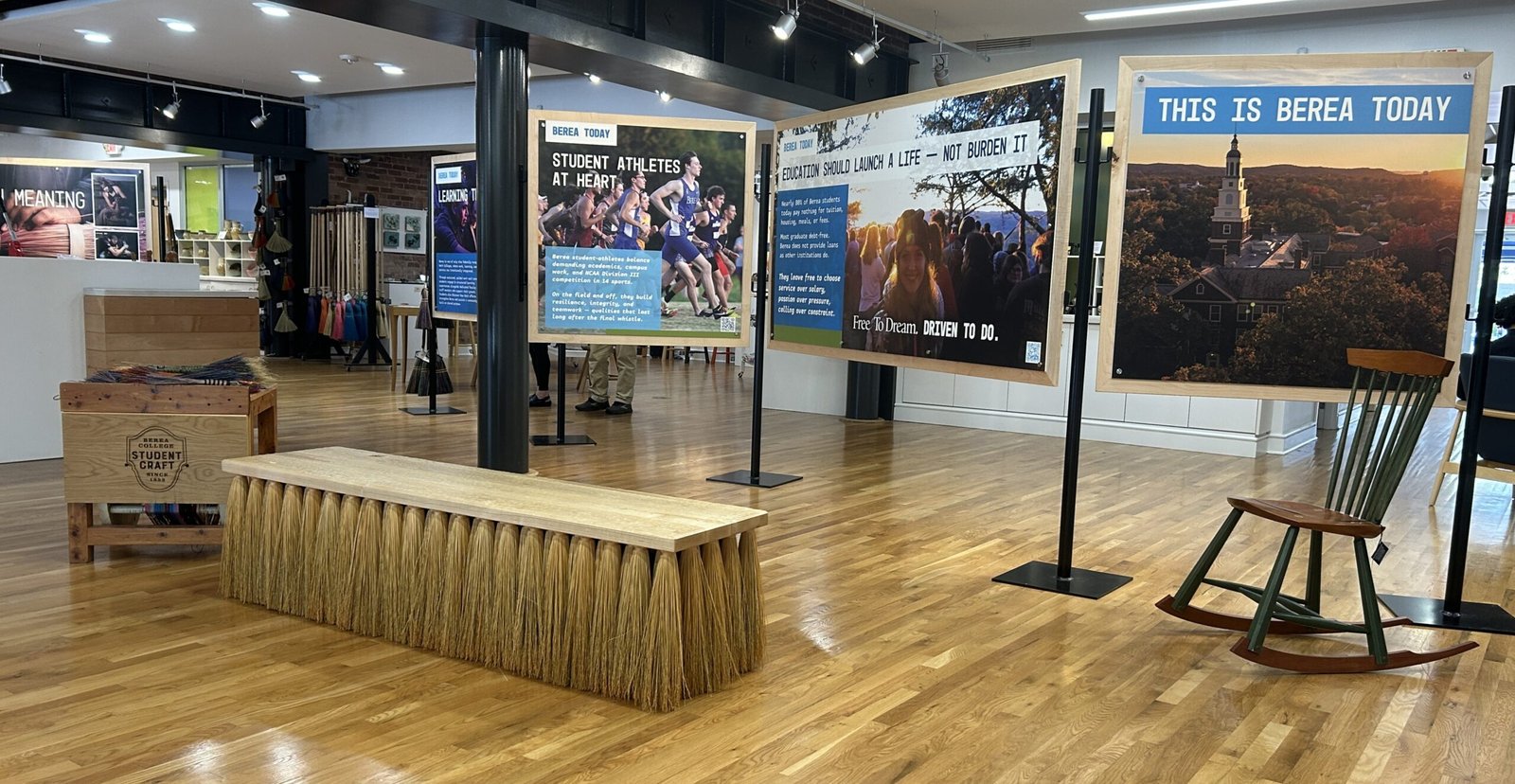
The transformed Visitor Center invites guests to explore Berea College’s people, mission and traditions.
Students Help Tell the Berea Story
One detail I particularly appreciated was how involved students are in the Visitor Center itself.
Several students work there, and I saw displays that had been researched and designed by students.
That stood out to me.
The students aren’t just learning the college’s history—they’re participating in how that history is presented to guests.
It also helps explain the character of Berea’s educational approach.
The college’s tuition-free model is paired with a student work program, giving students opportunities to learn through practical experience.
That relationship between learning and doing appeared again and again during my visit.
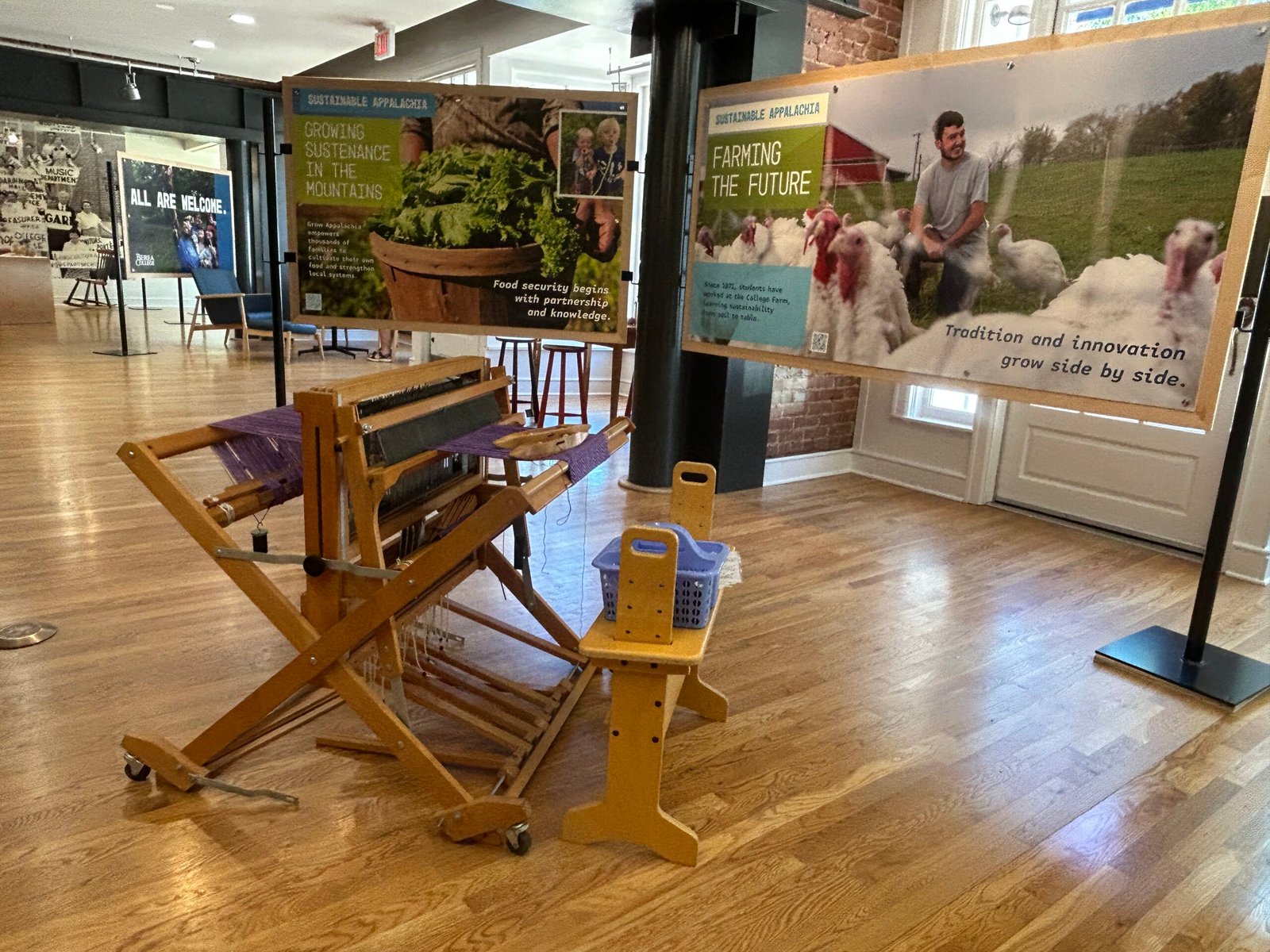
A loom and Appalachian agriculture exhibits connect traditional skills with sustainability and learning.
Appalachian Heritage Is Part of the Story
Even the exhibits about agriculture and Appalachian traditions offered more than historical context.
One display paired a traditional wooden loom with panels exploring growing food in the mountains and the future of farming.
The idea of connecting generations of knowledge with today’s challenges was especially compelling.
Berea College Student Craft: A Highlight of My Visit
If you have a chance to tour the Student Craft studios, do it. It will blow your mind.
Of everything I experienced beyond the Visitor Center, the Berea College Student Craft production studios left one of the biggest impressions.
I was able to see the craft area during my tour, including a student working at a large wooden weaving loom.
The bright strands of thread and the scale of the equipment gave me a new appreciation for the skill involved in making each piece.
Berea’s student craft tradition dates to 1893.
Today it combines design education and hands-on making through work in areas such as weaving, broomcraft, ceramics and woodcraft.
And this is what I kept thinking about: when you buy a handmade Berea College product, you’re buying much more than a broom, a blanket or a mug.
You’re taking home something shaped by the work, attention and creativity of the student who made it.
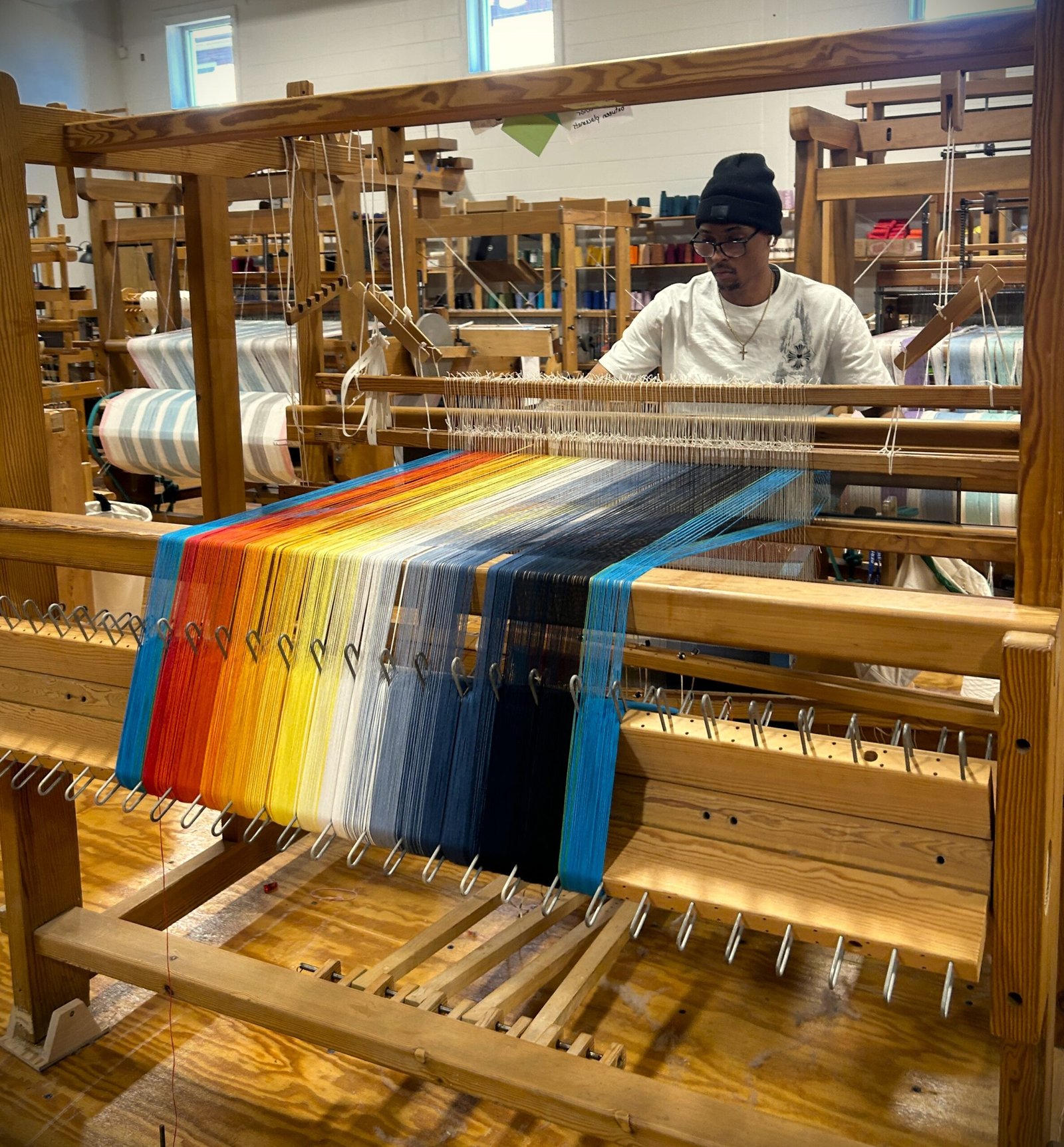
A student works at a loom in the Berea College Student Craft weaving studio.
A Tradition Worth Seeing in Person
The weaving studio made the relationship between education and craft feel especially tangible.
Seeing the loom in use helped me understand the scale, concentration and skill behind the finished textiles displayed elsewhere on campus.
The finished product matters—but so does the process behind it.
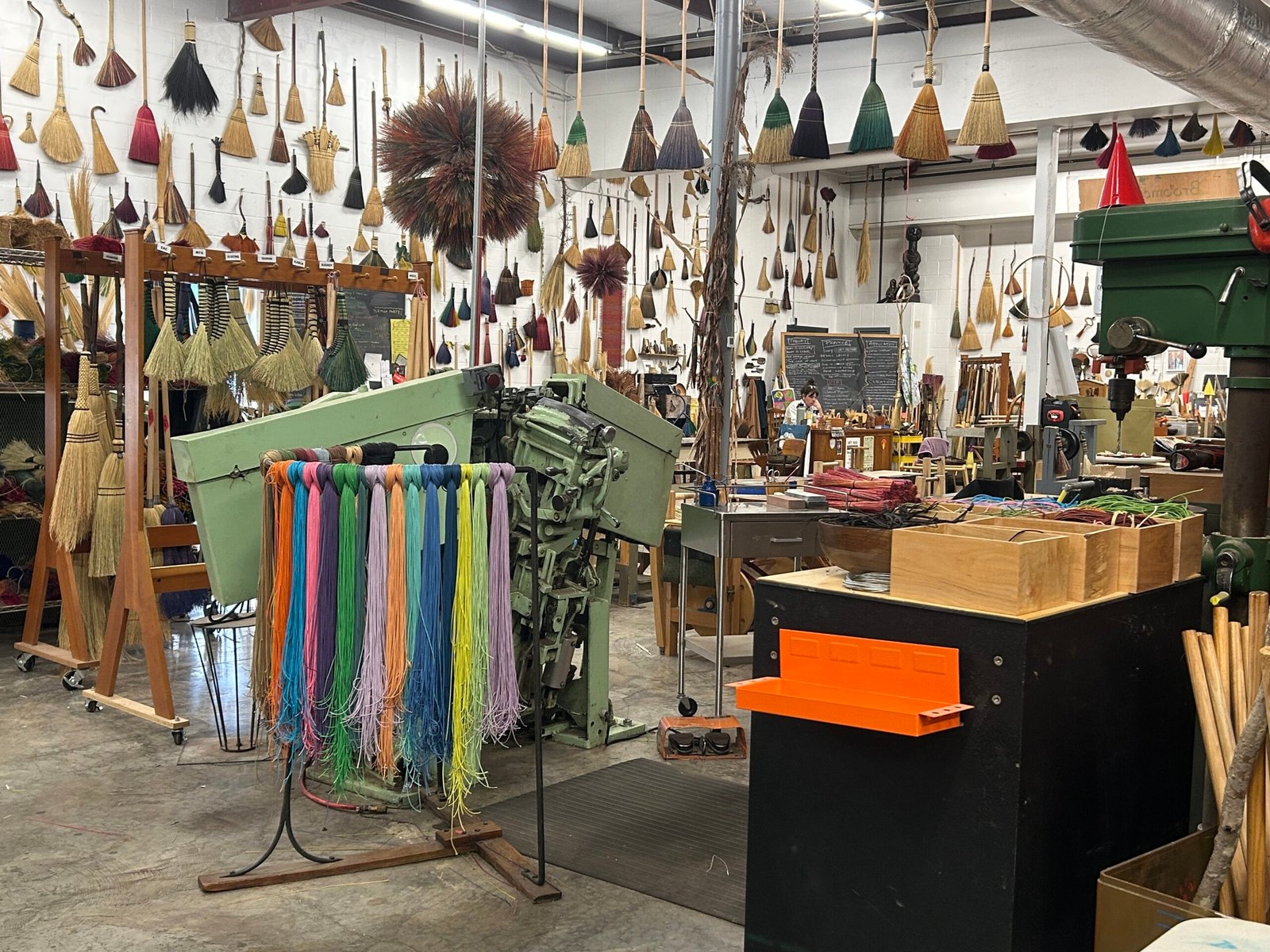
Inside the Student Craft broommaking workshop, colorful materials and handmade brooms reveal the work behind each piece.
A National Design Award—and a Tradition Worth Celebrating
Another discovery that genuinely impressed me: Berea College Student Craft received the 2026 Cooper Hewitt National Design Award for Product Design, presented by Cooper Hewitt, Smithsonian Design Museum.
The recognition honors forward-thinking work in product design.
Berea College became the first educational institution to receive the award in this category.
Think about that—a student craft tradition more than 130 years old is being recognized nationally for contemporary design.
Walking through the broommaking workshop, with handmade brooms hanging in seemingly every direction and colorful materials waiting to become finished products, made the achievement feel tangible.
These aren’t just objects on a shelf. They’re the result of learning, experimentation and hard work.
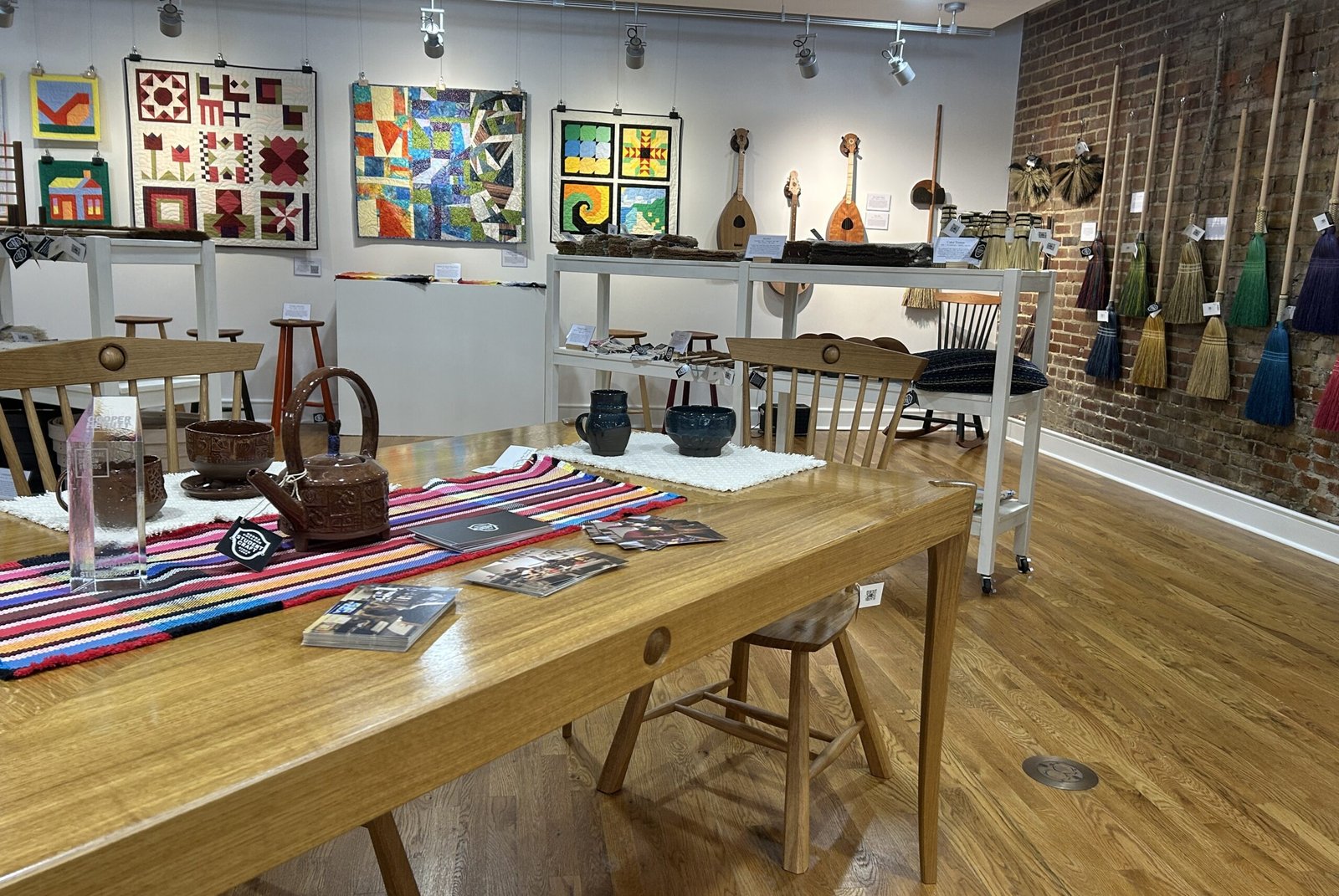
The Visitor Center retail shop displays an array of Berea College Student Craft products.
Take Something Meaningful Home at the Visitor Center Shoppe
Back at the Visitor Center, the retail shop makes a lovely connection between the stories visitors have just learned and the work students create.
The shop offers Student Craft products, including textiles, pottery, furniture and brooms, along with Berea College merchandise.
The shop is the college’s exclusive physical retail location for Berea College Student Craft products.
I particularly enjoyed seeing the finished work displayed together.
A colorful woven runner, pottery on a wooden table, quilts on the wall and rows of brooms all reflected different forms of craftsmanship.
If you’re shopping for a gift or a keepsake, this is a place where what you purchase can carry a much deeper story.
And if you need a refreshment while exploring College Square, the Visitor Center also has a fresh-fruit smoothie bar.
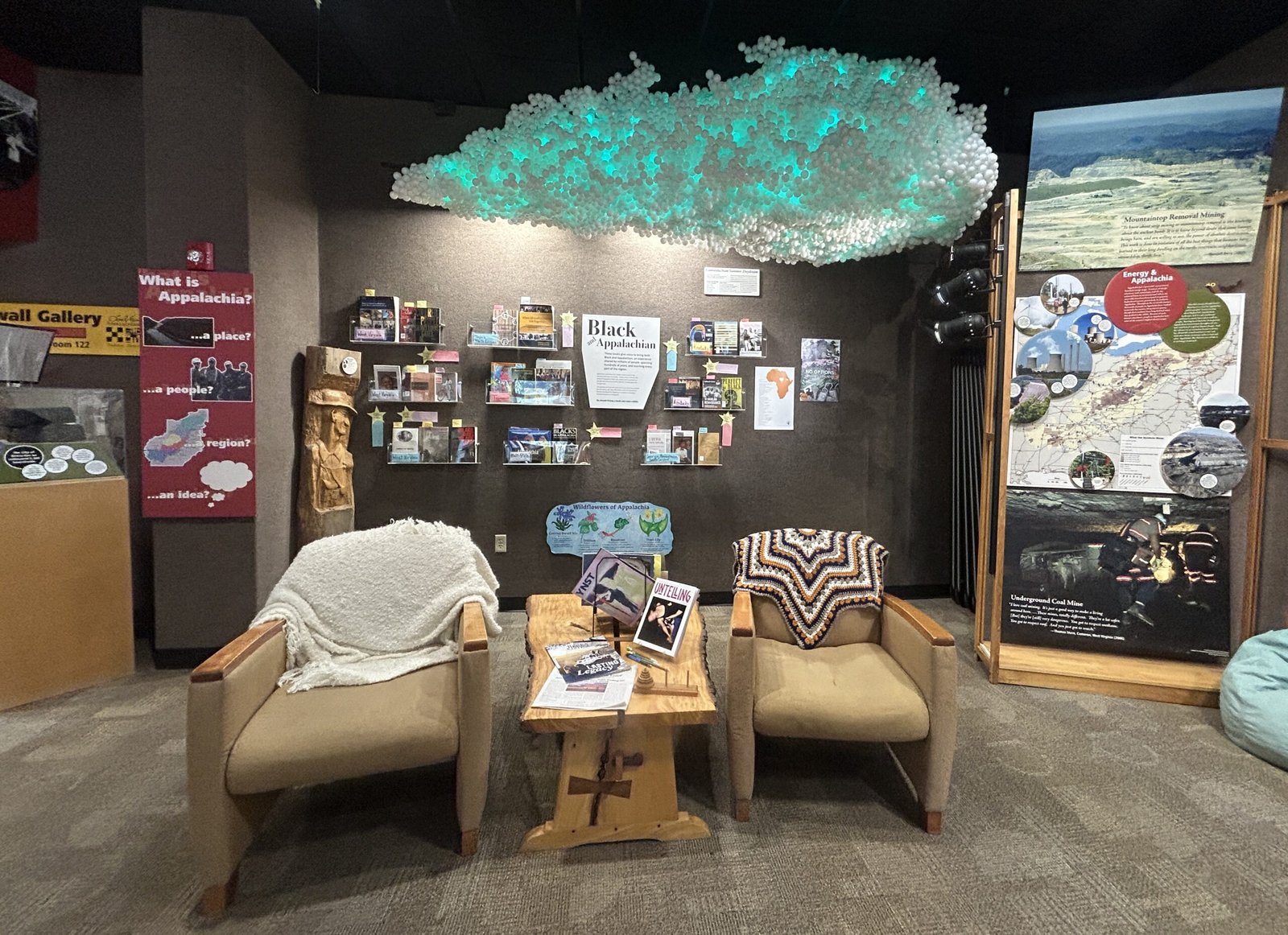
The Loyal Jones Appalachian Center offers exhibits exploring the many stories and perspectives of Appalachia.
Discover Appalachia at the Loyal Jones Appalachian Center
Another stop during my visit was the Loyal Jones Appalachian Center, which gives visitors opportunities to learn about the region’s history, culture and people.
It’s a relatively small gallery, but the exhibits cover substantial ground.
I saw displays touching on Appalachian identity, Black Appalachia and the region’s energy history.
I also learned about temporary exhibits developed and presented by students.
I love finding places that challenge visitors to think beyond familiar stereotypes.
The Appalachian Center does that through interpretation, artifacts and educational programming.
The gallery is free to visit. It generally welcomes visitors on weekdays from 8 a.m. to 5 p.m., although college classes and events can affect access.
If you’re interested in special programs or guest speakers, the Center’s website includes information about its monthly newsletter, The Gravy Infusion.
Walk the Campus—and Ask About a Tour
The Visitor Center is also a starting point for learning more about Berea College’s campus.
I toured part of the campus and had the chance to see the library, and I’d encourage visitors to explore beyond College Square if their schedules allow.
During my visit, I learned about a historical walking tour described as approximately 50 minutes and three-quarters of a mile, along with a self-guided option.
I also learned about opportunities to visit Student Craft production studios.
Because tour availability and arrangements can vary, I recommend contacting the Visitor Center before you go.
What makes this campus interesting to explore is how history, education, crafts and the landscape all fit together.
Whether you’re interested in architecture or simply enjoy wandering through an attractive college campus, it deserves some time.
More Than 2,600 Campus Trees
The figures shared with me during my tour were 2,682 trees and more than 100 tree species.
I was also surprised by what I learned about the campus trees.
During my tour, I was told that Berea College has maintained Tree Campus recognition for more than 15 years and has the longest consecutive recognition of any campus in Kentucky.
Even more interesting, students do much of the work involved in caring for the trees through the college’s work program.
The trees are beautiful, of course, but they also provide another example of Berea’s hands-on approach to education.
I’m looking forward to returning with my camera to capture more of the campus architecture, pathways and trees.
Berea College Farm Store
One more place worth adding to a Berea itinerary is the Berea College Farm Store.
I haven’t photographed the store yet, but I learned that it sells fresh produce, eggs, meats and other foods produced through Berea College’s agricultural operations, along with products from nearby farms and businesses.
Its student workers gain experience in food production, preparation and retail operations.
For visitors interested in local food, farming or how a college work program operates outside the classroom, this sounds like a worthwhile stop.
Planning tip: The Farm Store is at 311 North Main Street and currently lists hours of Tuesday through Friday, noon to 6 p.m., with a Tuesday closure from 4 to 5 p.m. for student meetings.
It’s separate from the Visitor Center, so check its current hours before adding it to your itinerary.
Why I Want to Return: The Berea College Art Collection
There’s another discovery I haven’t experienced in person yet: the Berea College Art Collection.
According to the college, the collection includes more than 16,500 works and is the largest university art collection in Kentucky.
It is connected with the Doris Ulmann Galleries, which organize exhibitions and make selections from the collection accessible to visitors.
As someone who loves photography and the arts, I’m especially curious to see what is on display.
I didn’t get the opportunity to explore the galleries on this visit, and I won’t pretend otherwise—but they’ve earned a place on my return-visit list.
A permanent collection isn’t necessarily on full display at once. Check the galleries’ current exhibitions, access information and photography rules before visiting.
Berea College Visitor Center
If your time in Berea is limited, start with the Visitor Center.
Even a shorter visit can introduce you to parts of the college you might otherwise overlook.
My Tips for Visiting Berea College
Hours and tour arrangements may change for holidays or college events, so verify them before making a special trip.
Is the New Berea College Visitor Center Worth Visiting?
Absolutely.
I visited specifically to see what had changed at the Visitor Center.
I left with a new appreciation for the many ways Berea College connects education, student work, craftsmanship, Appalachian culture and community life.
Most of all, I left surprised by how much I had learned—and how much the college has to offer people who simply want to visit.
The best visitor experiences make you want to keep exploring. This one did exactly that for me.
So whether you’re planning a weekend in Berea, driving through central Kentucky or looking for a new place to explore close to home, stop by the Berea College Visitor Center.
You may discover something unexpected.
And you just might leave planning another visit, too.
Have you explored Berea College or its Student Craft studios? What surprised you most?
About Angela
Angela Addington is the travel photographer and writer behind Lenses & Latitudes. She shares firsthand destination guidance and practical photography advice for independent and solo travelers, women over 50, road-trippers and weekend explorers. Learn more about Angela.