
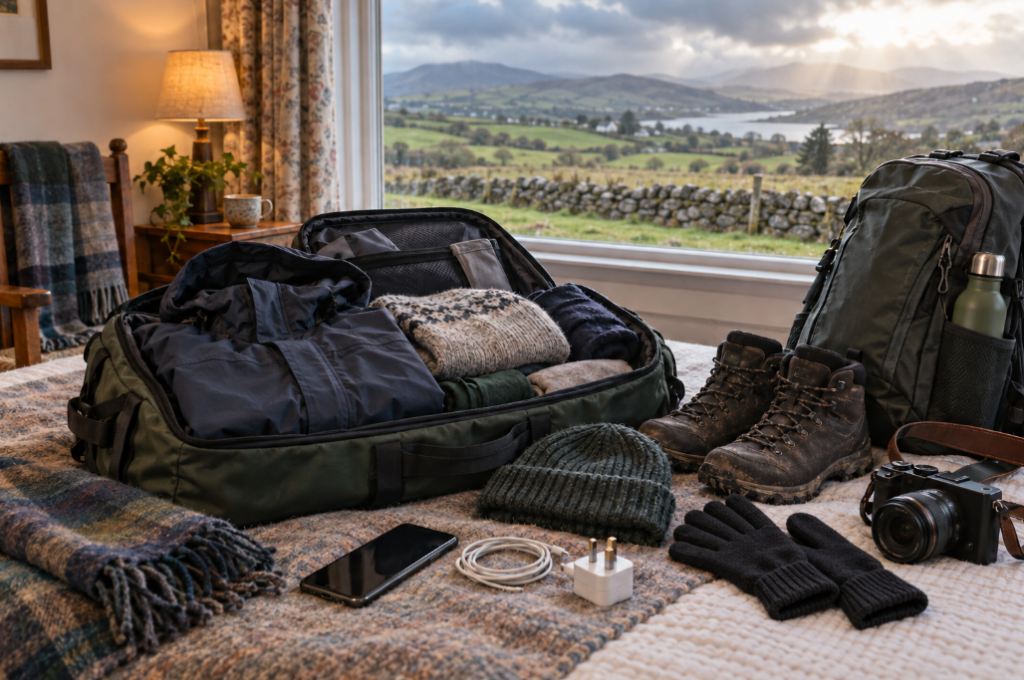
Travel Essentials for an Irish Adventure in Winter
What worked during my nine-day guided trip through Ireland in late January and early February—and what I would pack again.
Beautiful, Uncrowded and Wonderfully Unpredictable
Ireland in winter is beautiful, uncrowded and wonderfully unpredictable. During my nine-day guided tour in 2025, my brother and I traveled from Dublin through western and southern Ireland. We experienced rain, wind, sunshine and rapidly changing conditions—sometimes during the same day.
If Dublin is part of your Ireland itinerary, you may also want to save my guide to hidden bookshops and cafés in Dublin for independent bookstores, literary stops and tucked-away cafés to explore while you are in the city.
Visiting in late January and early February had real advantages. Our tour group was smaller, attractions were not crowded, and we could usually enter restaurants without long waits. The tradeoffs were shorter daylight hours, limited time at some outdoor stops and temperatures that felt noticeably cooler once the sun began to set.
Packing for this kind of trip is less about bringing one extremely heavy coat and more about building flexible layers. Here is what worked for me, what I would pack again and what travelers should know before taking a winter trip to Ireland.
Quick Ireland Winter Packing Checklist
For a nine-day winter trip, these are the items I would prioritize. Use the boxes as a quick visual checklist while you pack.
What Ireland’s Winter Weather Was Really Like
The weather changed constantly during our trip. We had rain, wind, cloudy skies and occasional stretches of sunshine. Some days changed from one condition to another within a few hours.
That variability is why I recommend dressing in layers rather than trying to predict the exact weather from the morning forecast.
Before leaving each day, check the current forecast from Met Éireann, Ireland’s national meteorological service.
Plan for change. A dry morning does not guarantee a dry afternoon, and a mild day can feel much colder once the sun goes down.
Pack Layers Instead of One Heavy Outfit
Layering was the most important part of staying comfortable during our winter trip.
I found it much easier to adjust when I could remove or add one piece at a time rather than relying on a single heavy coat.
Comfortable shirt or top that can be worn indoors.
Sweater, fleece or other insulating layer.
Choose a lighter or heavier jacket depending on the day’s conditions.
Add a waterproof outer layer when rain is expected.
I packed both a lighter jacket and a heavier jacket. That gave me enough flexibility to adapt instead of wearing the same coat regardless of conditions.
Bring a Hooded Waterproof Raincoat
A hooded raincoat was one of the most useful things I packed.
I originally considered relying on an umbrella, but the wind made a hood much more practical. A hood kept both hands free for photography and eliminated another item to carry.
Rain was often accompanied by wind. The hood stayed with me, while an umbrella would have been one more thing to manage during sightseeing stops.
Wear Waterproof Shoes With Good Traction
I wore waterproof hiking boots through much of the trip, and I would pack them again.
We walked on city streets, uneven paths, damp outdoor surfaces and areas where good traction made a noticeable difference.
I would also bring a second pair of comfortable shoes so the boots have time to dry if they become especially wet.
Pack a Warm Hat, Gloves and Good Socks
A few compact cold-weather accessories made a noticeable difference once temperatures dropped.
A warm hat and gloves were easy to keep in my daypack and simple to pull out when needed.
If you use your phone frequently for photographs, choose gloves that allow you to operate the touchscreen or are easy to remove quickly.
Use Ireland’s Limited Winter Daylight Carefully
Short daylight hours were one of the biggest tradeoffs of visiting Ireland in late January and early February.
If you are traveling independently, schedule outdoor landscapes and photography priorities as early as possible. Save museums, pubs, restaurants and other indoor activities for late afternoon and evening.
A guided tour handled much of that scheduling for us, but I still needed to be ready to photograph quickly when we reached an outdoor stop. There was not always time to study every angle or wait for the light to change.
7 Spectacular Day Trips from Galway in Winter → Find ideas that work well with a western Ireland itinerary.Carry a Practical Day Backpack
I traveled with both a checked suitcase and a carry-on, but my small backpack was the bag I used every day. It kept essentials available on the bus and was easy to carry while walking around tour stops.
My day backpack usually contained:
The plastic bag protected ticket stubs and brochures from damp weather and kept them together until I could organize everything at the hotel.
Avoid overloading your daypack. You will carry it through attractions, restaurants and outdoor stops, so every unnecessary item becomes extra weight.
Adapters, Charging and Winter Travel Technology
Bring a Type G Adapter
Ireland uses Type G electrical outlets, so travelers from the United States need a compatible adapter.
Remember that a plug adapter changes the shape of the plug—it does not automatically convert voltage. Check the labels on your phone, camera and other chargers before traveling.
Keep a Portable Charger in Your Daypack
A portable charger was important because I primarily photographed with my phone. Long sightseeing days, navigation, photographs and regular phone use can drain a battery quickly.
Keep the charger and cable in your daypack rather than packed underneath the bus. Follow your airline’s current rules regarding where power banks must be carried during flights.
Decide When Your Phone Is Enough
Although I brought my Nikon, I primarily used my phone during the trip. It was faster to access and easier to protect when the weather was unsettled. I carried the Nikon on clear days when rain was not expected.
That approach kept photography enjoyable without making every wet-weather stop a struggle to protect larger equipment.
For winter travel photography, consider carrying:
Consider a Guided Tour
I recommend a guided tour for a first visit to Ireland. My brother and I could watch the scenery, listen to the guide and enjoy the experience without worrying about navigating unfamiliar roads or continually checking maps.
Because we were passengers, we noticed far more of the country along the way. The smaller winter tour group also made the experience especially pleasant.
A guided tour does not eliminate every planning concern—you still need to pack for daily weather changes and be ready when the bus stops—but it removes much of the transportation stress from a first visit.
Is Ireland Worth Visiting in Winter?
Ireland in winter is a matter of tradeoffs.
The shorter days and unpredictable weather can reduce the amount of time available at outdoor attractions. Travelers must also be comfortable sightseeing in rain and wind.
We encountered very few crowds. Restaurants and attractions were easier to enter, and our smaller tour group made getting on and off the bus simpler.
For travelers who value quieter experiences more than long daylight hours, winter can be a rewarding time to visit.
Frequently Asked Questions About Packing for Ireland in Winter
Do I need a heavy winter coat in Ireland?
Bring a heavier jacket, but do not rely on it alone. A lighter jacket, insulating layers and a waterproof outer layer give you more flexibility as conditions change.
Should I pack an umbrella for Ireland?
I found a hooded raincoat more practical because of the wind. It kept my hands free and eliminated one more item to carry and keep track of.
Are waterproof boots necessary?
Waterproof hiking boots worked well for my trip. They kept my feet dry while providing traction and support on wet streets and outdoor paths.
Is a guided tour a good choice in winter?
A guided tour can be especially helpful for a first visit. It removes the need to navigate unfamiliar roads and lets everyone concentrate on the landscape. Winter tours may also have smaller groups, although group size will vary.
Is nine days enough for Ireland?
Nine days gave us time to begin in Dublin and travel through western and southern Ireland. It provided a helpful introduction to the country, though the shorter winter days limited how much time we could spend at some outdoor stops.
Final Thoughts on Packing for Ireland in Winter
The most valuable things I packed were not complicated: layers, waterproof hiking boots, a hooded raincoat, a warm hat, gloves and a well-organized day backpack.
Prepare for the weather to change, keep your daily essentials within reach and prioritize outdoor activities while daylight is available. Ireland’s winter weather may not cooperate with every plan, but the smaller crowds and quieter attractions can make the season surprisingly enjoyable.
About Angela
Angela Addington is the travel photographer and writer behind Lenses & Latitudes. She shares firsthand destination guidance and practical photography advice for independent and solo travelers, women over 50, road-trippers and weekend explorers. Learn more about Angela.
Pack for Change, Not for Perfect Weather
Rain can turn to sunshine, calm weather can become windy, and a comfortable afternoon can feel much colder as daylight fades.
Flexible layers, waterproof footwear and a few carefully chosen essentials made it much easier for me to enjoy Ireland as it was—not spend the trip wishing the weather were different.

Pingback: 5 Hidden Gems in Dublin Beyond the Tourist Trail
Pingback: 7 Spectacular Day Trips from Galway in Winter - Lenses and Latitudes