
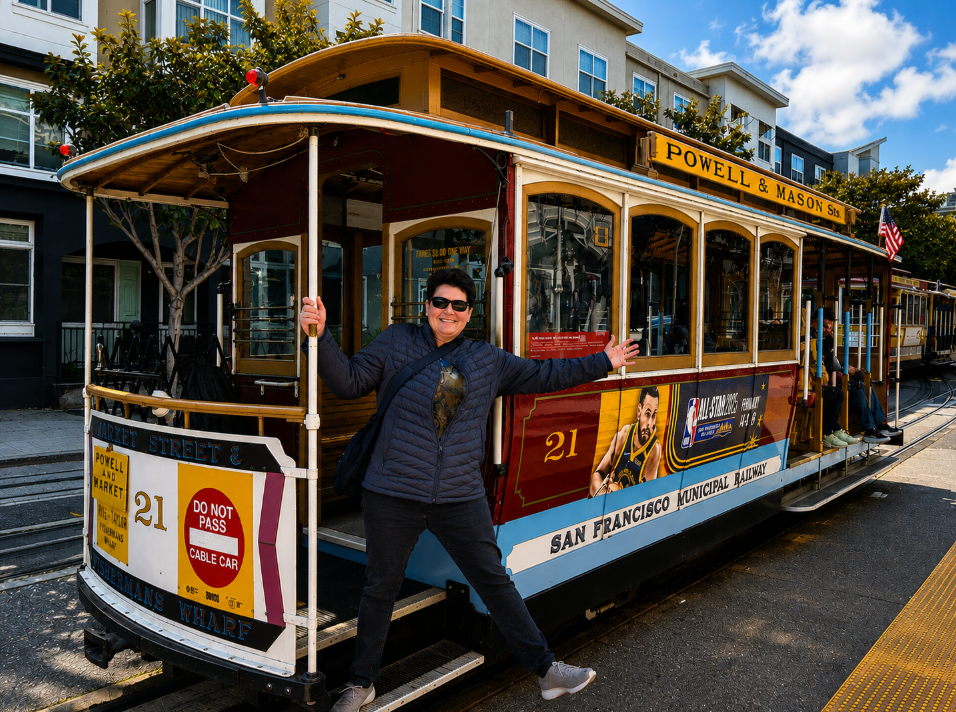
Riding a San Francisco Cable Car
The clang of the bell, steep hills, open-air seating and views unfolding between city buildings make riding a cable car one of San Francisco’s most recognizable experiences.
But cable cars are not simply tourist attractions. They are part of the city’s public transportation system and have carried passengers through San Francisco since 1873.
How Do You Ride a San Francisco Cable Car?
Choose one of the three routes based on where you want to go, buy the appropriate fare or Visitor Passport, board at a terminal or marked cable-car stop, and follow the conductor’s instructions once aboard.
For a first ride, boarding at a terminal can be easier because cars may already be full when they reach stops farther along the route.
I rode both the Powell–Hyde and Powell–Mason lines in 2025, using the cable cars for sightseeing as well as transportation around the city. After riding both, I wouldn’t choose one universally over the other—the better route really depends on where you’re trying to go.
How to Ride a San Francisco Cable Car in 5 Steps
Pick the line that best matches where you want to go.
Compare a single ride with a Visitor Passport based on how much Muni transportation you expect to use.
Terminals offer a better chance of getting aboard a busy car.
Powell–Hyde and Powell–Mason share part of their route, so make sure you are boarding the correct line.
Follow the crew’s instructions and enjoy one of San Francisco’s most distinctive forms of transportation.
Cable Cars, Streetcars and Muni Are Not the Same Thing
San Francisco operates several forms of public transportation under the Muni system, including buses, light rail, historic streetcars and cable cars.
Cable cars move by gripping a continuously moving underground cable. Historic streetcars, including those on the F Market & Wharves line, are powered electrically. If the vehicle is traveling along the Embarcadero past the Ferry Building, it is probably a historic streetcar—not a cable car.
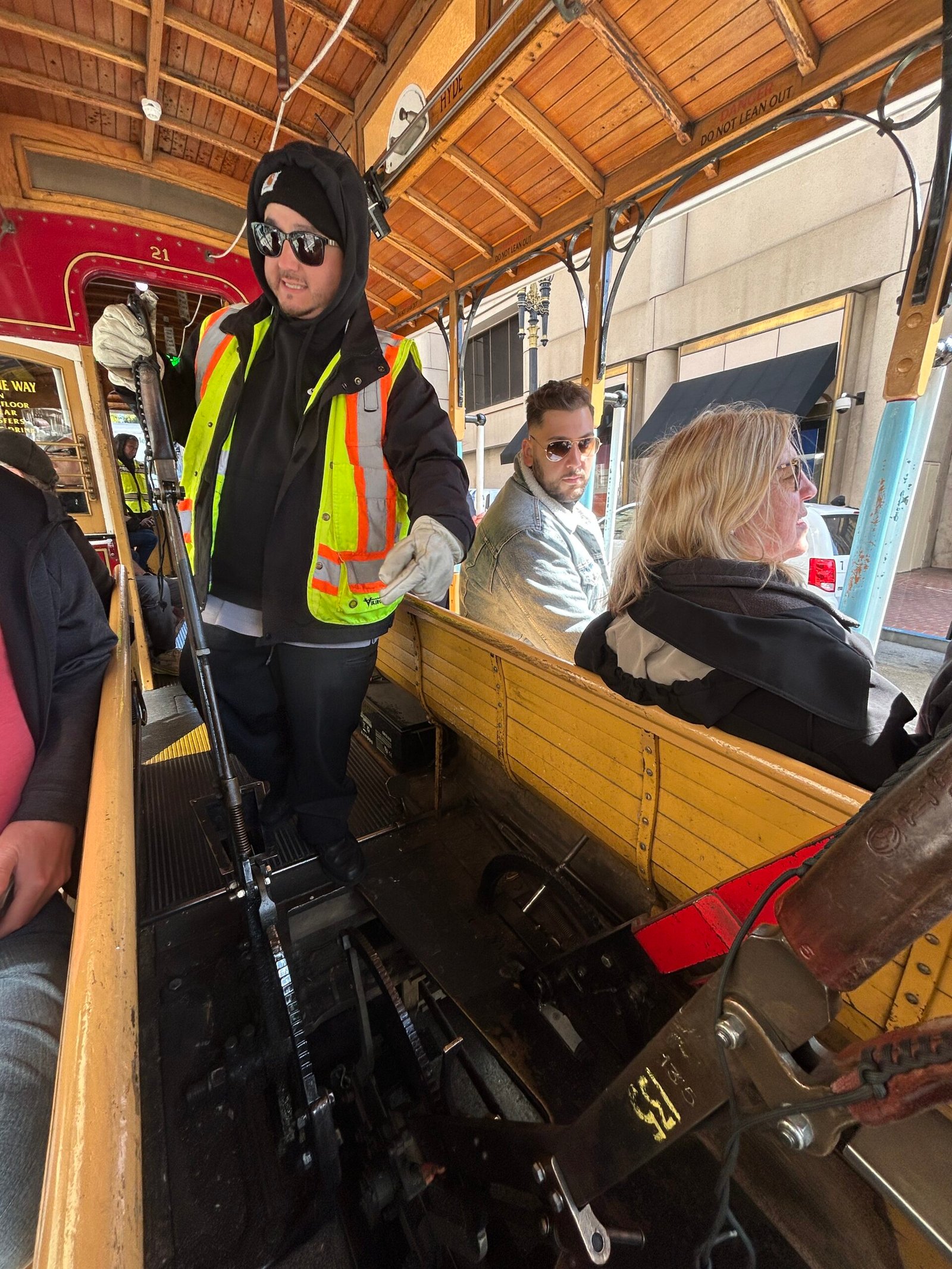
San Francisco’s first cable cars began carrying passengers in 1873. The present three-line system dates to 1957. You can learn more through the SFMTA history of Muni.
Which San Francisco Cable-Car Route Should You Ride?
There are three cable-car lines. Rather than trying to identify one “best” line, choose according to the neighborhoods and attractions you want to reach.
For Lombard Street & Waterfront Views
Runs between Powell and Market streets and Hyde and Beach streets near Aquatic Park and Fisherman’s Wharf.
Good for: Nob Hill, Russian Hill, Lombard Street, Ghirardelli Square and the waterfront.
The Hyde and Lombard stop is near the top of Lombard Street’s famous crooked section.
For North Beach & Fisherman’s Wharf
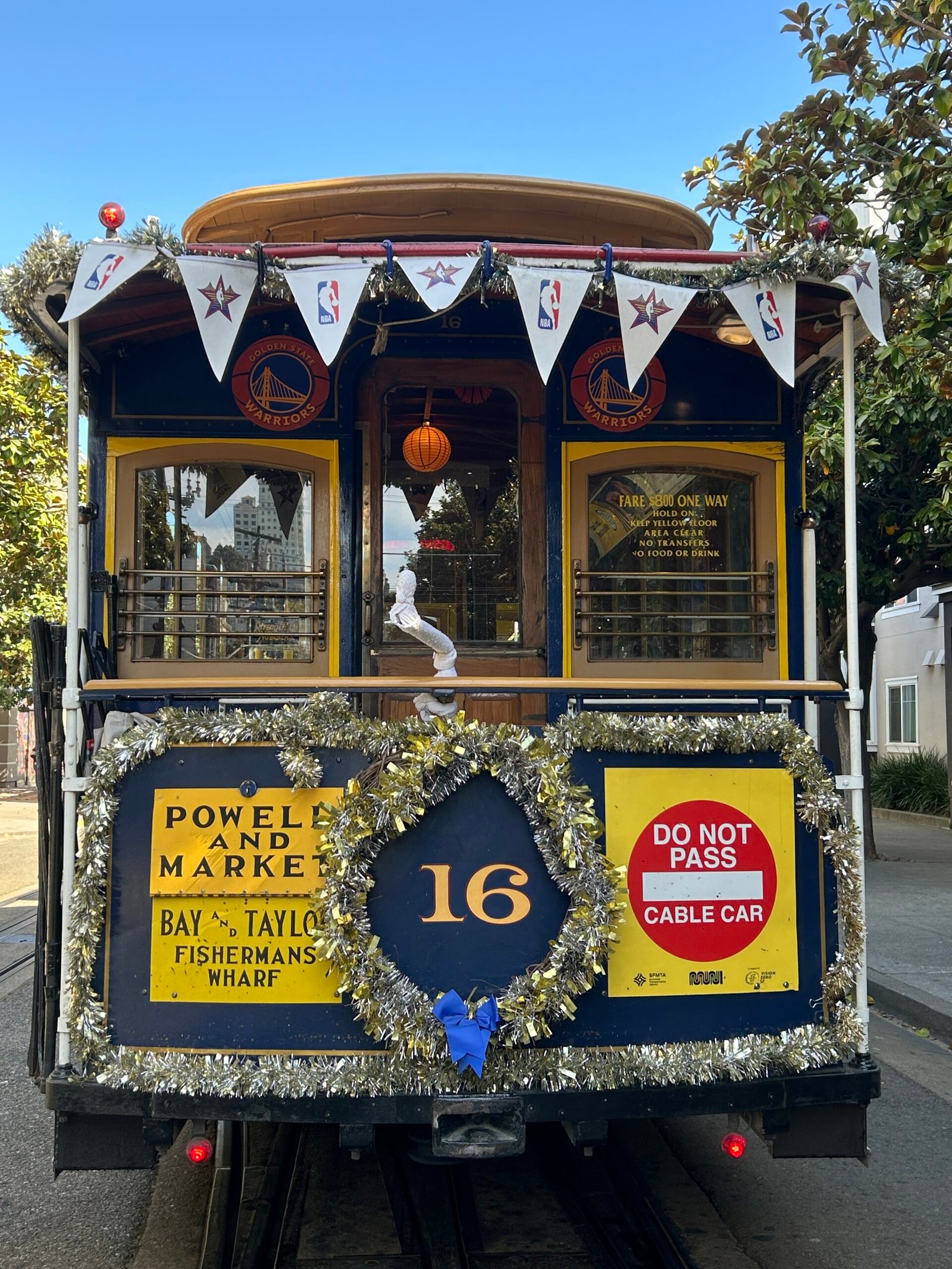
Runs between Powell and Market streets and Bay and Taylor streets in the Fisherman’s Wharf area.
Good for: Chinatown, North Beach, Fisherman’s Wharf and access toward Pier 39.
The Lombard and Columbus stop is several uphill blocks from the crooked section of Lombard Street.
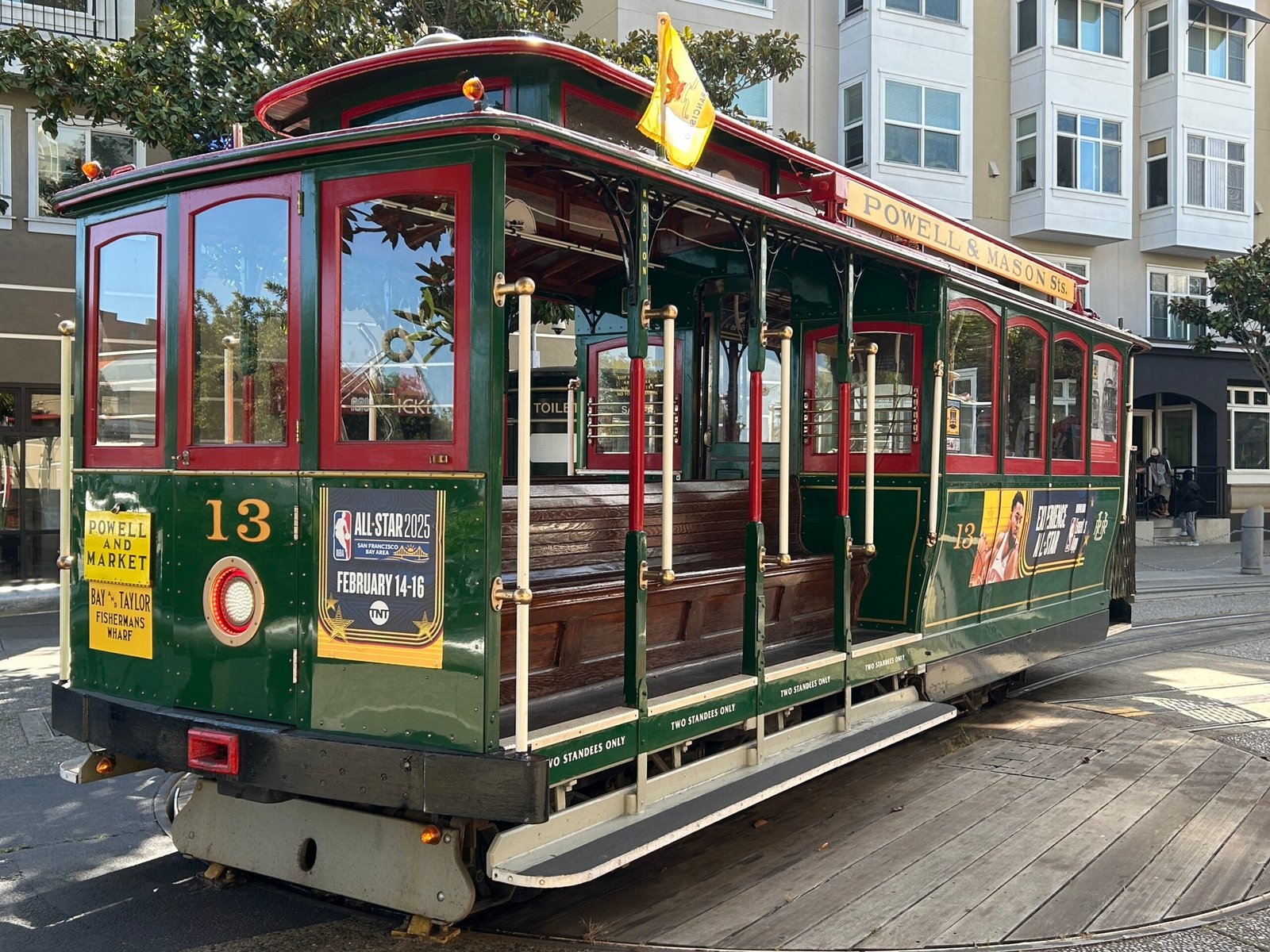
For Nob Hill & Downtown
Runs along California Street between the downtown/Market Street area and Van Ness Avenue.
Good for: Nob Hill, Chinatown and areas near Grace Cathedral.
This route does not travel to Fisherman’s Wharf.
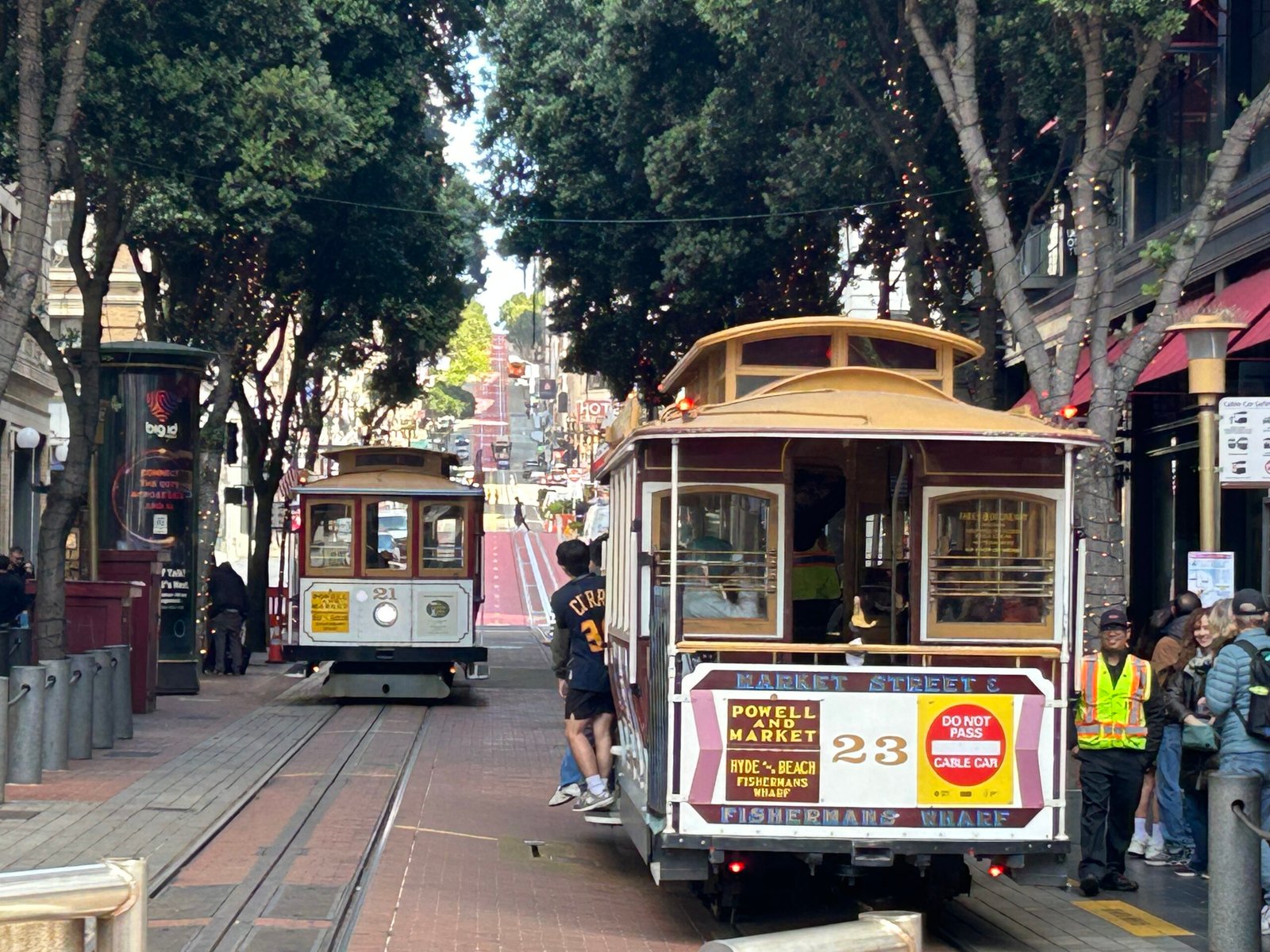
Riding Two San Francisco Cable-Car Lines
I rode both Powell–Hyde and Powell–Mason, and I would recommend either depending on where you want to go in the city.
We used the cable cars both because we wanted the classic San Francisco experience and because they actually helped us get from place to place.
That’s the approach I’d use again: look at your sightseeing plans first, then choose the cable-car route that works with them.
Before your trip, review the official maps and current service information on the SFMTA cable-car page.
How Much Does It Cost to Ride a San Francisco Cable Car?
SFMTA sells individual cable-car rides as well as Visitor Passports that include unlimited cable-car rides and eligible travel on Muni buses, Muni Metro and historic streetcars for the selected period.
A Visitor Passport may make more sense than individual tickets if you plan to ride the cable cars more than once or use other eligible Muni transportation during the same visit.
Visitor Passports do not include BART or other regional transit systems.
SFMTA has approved changes to its cable-car fare structure beginning in January 2027. Because prices and ticket products can change, confirm current rates on the official SFMTA fare page shortly before your trip.
How Do You Pay for a Cable Car?
Cable-car tickets and Visitor Passports remain available through MuniMobile as of September 2026. This is worth clarifying because SFMTA stopped selling ordinary Muni single-ride tickets through MuniMobile on September 1, 2026; individual cable-car tickets and Visitor Passports are still available in the app.
Clipper and other authorized payment options are also available. At nonterminal cable-car stops, cash payment to the operator may be possible with exact change.
At Powell and Market, Hyde and Beach, and Bay and Taylor, follow SFMTA’s advance-purchase requirements during staffed terminal hours. Payment procedures are changing as San Francisco updates its fare system, so check the official cable-car fare instructions shortly before you ride.
Where Should You Board a Cable Car?
You can board at a main terminal or at a marked cable-car stop along the route.
The major terminals include Powell and Market streets, Hyde and Beach streets, and Bay and Taylor streets.
Main Terminal
Better if getting aboard matters most. In my experience, boarding at the main terminals gave us a space on the car. The lines sometimes looked intimidating, but they generally moved more quickly than I expected.
Intermediate Stop
Convenient, but less predictable. We also boarded at stops along the route, but cars were often already full. That meant they couldn’t always take additional passengers.
Away from the terminals, look for the cable-car stop sign. And remember that Powell–Hyde and Powell–Mason share part of the same route, so check the route displayed on the car before boarding.
What Time Do San Francisco Cable Cars Run?
Schedules can change, and traffic, mechanical issues, construction and special events may interrupt service. Check your route and the current Muni alerts on the day you plan to ride.
Where Should You Sit on a Cable Car?
Cable cars have enclosed and open sections. Depending on available space and instructions from the crew, you may be able to sit on an exterior bench or stand while holding one of the exterior poles.
My Pick: The Open Bench
I hung off the exterior pole a few times—which is certainly part of the San Francisco cable-car experience—but after trying it, I preferred sitting outside on the open bench.
I still had the open-air views and atmosphere without hanging onto the side for the entire ride.
If you do stand on the exterior, hold on firmly and never lean away from the car. Follow every instruction given by the grip operator and conductor. If you prefer a more protected ride, choose a seat inside the enclosed section when one is available.
Photography & Video Tips from the Cable Car
For the Moving Ride, I Preferred Video
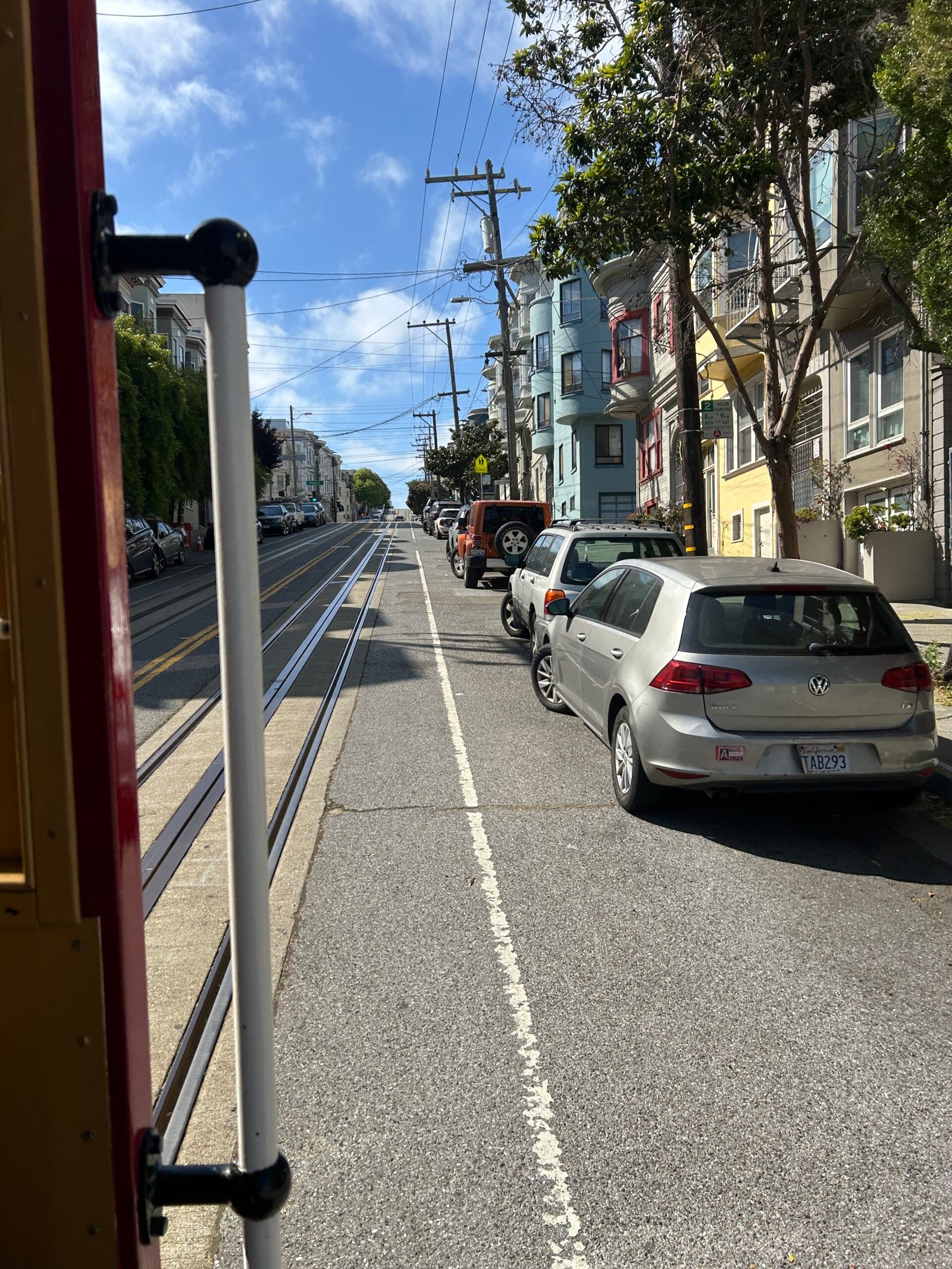
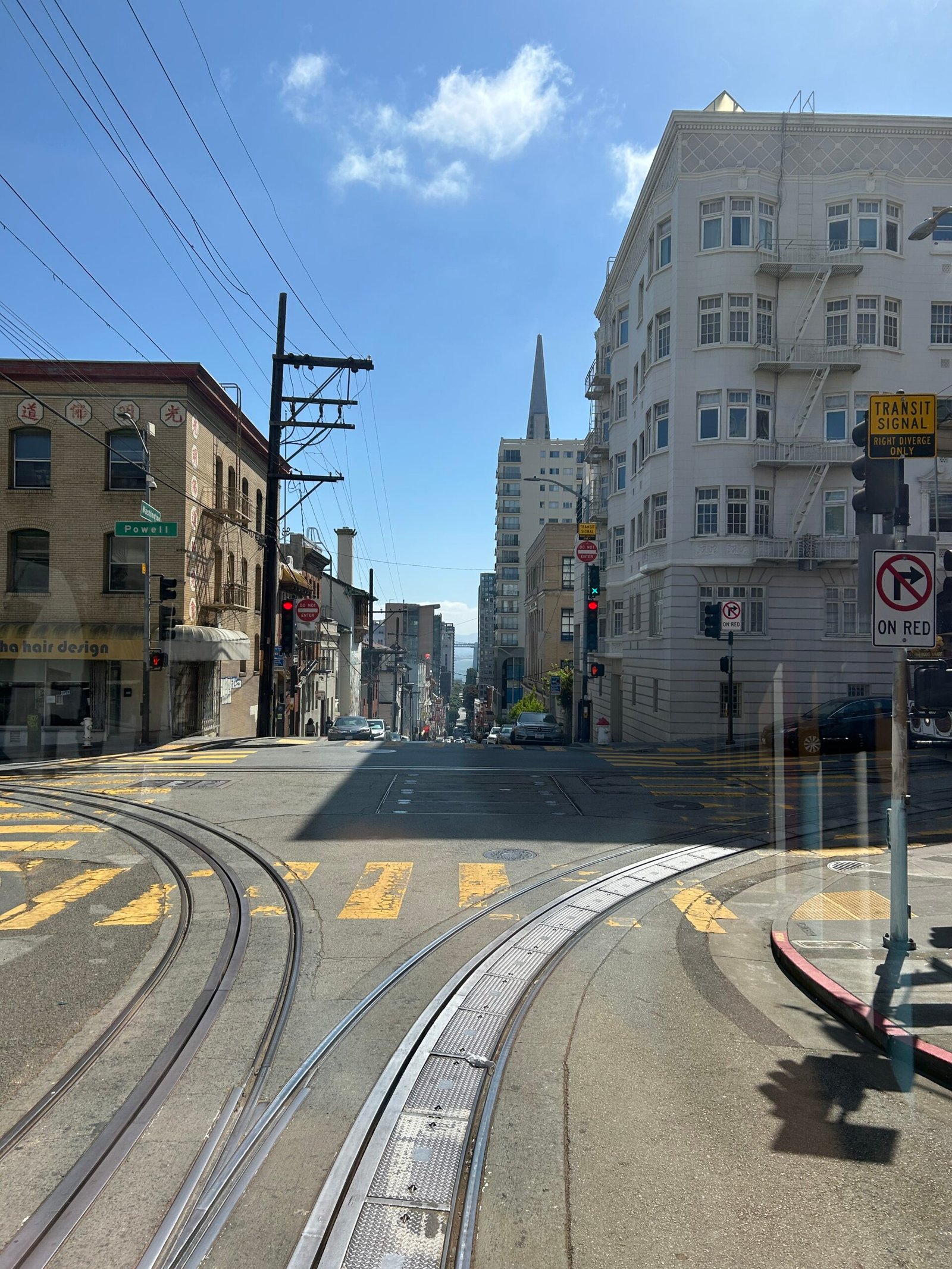
As a photographer, I found video much easier and more enjoyable from the moving cable car than trying to capture still photographs. The ride isn’t always smooth, which can make sharp photos tricky.
Video lets you capture the movement, hills and changing street scenes as they unfold. For sharper still photographs of the cable cars themselves, photograph them while you’re on the street or when the car is stopped.
Whatever you use, keep a secure grip on your phone or camera and never lean your body or equipment outside the safe riding area just to get a shot.
Essential Tips for Your First Cable-Car Ride
Are San Francisco Cable Cars Wheelchair Accessible?
No. SFMTA states that the historic cable cars are not equipped with accessible boarding. Boarding requires steps, and the movement of the vehicle can also be challenging for travelers with balance or mobility concerns.
Travelers who need an accessible alternative should review the SFMTA accessibility information and Trip Planner before traveling.
What About the Cable Car Museum?
The Cable Car Museum is at 1201 Mason Street inside the Washington-Mason cable-car powerhouse and carbarn. Visitors can learn how the system works and see historic cable cars, photographs and mechanical equipment. Admission is free.
I didn’t make it to the museum during this trip, so I can’t give you a firsthand review yet. It’s on my list for the next time I return to San Francisco.
The museum currently lists hours of Tuesday through Thursday from 10 a.m. to 4 p.m. and Friday through Sunday from 10 a.m. to 5 p.m., with Monday closed.
Because museum schedules can change, confirm the latest information on the Cable Car Museum website before visiting.
San Francisco Cable Car FAQ
Which San Francisco cable-car line is best for first-time visitors?
There isn’t one route that’s best for everyone. Powell–Hyde works particularly well for Lombard Street, Ghirardelli Square and the waterfront, while Powell–Mason is useful for North Beach and Fisherman’s Wharf. Choose according to where you want to go.
Can you get on a cable car between the main terminals?
Yes. Cable cars have marked stops along their routes. However, a car may already be full when it reaches an intermediate stop. In my experience, boarding at a terminal was more reliable when getting aboard was the priority.
How much is a San Francisco cable-car ride?
Cable-car fares are set by SFMTA and can change. A fare change is scheduled for 2027, so check the official SFMTA fare page shortly before your visit rather than relying on an older published price.
Can you use a Visitor Passport on San Francisco cable cars?
Yes. SFMTA Visitor Passports include unlimited cable-car rides along with eligible Muni buses, Muni Metro and historic streetcars during the selected period.
Is it better to sit inside or outside?
That depends on your comfort level. I tried hanging onto an exterior pole but ultimately preferred the open bench. It provided the outdoor experience and views while letting me sit down. The enclosed section is a better choice if you want more protection from wind and weather.
Is Riding a San Francisco Cable Car Worth It?
For me, absolutely. I wanted to ride the cable cars because they are such an iconic part of San Francisco, but I also appreciated that we could actually use them to get around the city.
Choose your route based on where you’re going, don’t let a long-looking terminal line automatically scare you away, and give yourself enough time to enjoy the ride.
And if you get the chance to ride outside, that open-air view of San Francisco is hard to forget.
Have you ridden one of San Francisco’s cable cars? Share which route you chose and your favorite part of the ride.
About Angela
Angela Addington is the travel photographer and writer behind Lenses & Latitudes. She shares firsthand destination guidance and practical photography advice for independent and solo travelers, women over 50, road-trippers and weekend explorers. Learn more about Angela.

Pingback: Alcatraz Then and Now: My View 42 Years Later - Lenses and Latitudes