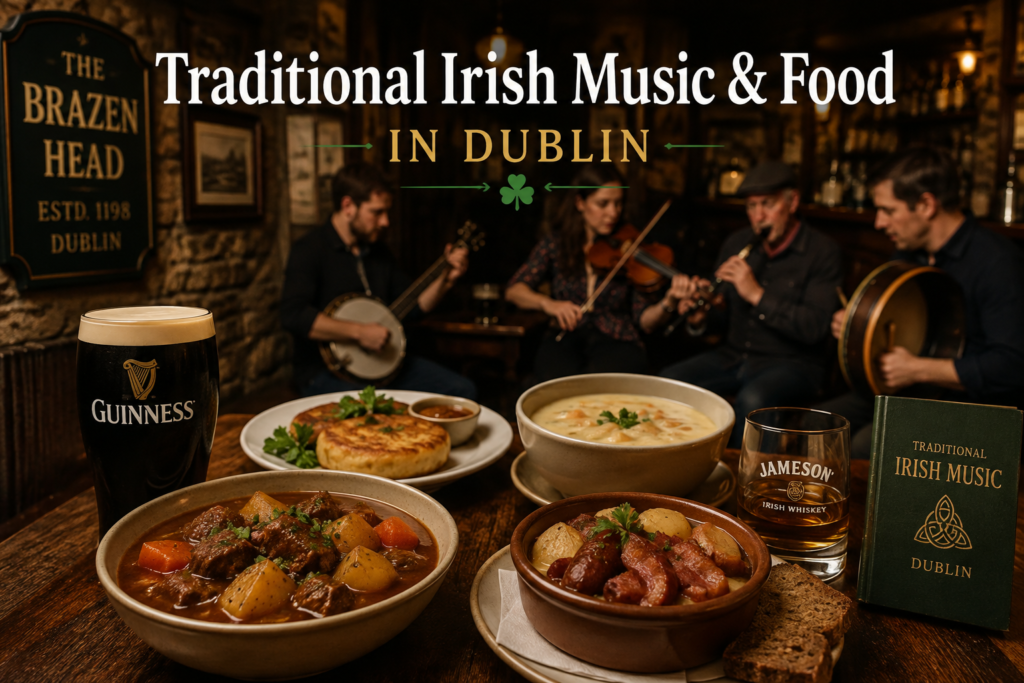
Music, food and pub culture offer several ways to experience Dublin’s living traditions.
Where to Experience Traditional Irish Culture in Dublin
Dublin makes it possible to experience traditional music, classic Irish dishes, Guinness and whiskey history within a relatively compact city centre.
What Are the Best Ways to Experience Traditional Irish Culture in Dublin?
Listen to a traditional music session in a historic pub, try classic dishes such as Irish stew, boxty and Dublin coddle, and learn the stories behind Guinness and Irish whiskey.
Few cities celebrate their cultural traditions as enthusiastically as Dublin.
Whether you’re listening to live traditional Irish music, enjoying a hearty Irish meal or learning about the city’s famous beverages, Dublin offers several ways to experience Irish heritage firsthand.
The key is not to turn the day into a checklist.
Choose the traditions that interest you most and allow enough time to actually enjoy the music, food and atmosphere.
Traditional Irish Culture in Dublin at a Glance
Where Can You Hear Traditional Irish Music in Dublin?
Dublin has traditional Irish music sessions throughout the week, with The Cobblestone, O’Donoghue’s and The Brazen Head among the city’s best-known places to hear live music.
Traditional Irish music remains an important part of Dublin’s pub culture.
Sessions may feature instruments such as the fiddle, tin whistle, uilleann pipes, flute, concertina, accordion, guitar and bodhrán.
The experience can range from informal gatherings of musicians playing together to scheduled evening performances.
If hearing traditional music is a priority, check the venue’s current schedule before choosing your evening.
Traditional Irish Music Pubs in Dublin
The Cobblestone is one of Dublin’s strongest choices if traditional music is your main priority.
Located at 77 King Street North beside Smithfield Square, The Cobblestone has built an international reputation around Irish traditional music.
The pub describes itself as “a drinking pub with a music problem,” reflecting how central music is to the experience.
As of 2026, traditional sessions are published throughout the week, with start times varying by day.
Good to know: The Cobblestone does not serve food and does not take table reservations, so plan your meal separately.
O’Donoghue’s combines live Irish music with an important connection to Ireland’s modern folk-music history.
Situated at 15 Merrion Row, O’Donoghue’s Pub is closely associated with The Dubliners.
Musicians who would become members of the group regularly gathered and performed here during the Irish folk revival of the 1960s.
O’Donoghue’s continues that tradition today, with its current 2026 information advertising live Irish music nightly and earlier sessions on weekends.
The Brazen Head combines traditional music with one of Dublin’s most historic pub settings.
The Brazen Head says there has been a hostelry on its site since 1198. The present building dates to 1754 and operated as a coaching inn.
The pub promotes itself as Ireland’s oldest pub, although travelers researching Ireland’s oldest surviving public house may also encounter Sean’s Bar in Athlone, which holds Guinness World Records recognition.
The useful distinction is that The Brazen Head has a documented hospitality tradition on this Dublin site stretching back centuries.
Traditional music remains a major part of the modern experience, with a current schedule listing live music seven nights a week and additional Sunday afternoon sessions.
If your trip includes Athlone, read my guide to the best things to do in Athlone for more about Sean’s Bar.
Do You Have to Pay to Hear Traditional Irish Music in Dublin?
Many traditional music sessions in Dublin pubs do not require a separate admission ticket, although purchasing a drink or food is customary when spending time in a pub.
Special concerts, ticketed performances and private music experiences are different.
If you’re planning your evening around a particular musician or event, check the venue’s current schedule and booking information first.
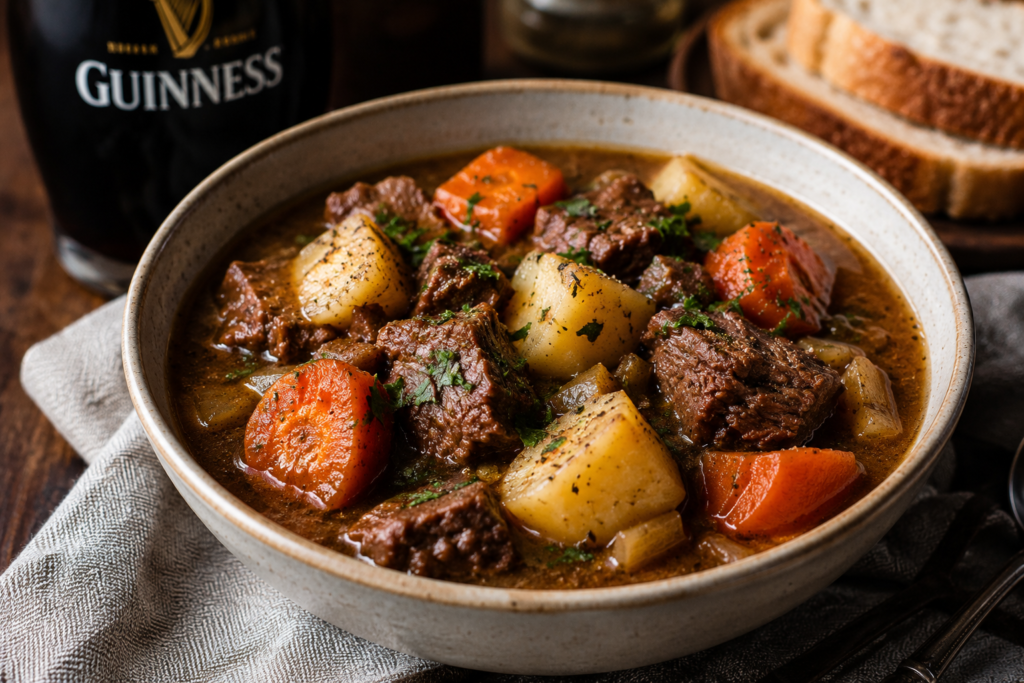
Irish stew is one of several traditional dishes worth looking for on Dublin menus.
What Traditional Irish Food Should You Try in Dublin?
Four dishes worth looking for are Irish stew, boxty, Dublin coddle and Irish seafood chowder.
They reflect different parts of Ireland’s agricultural, urban and coastal food traditions.
Irish cuisine draws heavily on ingredients such as potatoes, lamb, pork, beef, seafood, oats, dairy products and seasonal vegetables.
Dublin restaurants now use those ingredients in everything from traditional recipes to more modern interpretations.
The official Visit Dublin guide to Irish food is useful for current restaurant ideas and explanations of Irish dishes.
Four Irish Dishes to Look For
Traditional Irish stew is generally associated with lamb or mutton slow-cooked with potatoes, onions and other vegetables.
Recipes vary considerably, especially in modern restaurants. Some Dublin menus also feature beef-and-Guinness stews alongside more traditional lamb versions.
Visit Dublin currently highlights O’Neill’s Victorian Pub on Pearse Street as a place for traditional Irish stew. Check current service through the O’Neill’s official menu.
Boxty is a traditional Irish potato preparation most commonly associated with a mixture of grated raw potato and mashed potato.
Recipes and cooking methods vary, and boxty can appear as pancakes, dumplings, loaves or contemporary restaurant interpretations.
Gallagher’s Boxty House in Temple Bar specializes in the dish and offers several boxty preparations.
Dublin coddle is closely associated with the city itself and traditionally combines sausages, bacon or rashers, potatoes and onions cooked slowly together.
It developed as a practical one-pot meal using ingredients that could simmer together over time.
Gallagher’s Boxty House currently includes Dublin coddle among its stew choices.
Irish seafood chowder is typically a creamy soup containing a mixture of fish or shellfish, potatoes, vegetables and herbs.
Ireland’s location and working fishing ports give seafood a natural place in Irish cuisine, although chowder recipes vary widely from restaurant to restaurant.
Gallagher’s Boxty House currently lists Atlantic Seafood Chowder made with fresh and smoked seafood, mussels and stout-and-treacle bread.
Which Traditional Irish Dish Is Most Closely Associated With Dublin?
Dublin coddle has the strongest specifically Dublin identity among the dishes in this guide.
Irish stew and boxty are connected with broader Irish food traditions, while seafood chowder reflects Ireland’s coastal food culture.
Coddle, by contrast, is particularly associated with Dublin and its working-class culinary history.
What Is the Guinness Storehouse Experience Like?
The Guinness Storehouse is a multi-floor visitor experience exploring the history, brewing story, advertising and cultural impact of Guinness, ending with panoramic views from the Gravity Bar.
Located at St. James’s Gate, the Guinness Storehouse is one of Dublin’s best-known attractions.
The standard experience is self-guided and moves through seven floors devoted to brewing, tasting, advertising, Arthur Guinness and the history of St. James’s Gate.
The visit finishes at the seventh-floor Gravity Bar, with 360-degree views across Dublin.
Current standard admission includes a Guinness, Guinness 0.0 or soft drink at the Gravity Bar.
The Storehouse recommends approximately 90 minutes for the standard experience, although visitors can spend longer.
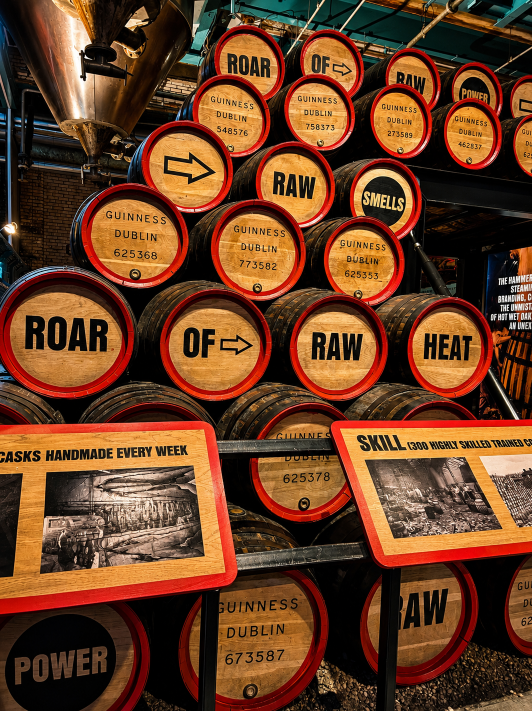
The Guinness Storehouse interprets the company’s brewing, advertising and cultural history across seven floors.
Do You Have to Drink Alcohol at the Guinness Storehouse?
No. You do not have to drink alcohol to visit the Guinness Storehouse.
The Gravity Bar currently offers Guinness 0.0 or a soft drink as alternatives to a standard Guinness with the visitor experience.
Is Jameson Distillery Bow St. a Working Distillery?
No. Jameson Bow St. is the historic home of Jameson and now operates as a visitor experience rather than the company’s working production distillery.
The original Bow Street site dates to 1780.
Whiskey production moved to Midleton in County Cork in 1975, but the Smithfield location continues to interpret Jameson’s history and whiskey-making traditions.
The Jameson Distillery Bow St. offers several guided experiences.
The flagship Jameson Experience with Tasting currently lasts about 45 minutes and includes a guided tour, comparative tasting of three Jameson whiskeys and a signature Jameson drink.
Additional bookable experiences include premium tastings, cocktail-making classes, blending classes and other whiskey-focused sessions.
Do You Need to Book Guinness and Jameson in Advance?
Advance booking is a good idea for both the Guinness Storehouse and Jameson Distillery Bow St., particularly on weekends and during busy travel periods.
Both attractions use timed visitor experiences, and individual time slots or upgraded tours can sell out.
How Can You Plan a Traditional Irish Culture Day in Dublin?
A simple approach is to combine one major visitor experience, one traditional Irish meal and one evening music session.
If you want less obvious stops between these experiences, my guide to Dublin’s hidden bookshops and cafés offers more places beyond the city’s best-known attractions.
You can also explore my guide to off-the-beaten-path places in Dublin for gardens, museums, neighborhoods and quieter walking routes.
Traditional Irish Music and Food in Dublin FAQ
Where can you hear traditional Irish music in Dublin?
The Cobblestone in Smithfield, O’Donoghue’s on Merrion Row and The Brazen Head on Lower Bridge Street are three well-known options with current traditional Irish music schedules.
Is traditional music free in Dublin pubs?
Many pub sessions do not charge separate admission, although buying a drink or meal is customary. Special concerts and events may require tickets.
What food should you try in Dublin?
Irish stew, Dublin coddle, boxty and seafood chowder are four good choices for travelers interested in traditional or locally rooted Irish dishes.
What is Dublin coddle?
Dublin coddle is a traditional one-pot dish generally made with sausages, bacon or rashers, potatoes and onions simmered together.
What is boxty?
Boxty is an Irish potato preparation commonly made with grated raw potato and mashed potato. It can be cooked or served in several different forms.
How long do you need at the Guinness Storehouse?
The Guinness Storehouse recommends approximately 90 minutes for its standard self-guided experience, although you may want longer if you add upgraded experiences or spend extra time in the Gravity Bar.
Does the Guinness Storehouse have non-alcoholic options?
Yes. Current visitor options at the Gravity Bar include Guinness 0.0 and soft drinks as alternatives to alcoholic Guinness.
How long is the Jameson Bow St. tour?
The current flagship Jameson Experience with Tasting lasts approximately 45 minutes.
Is Jameson still made at Bow Street?
No. Production moved from Bow Street to Midleton, County Cork, in 1975. The historic Dublin site now operates as a visitor experience.
Music, Food and Pub Culture Are Still Part of Everyday Dublin
Dublin’s traditional music, food and pub culture are not simply things preserved for visitors—they remain part of the city’s living cultural identity.
A traditional music session can introduce you to instruments and tunes passed through generations.
Dishes such as coddle and boxty connect present-day menus with older food traditions.
Guinness and Irish whiskey add another layer through industries that have become internationally associated with Ireland.
The best approach is not to rush from one “Irish experience” to another.
Sit through more than one tune. Look around the pub. Ask what is on the menu. Learn why a dish or drink became associated with the city.
Those slower moments are often what make Dublin feel less like a checklist of attractions and more like a place you have actually experienced.
Sláinte!
Plan More of Your Dublin and Ireland Trip
About Angela
Angela Addington is the travel photographer and writer behind Lenses & Latitudes. She shares firsthand destination guidance and practical photography advice for independent and solo travelers, women over 50, road-trippers and weekend explorers. Learn more about Angela.