
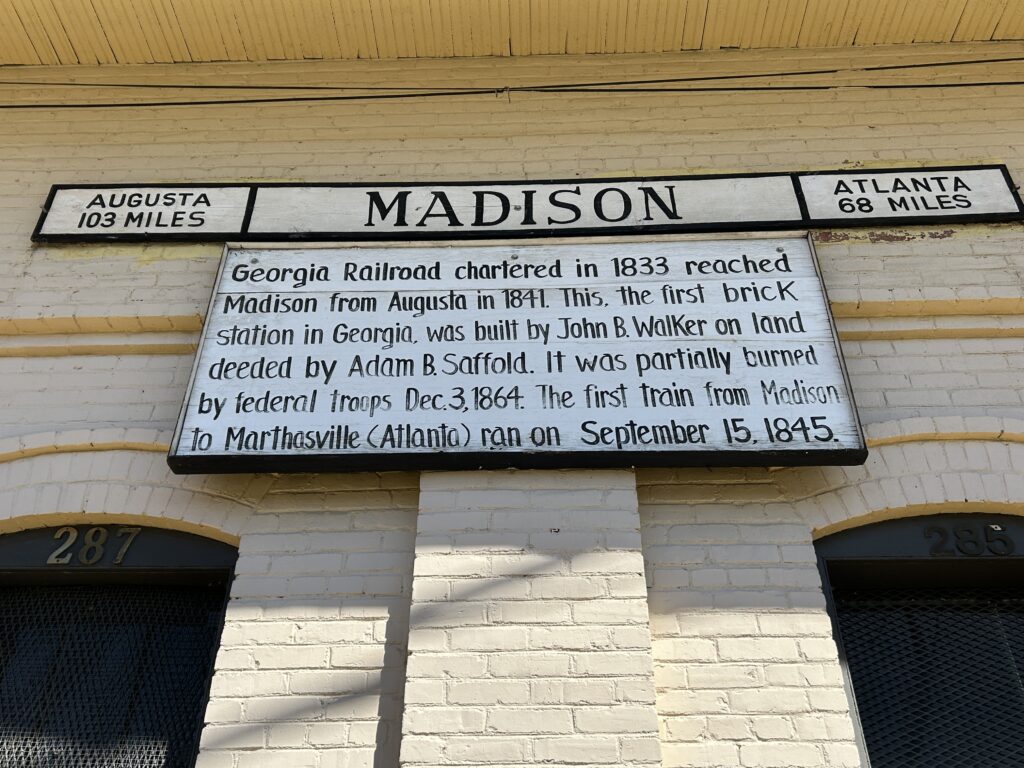
Madison Station: Where Railroad History Meets the March to the Sea
Madison Station connects one of the town’s most important Civil War stories with the railroad that helped shape Madison long before the war—and still defines part of the landscape today.
Why Is Madison Station Historically Important?
Madison Station marks a key stop on Georgia’s March to the Sea Heritage Trail.
On November 19, 1864, Federal troops from the 20th Corps entered Madison and destroyed railroad infrastructure, including the depot, water tank, warehouses, tracks and other facilities.
Much of the surrounding town survived, leaving Madison with the historic streetscape visitors see today.
For travelers interested in Civil War history, railroads or photography, this is an easy stop to combine with Madison’s larger historic district.
Interpretive signs explain the military and railroad history, while the active rail corridor provides a present-day connection to the transportation system that helped shape the town.
Madison Station at a Glance
What Happened at Madison Station During the Civil War?
Federal troops reached Madison during Sherman’s March to the Sea on November 19, 1864 and targeted the railroad infrastructure that supported Confederate transportation and supplies.
General William T. Sherman had divided his army into two wings after leaving Atlanta.
Major General Henry W. Slocum commanded the Left Wing, which included the 20th Corps moving east along the Georgia Railroad.
After destroying railroad facilities between Social Circle and Madison, the 20th Corps reached Madison.
Brigadier General William T. Ward’s division destroyed the depot, water tank, warehouses, switching tracks, sidetracked cars and other railroad facilities.
Brigadier General John W. Geary’s division was then detached to continue east and destroy the railroad bridge over the Oconee River.
The Georgia Civil War Heritage Trails March to the Sea route identifies Madison Station as Stop L10 on the larger trail.
When Was Madison Station Destroyed?
The Civil War Heritage Trail and Georgia Historical Society place the destruction of Madison’s railroad depot and facilities on November 19, 1864.
Visitors may notice that one railroad-history sign at the site includes a different Civil War date.
For the March to the Sea event described in this guide, I use November 19 because that date is documented by both the dedicated Georgia Civil War Heritage Trails interpretation and Georgia Historical Society records.
For a detailed account of the troop movements through Morgan County, see the Georgia Historical Society’s March to the Sea marker history.
Why Was the Railroad So Important?
Railroads were vital transportation and supply routes during the Civil War, which made Madison’s Georgia Railroad facilities a military target.
Madison had developed as an important railroad town long before the war.
The Georgia Railroad connected communities between Augusta and the growing settlement that eventually became Atlanta, moving passengers, agricultural products and other goods across the state.
Destroying track, depots, bridges, water tanks and warehouses interfered with the Confederacy’s ability to move supplies and use the rail network effectively.
Was Madison Spared During Sherman’s March to the Sea?
Much of Madison’s residential and civic architecture survived the Union army’s passage, but the popular story that one person simply convinced Sherman to spare the entire town is more complicated than local legend suggests.
The railroad facilities and military-related property were deliberately destroyed.
At the same time, many homes and other buildings remained standing.
That survival contributed to the unusually large concentration of historic architecture that visitors can still see in Madison today.
Did Joshua Hill Save Madison?
Joshua Hill played an important role during the Union army’s arrival, but the familiar story that Sherman personally promised him Madison would be spared is not supported by surviving evidence.
Hill was a prominent Madison resident, former U.S. congressman and outspoken opponent of Georgia’s secession.
He had met Sherman previously in Atlanta while arranging to recover the body of his son, who had been killed during the war.
When Federal troops approached Madison on November 19, Hill rode out to meet them and appealed for the protection of the town.
Local tradition later credited him with “saving Madison,” but Madison’s official historical interpretation notes that there is no evidence Sherman made Hill a specific promise to spare the city.
You can learn more through the official Visit Madison history of the Joshua Hill legend.
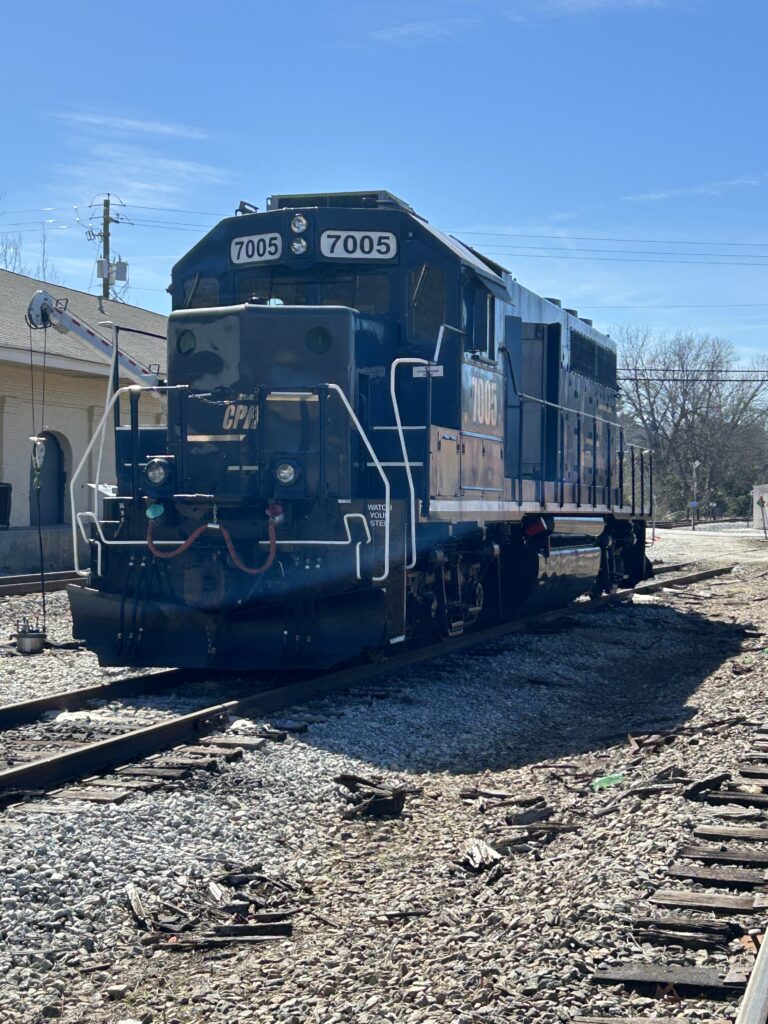
Madison’s railroad story continues beyond its Civil War history, making the area interesting for rail enthusiasts as well as history travelers.
Does Madison Still Have a Historic Train Depot?
Yes, but the surviving historic depot should not be confused with the Civil War-era Georgia Railroad depot destroyed in 1864.
Madison also has a historic Central of Georgia depot from a later period.
Visit Madison reports that this building has been relocated and stabilized as part of ongoing efforts to preserve and interpret the city’s railroad history.
This distinction is important when visiting Madison Station.
The Civil War Heritage Trail interprets the earlier railroad site and the events of November 1864, while the surviving depot represents another chapter in Madison’s transportation history.
Read more about the surviving depot through Visit Madison’s history of the Madison train depot.
What Will You See at the Madison Station Civil War Site?
The most important visitor feature is the March to the Sea interpretive marker, which explains troop movements, railroad destruction and Madison’s experience during the campaign.
The display includes historic illustrations, portraits of Union commanders and a map showing Federal troop movements through the area.
Reading the marker before exploring the surrounding downtown makes it easier to understand how Madison fit into the larger military campaign.
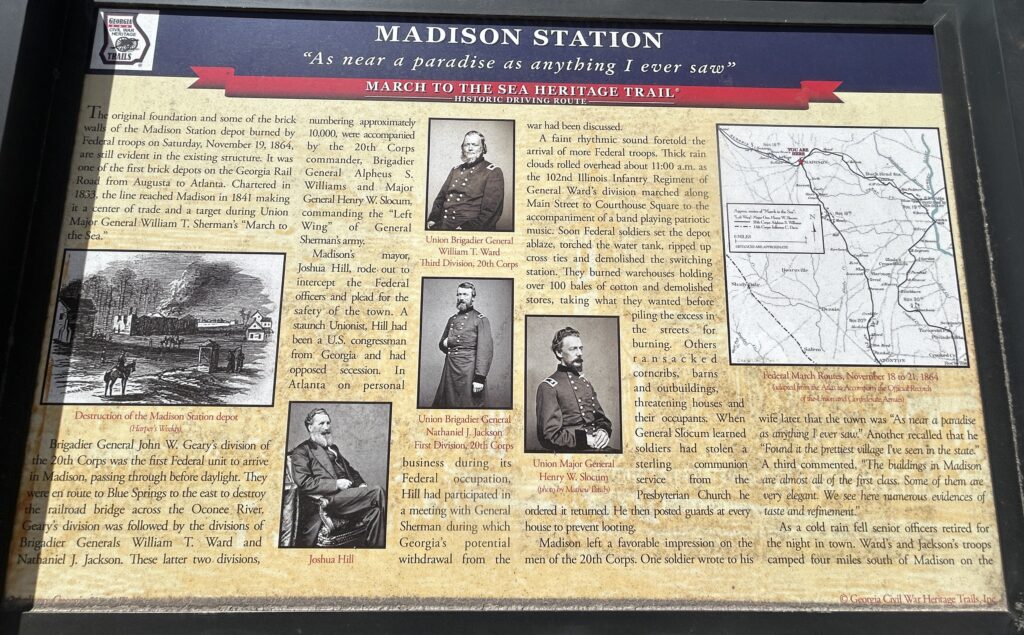
The Madison Station marker places the railroad destruction within the larger route of Sherman’s March to the Sea.
Is Madison Station Good for Train Photography?
The railroad setting can be interesting for rail photography, but train movements are unpredictable and visitors should treat the tracks as active railroad property.
The combination of railroad equipment, tracks and historic interpretation creates opportunities to photograph both Madison’s past and its continuing rail connection.
Do not stand on the tracks, cross into railroad property or position yourself closer to a train simply for a photograph.
Use public areas and photograph from a safe distance.
How to Photograph Madison Station
How Long Should You Spend at Madison Station?
Allow approximately 20–30 minutes if you primarily want to read the historical markers and take photographs.
History enthusiasts may want additional time to read every panel carefully, while rail photographers may stay longer if there is activity in the area.
Because the site is close to downtown, I would combine it with Madison’s historic district rather than plan a separate trip around Madison Station alone.
Is Madison Station Free to Visit?
Yes. The outdoor historical markers and Civil War Heritage Trail stop can be viewed without an admission charge.
That makes Madison Station an easy addition to a walking or driving tour of Madison.
How Does Madison Station Fit Into the March to the Sea Trail?
Madison Station is Stop L10 on the Georgia Civil War Heritage Trails March to the Sea route.
Nearby trail sites help place Madison in the larger movement of the Federal Left Wing.
Rutledge Station lies to the northwest, while the Oconee River railroad bridge site continues the story east of Madison.
The route eventually moves south and east through communities including Eatonton and Milledgeville as it follows portions of Sherman’s 1864 campaign toward Savannah.
Use the official March to the Sea Heritage Trail guide if you want to turn Madison Station into part of a larger Civil War road trip.
What Else Can You See in Historic Madison?
Madison Station works best as part of a larger exploration of the city’s history rather than as an isolated stop.
Heritage Hall, the Madison-Morgan Cultural Center, Madison’s historic cemeteries and the wider Historic District all add different perspectives to the town’s story.
Madison Station Georgia FAQ
What happened at Madison Station during the Civil War?
Federal troops from the 20th Corps entered Madison on November 19, 1864, during Sherman’s March to the Sea and destroyed the depot, water tank, warehouses, tracks, railroad cars and other rail facilities.
When was the Madison depot destroyed?
The Georgia Civil War Heritage Trails and Georgia Historical Society document the destruction of Madison’s railroad facilities on November 19, 1864.
Did Sherman burn Madison, Georgia?
Union troops destroyed Madison’s railroad and military-related infrastructure, but much of the residential town survived. This helped preserve many of the historic buildings visitors see today.
Did Joshua Hill save Madison from Sherman?
Joshua Hill appealed to Union forces as they entered Madison and had previously met Sherman, but local historical interpretation notes that there is no surviving evidence Sherman personally promised Hill that Madison would be spared.
Does the original Civil War depot still exist?
No. The depot associated with the November 1864 destruction did not survive. A different historic Central of Georgia depot from a later period survives in Madison and has been relocated and stabilized.
Is Madison Station part of the Georgia Civil War Heritage Trail?
Yes. Madison Station is Stop L10 on the official March to the Sea Heritage Trail.
Is Madison Station free to visit?
Yes. The outdoor interpretive signs and heritage-trail stop can be visited without an admission fee.
Can you photograph trains at Madison Station?
The active railroad corridor can provide opportunities for rail photography, but trains do not follow a sightseeing schedule. Stay entirely in public areas, remain off the tracks and use a telephoto lens when additional distance is needed.
Is Madison Station Worth Visiting?
Madison Station is worth stopping for if you enjoy Civil War history, railroad history or places where the past remains visible in the modern landscape.
The site does not require a long visit.
In about half an hour, you can read the March to the Sea interpretation, learn why Madison’s railroad became a military target and photograph a location that remains connected to rail transportation today.
What makes the stop especially interesting is the contrast.
The railroad that helped Madison grow before the war became a target in 1864, and rail activity continues to be part of the landscape generations later.
Before visiting, review the official Georgia March to the Sea Heritage Trail for the larger historical route.
Then use my Georgia Lake Country Weekend Guide to connect Madison Station with more history, food and attractions around Madison, Eatonton and Lake Oconee.
About Angela
Angela Addington is the travel photographer and writer behind Lenses & Latitudes. She shares firsthand destination guidance and practical photography advice for independent and solo travelers, women over 50, road-trippers and weekend explorers. Learn more about Angela.