
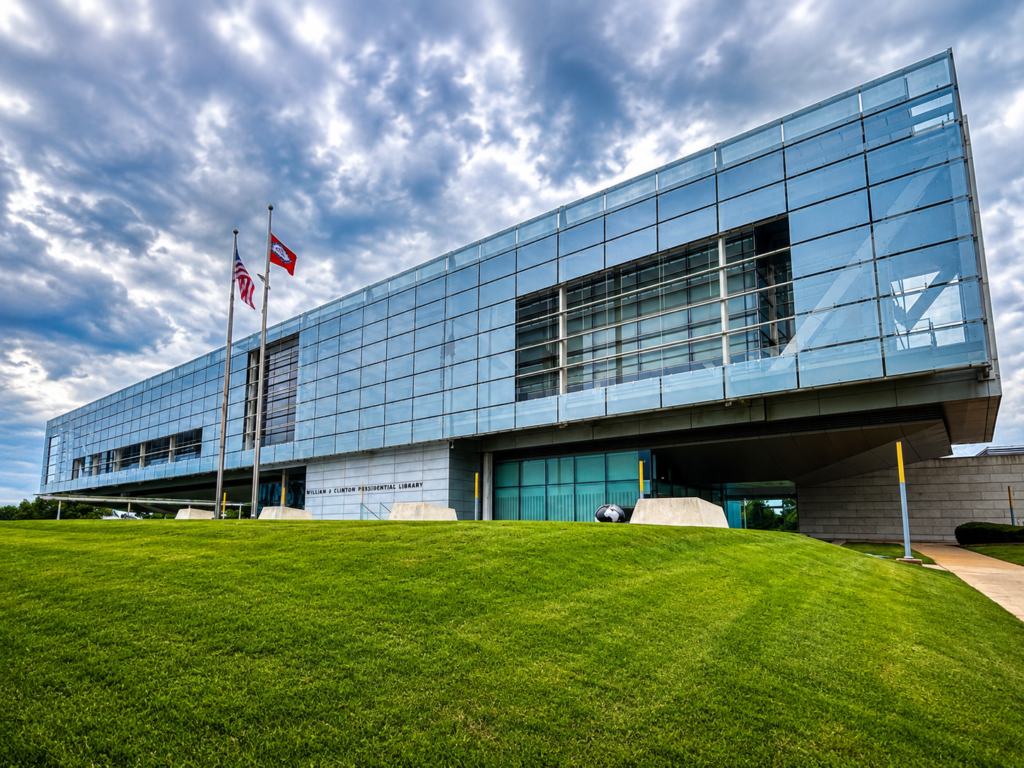
The Clinton Presidential Library surprised me before I even walked inside—the architecture immediately became part of the experience.
Why Every Traveler Should Visit at Least One Presidential Library
I visited the Clinton Presidential Library expecting a political history museum. What I found was a much broader travel experience involving architecture, American history, international culture, archival records and one of the most recognizable rooms in the White House.
What surprised me most: You do not have to be passionate about politics to find a presidential library fascinating.
Is the Clinton Presidential Library Worth Visiting If You Aren’t Interested in Politics?
Yes. I went in more interested in history, architecture and travel than politics, and the museum held my attention for hours.
The William J. Clinton Presidential Library and Museum combines White House history, personal artifacts, archival records, diplomatic gifts, multimedia exhibits and an Oval Office replica inside one of Little Rock’s most distinctive modern buildings.
For me, it became less about agreeing or disagreeing with a political figure and more about seeing how a presidency and a period of American history are preserved.
About My Visit
The Clinton Presidential Library provided hosted admission during our June 2026 Midwest road-trip assignment.
Hosted experiences never guarantee positive coverage. All observations, photographs and recommendations in this article reflect my firsthand experience.
Clinton Presidential Library Visitor Snapshot
Hours, admission prices, tours and photography policies can change. Verify current information with the Clinton Presidential Library before visiting.
I Wasn’t Sure This Museum Would Hold My Attention
When we planned our Midwest road trip, I knew I wanted to spend time exploring Little Rock.
For travelers planning a similar journey, my 8-Day Midwest Road Trip Itinerary connects the major stops into a practical route.
I wasn’t nearly as certain about visiting a presidential library.
Politics has never been the reason I travel, and I wondered whether a museum centered around one presidency would feel too narrow for me.
That assumption started changing before I reached the entrance.
As we approached the Clinton Presidential Library along the Arkansas River, the building itself immediately caught my attention.
I realized this could be as much an architecture and history stop as a political one.
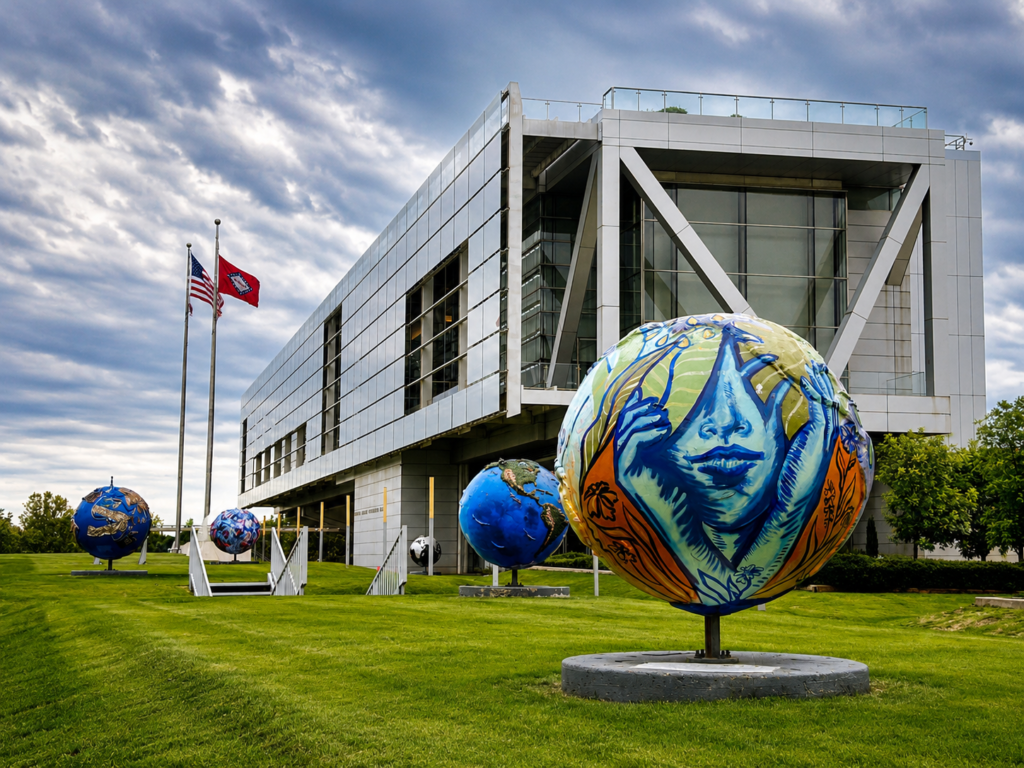
The library complex combines public art, modern architecture and riverfront surroundings.
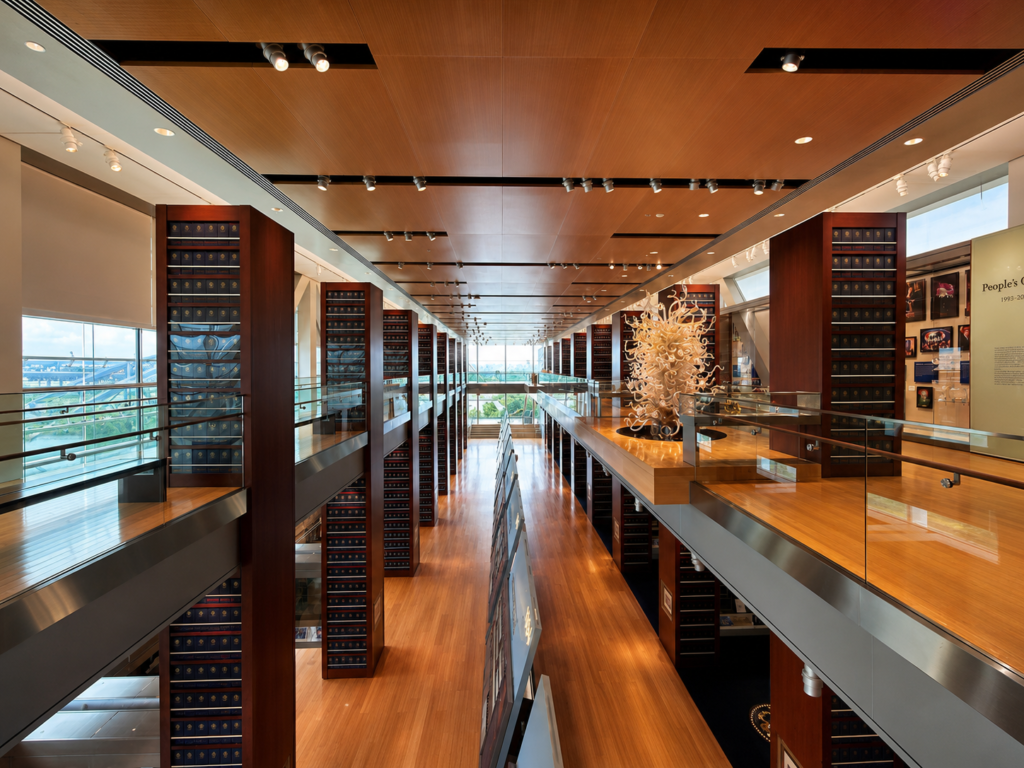
The architecture became one of my favorite subjects to photograph during the visit.
The Building Is Worth Seeing on Its Own
The museum’s open interior creates long lines, layered viewpoints and clear sightlines across the galleries.
Large windows connect the building visually with the Arkansas River and bring natural light into parts of the museum.
As a photographer, I became almost as interested in the structure as the artifacts.
One of my favorite photographs from the entire visit wasn’t of a presidential object at all.
It was an architectural view looking down through the museum toward the galleries below.
A Modern Landmark on the Arkansas River
The Clinton Presidential Center was designed by architect James S. Polshek and occupies a former industrial riverfront site.
The complex contains more than 150,000 square feet and became notable not only for its modern design but also for its sustainability work.
The building ultimately achieved LEED Platinum certification.
For architecture-minded travelers, that adds another layer to the visit beyond the museum collection itself.
What Is a Presidential Library?
A presidential library preserves records, artifacts and historical material connected to a U.S. presidential administration while also operating as a museum for the public.
The experience goes far beyond a biography of one president.
Visitors encounter documents, photographs, gifts, multimedia exhibits, personal objects and material connected to major events that occurred during that administration.
That makes a presidential library part museum, part archive and part record of a specific era in American history.
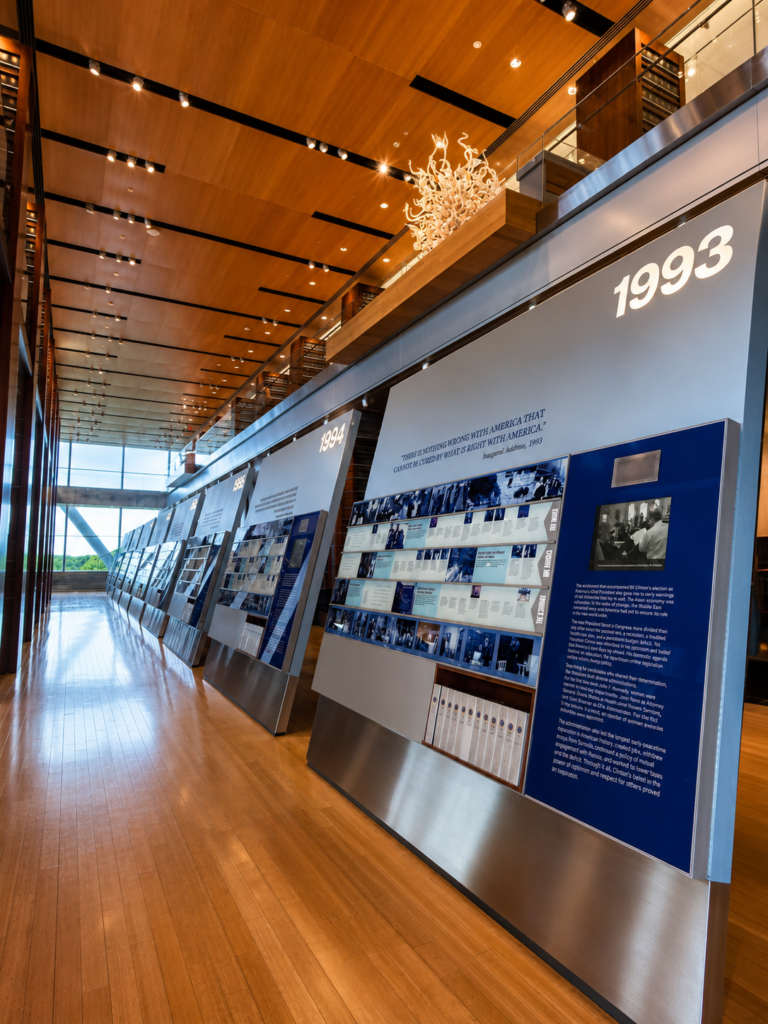
The exhibits combine chronology, artifacts, photography and multimedia interpretation.
More Than Eight Years in Office
I expected the museum to focus almost entirely on the Clinton presidency.
Instead, the exhibits also trace the life and experiences that led to the White House while placing the administration within the broader events of the era.
Photographs, artifacts, videos and documents keep the museum from feeling like one long wall of text.
I found myself moving naturally between political history, personal history, public events and cultural material.
That variety is one reason the museum worked for me even though politics is not one of my primary travel interests.
Stepping Into the Oval Office Replica
The full-scale Oval Office replica was one of the highlights of my visit.
Walking into a room you’ve seen in photographs, documentaries and news coverage creates an odd sense of familiarity.
During my June 2026 visit, photography was not permitted once we were inside the replica itself, though I could photograph it from the doorway.
Visitors could also pose for an optional professional photograph behind the desk.
We had the photograph taken but chose not to purchase it.
Photography rules and souvenir-photo options can change, so check current museum guidance when you visit.
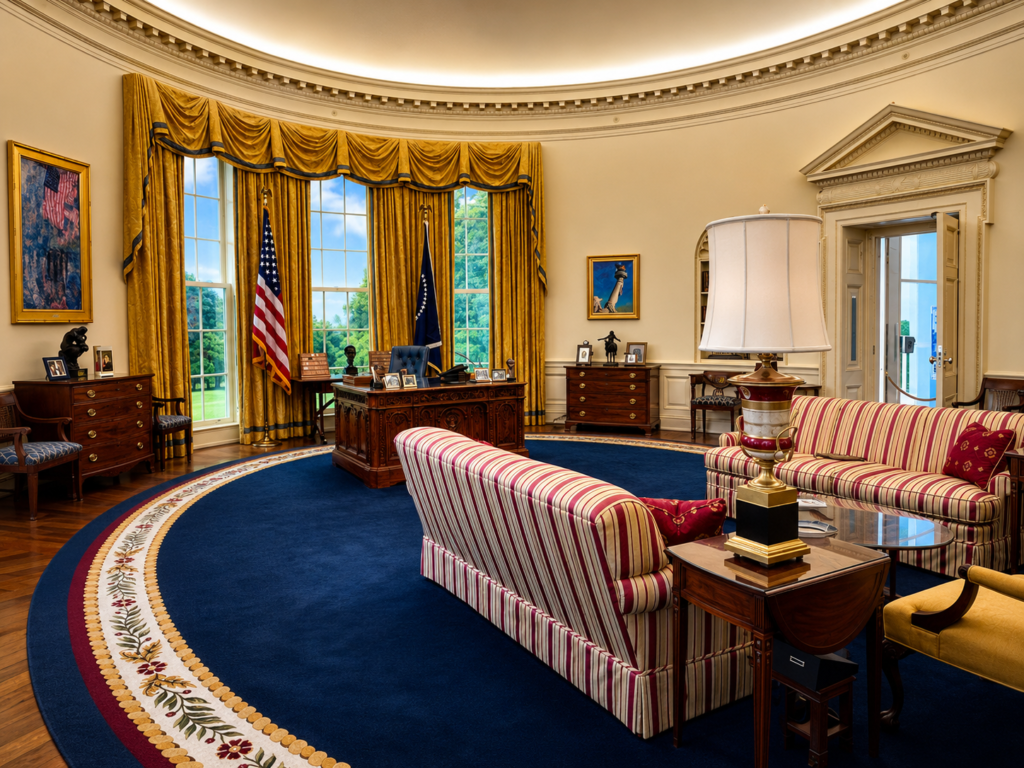
The Oval Office replica was one of the museum experiences I was most curious to see in person.
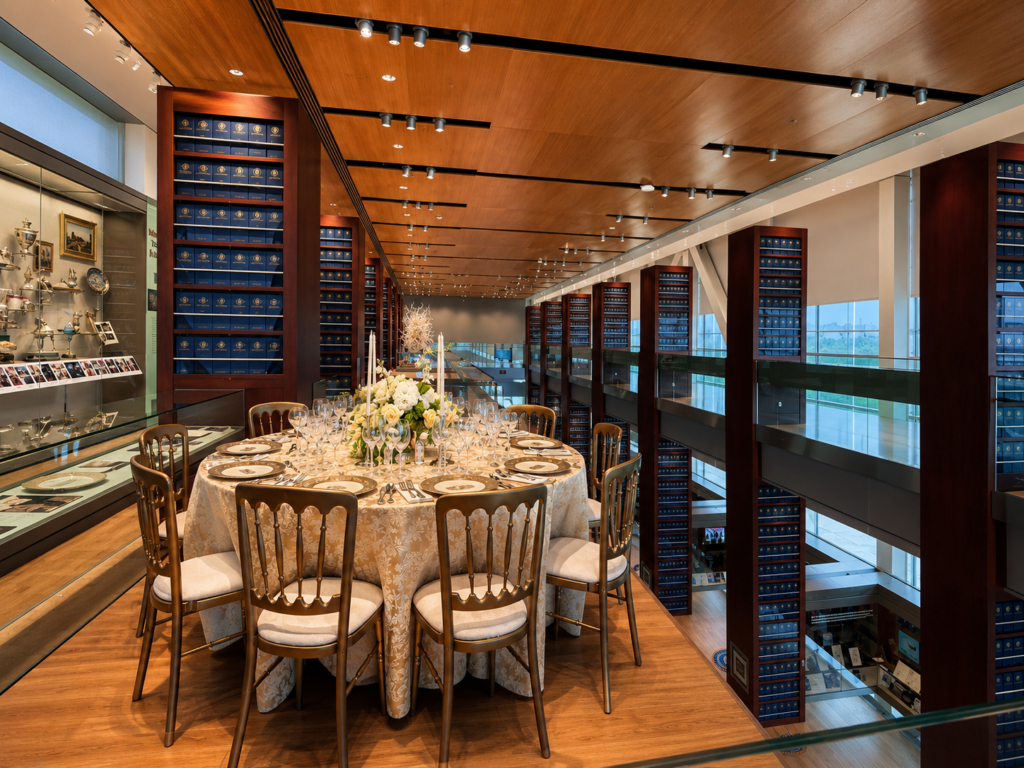
The exhibits reveal details of White House life that are easy to overlook when learning history from a distance.
The Archival Material Changed My Perspective
One of the simplest displays made one of the strongest impressions on me.
Rows of archival boxes represented records preserved from the administration.
Nearby, daily schedules documented how presidential time was organized.
Seeing that material physically represented made the scale of the office feel much more tangible.
History books summarize years into chapters.
An archive reminds you that history was created one meeting, one document and one day at a time.
Diplomatic Gifts Became a Cultural Journey
One section interested me far more than I expected: gifts presented by leaders and representatives from around the world.
These weren’t simply objects in display cases.
They reflected craftsmanship, traditions, symbolism and cultural identity from many different countries.
As a traveler, I found myself slowing down here.
The collection provided a reminder that international relationships involve culture and ceremony as well as formal diplomacy.
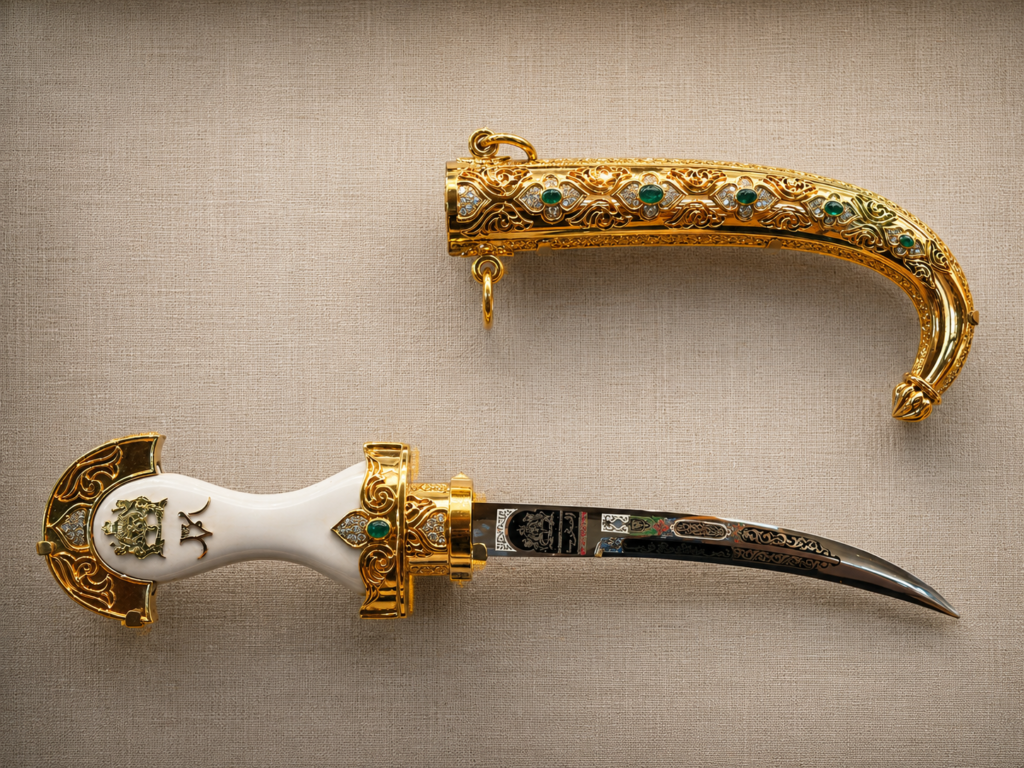
Diplomatic gifts connected the museum experience to cultures and traditions from around the world.
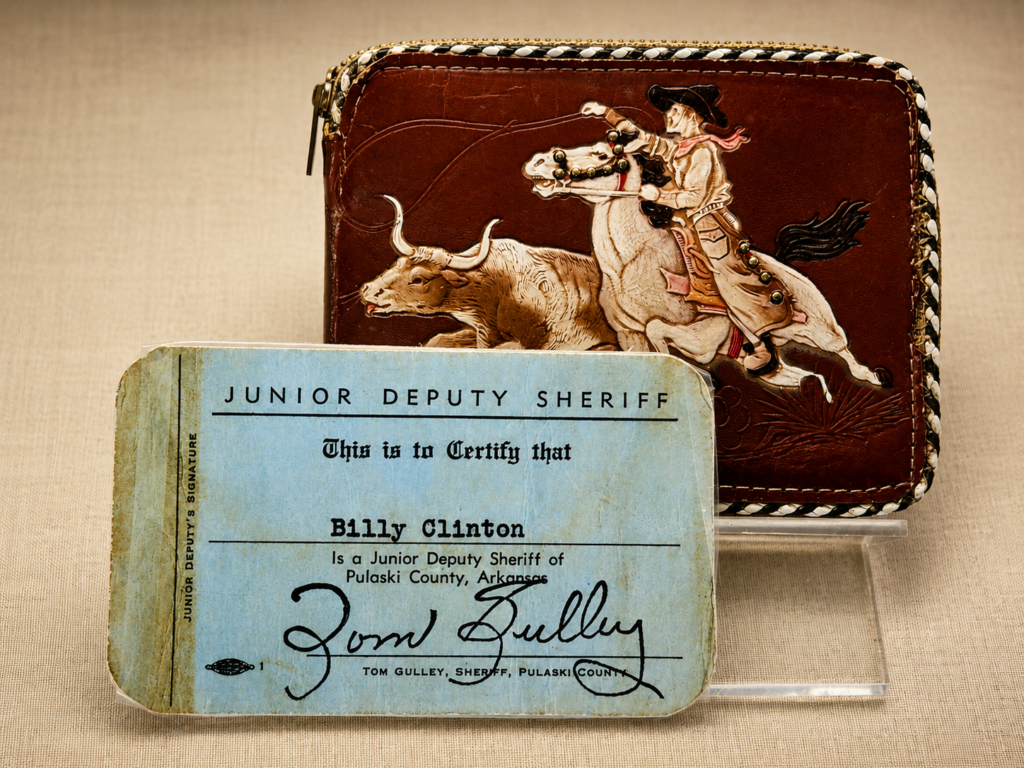
Personal objects helped connect the presidency to the life that came before it.
The Personal History Made the Museum More Human
I learned details during the visit that I had never encountered before.
For example, I hadn’t known that Bill Clinton was not born with the surname Clinton.
I also knew relatively little about his early life or how young he was when his political career developed.
Those details made the museum feel less like a summary of an administration and more like a story about the path that eventually led to the presidency.
Whether a visitor is interested in politics or not, understanding the people behind historical offices can make the larger story easier to connect with.
Four Reasons Travelers May Find Them Worthwhile
Primary Historical Material
Artifacts, documents and photographs let visitors encounter history through original material rather than only summaries.
Architecture
Presidential libraries are often major architectural projects, giving travelers another reason to visit even before considering the exhibits.
Culture & Diplomacy
International gifts, ceremonial objects and state-event material reveal cultural connections that extend well beyond domestic politics.
A Specific Era
Each library preserves part of the cultural, technological and historical context of the years represented by that administration.
You Don’t Have to Agree With a President to Learn From the Museum
A presidential library can be valuable as a historical institution even when a visitor does not share the politics of the president it represents.
For me, the value came from seeing artifacts, architecture, records and cultural material connected to a period of American history.
The museum gave me context I would not have gained simply by reading a short historical summary.
That is why I left believing every traveler with an interest in history should consider visiting at least one presidential library.
The Architecture May Be Your Best Photo Subject
I expected most of my photographs to focus on artifacts.
Instead, some of my favorites came from the building itself.
Look for repeating lines, gallery levels, window light and viewpoints that show how the interior spaces connect.
A phone is more than sufficient for most exhibit photography, while a dedicated camera may be useful if architecture is one of your main interests.
Always follow current museum photography rules, especially around specialty exhibits and the Oval Office replica.
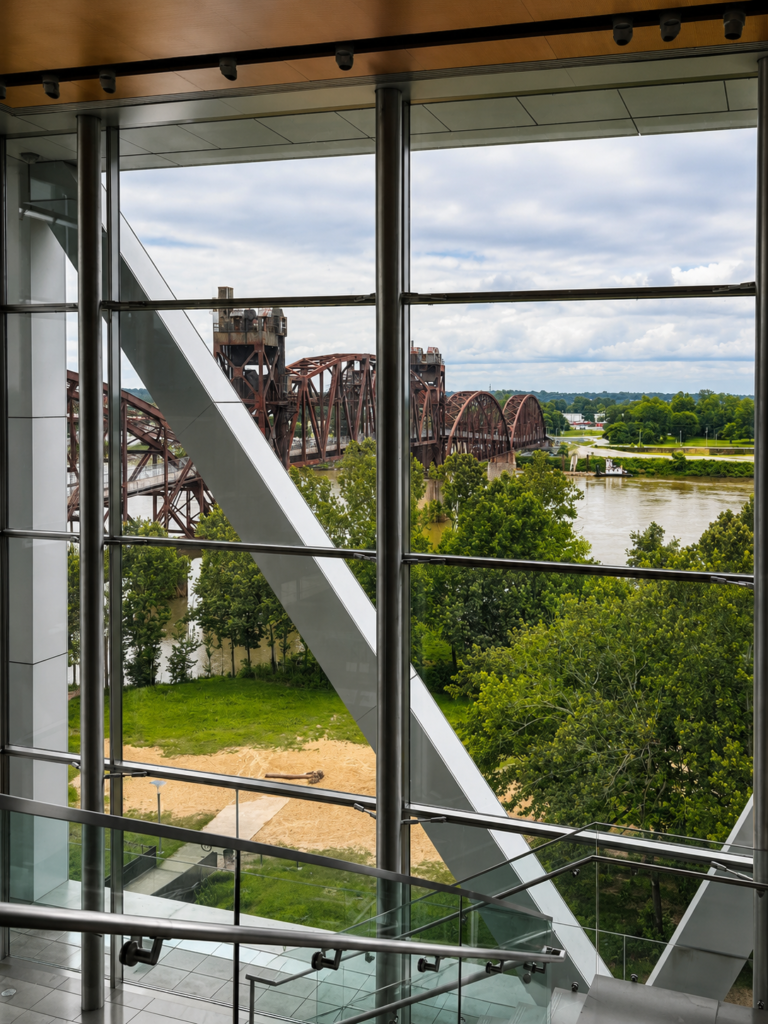
Large windows connect the museum’s modern interior with the Arkansas River outside.
How I Would Photograph the Clinton Library
Photograph the Lines
Use balconies, gallery rails and long interior sightlines to emphasize the building’s geometry.
Watch Window Light
Large windows can create bright backgrounds, so expose for the subject when photographing toward the river.
Include Context
A person or exhibit element can help show the scale of the building better than an empty architectural frame.
Allow About 2–3 Hours
I recommend allowing roughly 2–3 hours for a comfortable first visit.
That gives you enough time to explore the permanent exhibits, Oval Office replica, architecture and major display areas without racing through them.
Visitors who enjoy reading detailed historical interpretation could easily stay longer.
Talking with docents can also add time—and value—to the visit.
Current Clinton Presidential Library Information
Guided tours: The museum currently offers scheduled individual guided tours on select weekdays and Saturdays. Tour schedules can change, so check the official site before planning around a specific time.
Would I Visit Another Presidential Library?
Yes—and that may be the best endorsement I can give this one.
I arrived unsure whether my first presidential library would hold my attention.
I left wanting to visit another.
The combination of architecture, artifacts, archival material, cultural objects and historical interpretation made the experience broader than I expected.
It showed me that presidential libraries can be worthwhile travel destinations even for people who do not travel because of politics.
Frequently Asked Questions
Is the Clinton Presidential Library worth visiting?
Yes. I recommend it for travelers interested in history, museums, architecture, American culture and White House history—even if politics is not a major personal interest.
How long should you spend at the Clinton Presidential Library?
I would allow about 2–3 hours for a first visit. Visitors who read exhibits in depth or take a guided tour may want longer.
Is parking free at the Clinton Presidential Library?
Yes. The museum currently provides free parking for visitors.
Can you visit an Oval Office replica?
Yes. The museum includes a full-scale Oval Office replica. Photography rules inside the replica can change, so verify current guidance before your visit.
Is the Clinton Presidential Library good for people who aren’t interested in politics?
Yes. I found the architecture, archives, diplomatic gifts, cultural material and historical exhibits compelling even though politics was not the reason I visited.
Is the Clinton Presidential Library accessible?
The museum currently provides elevator access to its public floors, and a limited number of manual wheelchairs are available on a first-come, first-served basis.
From Oklahoma City to Little Rock
The Clinton Presidential Library began the Little Rock portion of our journey, followed by one of the most memorable historic stays of the entire trip.
See how Little Rock fits into the larger journey in my 8-Day Midwest Road Trip Itinerary.
Factory Obscura
Go back to the immersive Oklahoma City art experience that came before Arkansas.
The Empress of Little Rock
Continue with our overnight stay inside the historic Hornibrook Mansion.
The Full Midwest Road Trip
Follow the complete nine-day journey through eight states.
About Angela
Angela Addington is the travel photographer and writer behind Lenses & Latitudes. She shares firsthand destination guidance and practical photography advice for independent and solo travelers, women over 50, road-trippers and weekend explorers. Learn more about Angela.
Pingback: Step Back in Time at Arkansas’s Most Beautiful Historic Bed & Breakfast - Lenses and Latitudes
Pingback: Why Dugan’s Pub Is Little Rock’s Most Authentic Taste of Ireland - Lenses and Latitudes
Pingback: Take the Picture—Even If No One Else Understands Why - Lenses and Latitudes
Pingback: Your Best Stories Begin Outside Your Comfort Zone - Lenses and Latitudes