
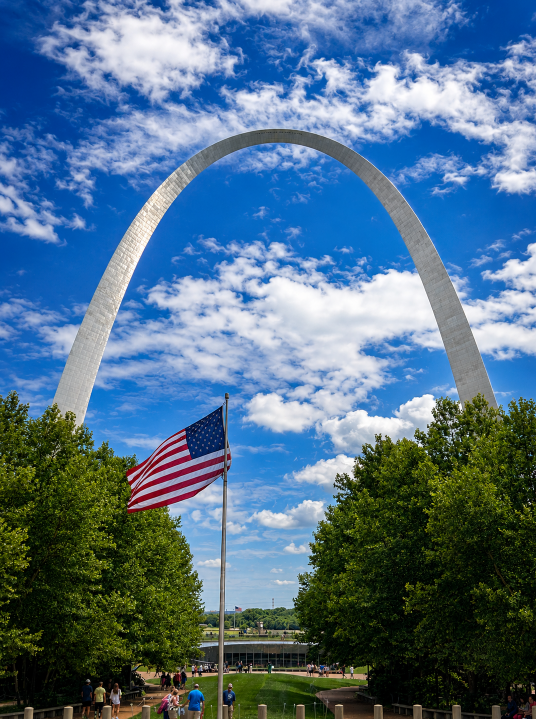
Riding the Gateway Arch Tram
The Gateway Arch dominates the St. Louis skyline, but seeing it from the ground is only part of the experience. During our Midwest road trip, my brother and I rode the tram inside the Arch to the observation area 630 feet above the city.
Even as someone who is afraid of heights, I found the experience surprisingly comfortable—and the views were worth making time for.
Is the Gateway Arch Tram Worth Riding?
Yes. Riding the Tram to the Top adds an entirely different dimension to a Gateway Arch visit.
The ride combines unusual engineering, a compact tram journey through the inside of the monument and views from 630 feet above St. Louis.
Even with my fear of heights, I felt comfortable during the ride and would do it again.
The tram itself is only part of the experience. I recommend combining it with the free Museum at the Gateway Arch, the park grounds and the restored Old Courthouse.
Planning a longer trip through the region? Our 8-day Midwest road trip itinerary shows how we included the Gateway Arch alongside our other stops in St. Louis, Wichita, Oklahoma City and Little Rock.
Reserve Your Gateway Arch Tram Tickets in Advance
I purchased our Tram Ride to the Top tickets about two months before our visit. Our preferred date and time were still available, but I would not depend on that being true—especially during summer, on weekends or when a major event is happening downtown.
Same-day tickets may be available, but the National Park Service warns that tram tickets often sell out during busy periods. Advance reservations are strongly recommended.
Buy tickets through the official Gateway Arch ticket website once your St. Louis plans are firm.
Arrive before the time printed on your ticket. Everyone entering the Visitor Center passes through airport-style security, and the public entrance is on the west side facing Fourth Street and the Old Courthouse.
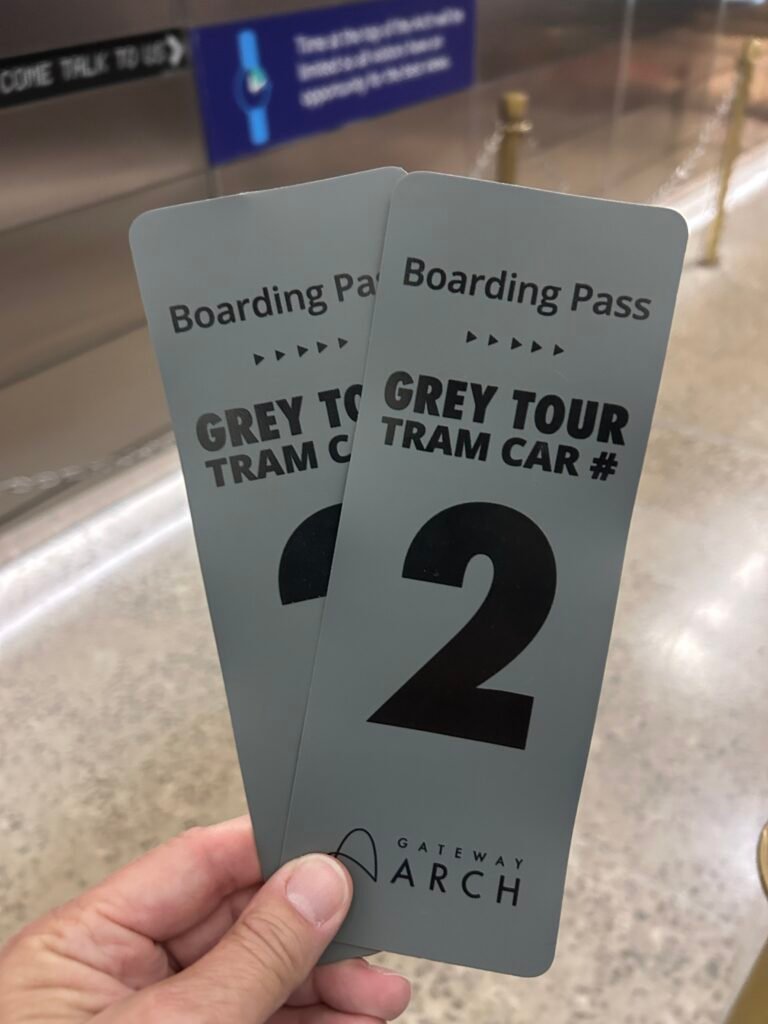
Your Tram Time Isn’t the Only Time to Watch
The tram reservation is timed, but prepaid parking can have a reservation window too.
That distinction cost us money during our visit.
We entered our parking garage only about 15 minutes early and ended up being charged again. Give yourself enough time to reach the Arch and complete security, but pay close attention to the exact start time of any prepaid garage reservation.
There Is No Visitor Parking Directly at the Gateway Arch
We reserved parking before our visit, which removed the uncertainty of searching for a downtown space after arriving.
The Gateway Arch currently identifies Stadium East Parking Garage at 200 South Broadway as its preferred downtown parking option. The current preferred rate is $11 for the first five hours.
The garage is several blocks from the park entrance, so allow time for the walk.
Read the garage reservation terms closely and do not enter before your reserved window begins. Check the official Gateway Arch parking page before your visit because participating garages, pricing and conditions can change.
Bring Your National Park Passport
Gateway Arch National Park is an official National Park Service site, so bring your National Park Passport if you collect cancellation stamps.
During our visit, we found Gateway Arch stamps inside the visitor area and gift shop.
Stamp locations can change, so ask a ranger or staff member if you don’t immediately see them.
Look Down Before You Go Up
One of the interesting surprises is that the Gateway Arch Visitor Center and museum are underneath the monument.
From outside, the curved glass atrium draws your eye toward the entrance. Inside, you descend into a bright museum space below ground level before eventually traveling upward through the Arch itself.
Pause near the glass atrium and look for leading lines, reflections and layers. A phone’s wide-angle lens works well here. Tap the brightest part of the scene to control exposure and protect the highlights.
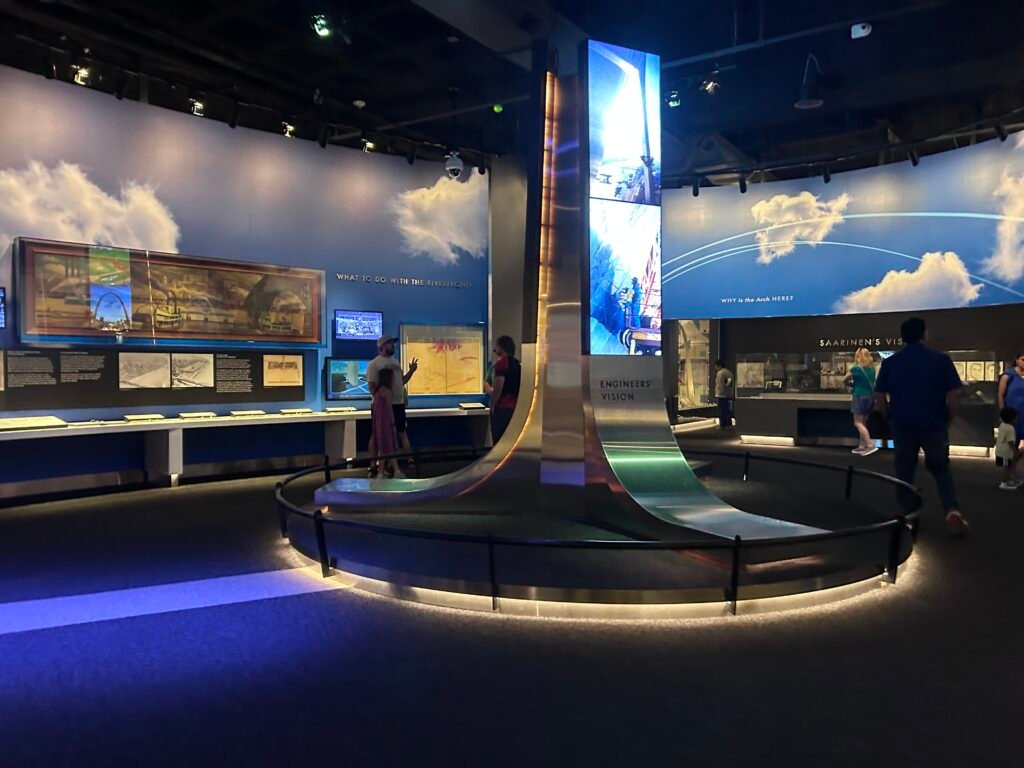
Give the Museum About an Hour
We explored the museum for about an hour before our scheduled tram ride, and that timing worked well.
The museum adds historical context to the monument and the larger St. Louis riverfront story before you ride to the top.
Admission to the Museum at the Gateway Arch is free, which means visitors can explore it even if they decide not to purchase a tram ticket.
Turn off your flash to reduce glare from exhibits. Capture wide gallery scenes as well as smaller details so your photos tell both the architectural and historical story.
What Riding the Gateway Arch Tram Is Really Like
The tram car is small, but it was more comfortable than I expected.
My brother is 6 feet 4 inches tall, and the two of us fit comfortably inside. A full tram car would naturally feel much cozier.
The system feels like a combination of an elevator and a Ferris wheel car because the capsules continually adjust as they follow the curve of the Arch.
Despite the unusual movement, I found the ride smooth.
What If You’re Afraid of Heights?
I am afraid of heights, yet I felt comfortable throughout the trip. Because the tram moves through the enclosed interior of the monument, I never had the sensation of hanging over the city during the ascent.
Visitors should know that the tram cars are compact and the observation area requires significant stair access. The top of the Arch is not wheelchair accessible.
Current accessibility guidance states that visitors must manage at least 96 steps divided among six flights, and wheelchairs, walkers and strollers cannot be taken into the tram cars or observation area.
A View Most Visitors Never Imagine from the Ground
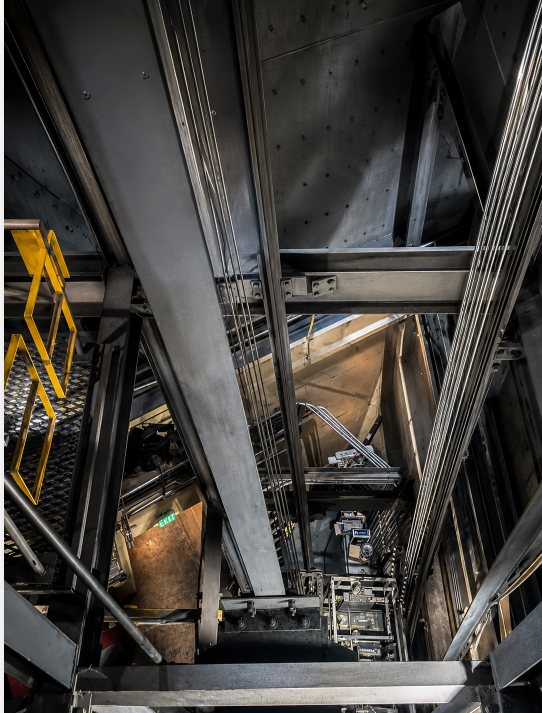
The steel beams, cables, stairs and mechanical systems inside the Gateway Arch reveal just how unusual the journey to the top really is.
Photography tip: A phone is much easier to manage than a large camera bag inside the compact tram. Use a wide-angle setting if you want to show the scale of the tram car and curved interior.
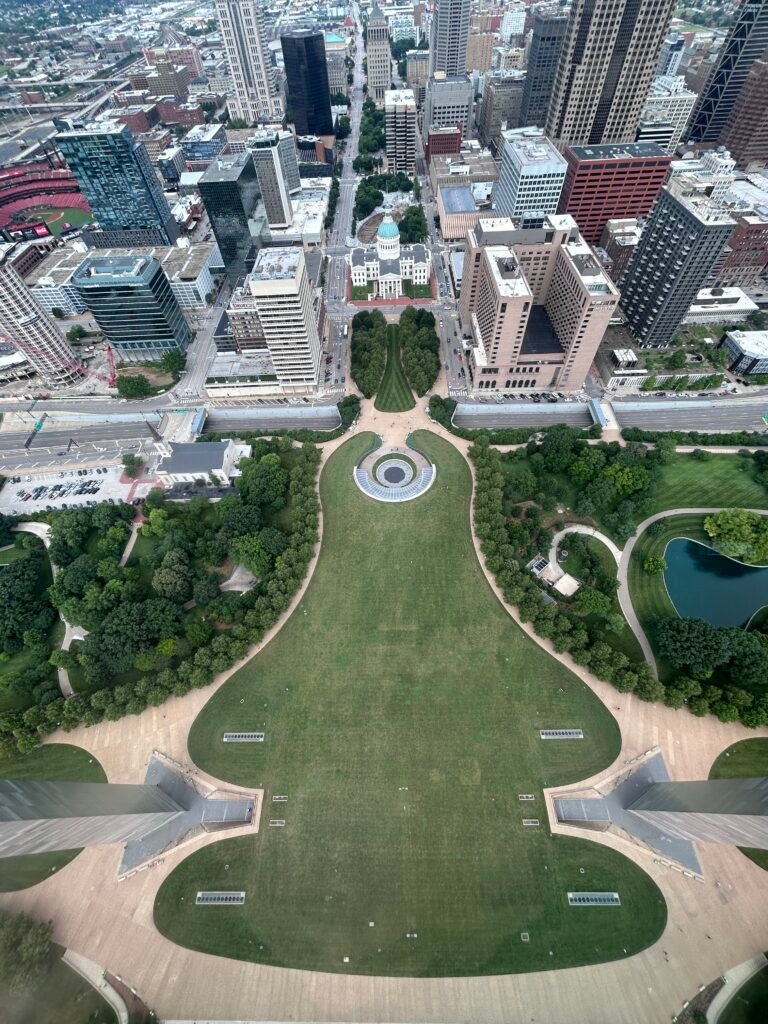
Views from the Top of the Gateway Arch
Our day began overcast, but visibility from the observation area was still excellent.
Looking west, we could see downtown St. Louis, the Old Courthouse and Busch Stadium. In the opposite direction, the Mississippi River stretched toward Illinois.
Most surprising of all, the height didn’t bother me nearly as much as I expected.
I eventually found myself leaning toward the small windows and looking straight down at the park below.
A smartphone works particularly well because its small lens can get close to the observation windows. Shade the lens with your free hand to reduce reflections, and photograph both vertical and horizontal compositions.
The Old Courthouse from Above
The Old Courthouse is one of the easiest landmarks to recognize from the observation area.
Seeing it from above also gives you a much better sense of how closely the historic courthouse and the Arch grounds are connected.

Make Time for the Gateway Arch Grounds
Because our schedule was limited and we also wanted to visit the Old Courthouse, we did not explore every part of the park.
We did spend time near the Reflection Pond and walked toward the Mississippi River.
The grounds are worth exploring because the Arch changes dramatically depending on where you stand.
Move around the Reflection Pond instead of stopping at the first viewpoint. Lower angles can strengthen the reflection, while standing close to the Arch legs produces dramatic wide-angle compositions.
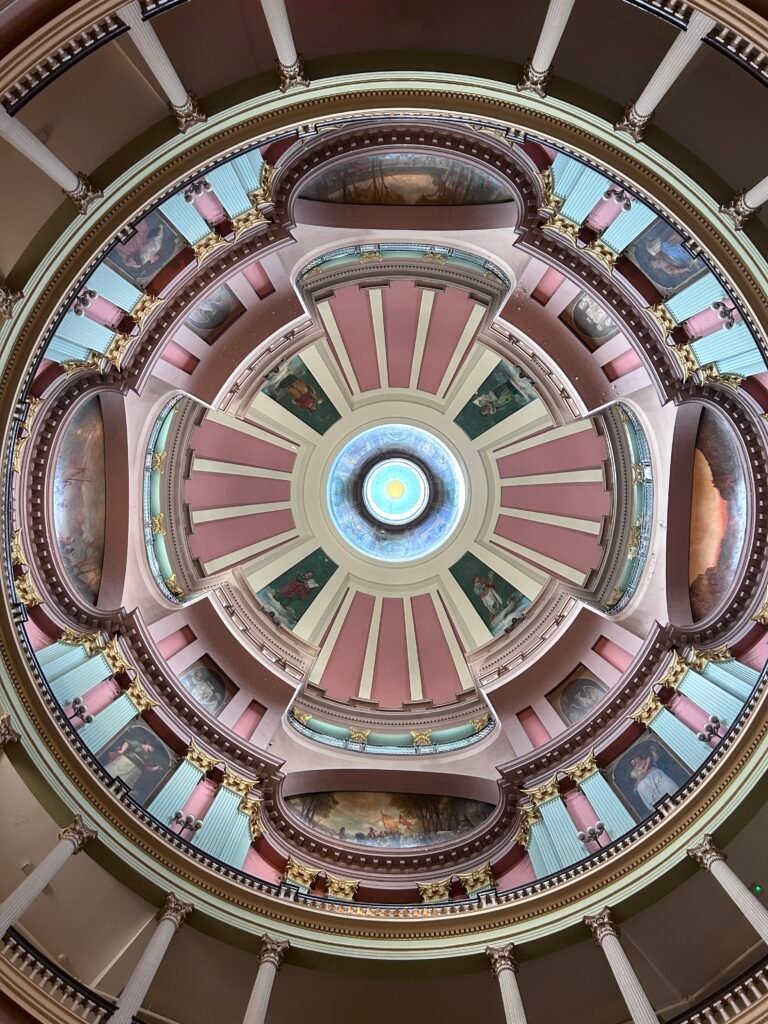
Do Not Skip the Old Courthouse
The Old Courthouse deserves to be part of the same visit. It sits directly across from the Arch and is part of Gateway Arch National Park.
Admission is free.
The restored building includes museum galleries and historic courtrooms, while the rotunda is beautiful from both the ground floor and upper levels.
The courthouse also carries major historical significance as the site of proceedings connected to the Dred and Harriet Scott freedom suit and Virginia Minor’s fight for women’s voting rights.
The Old Courthouse is currently open daily from 9:00 a.m. to 5:00 p.m., and the National Park Service estimates that many visitors spend about an hour exploring it.
Use your widest lens for a straight-up rotunda composition, then photograph again from the upper levels to create depth with railings, columns and the floor below.
Is Three Hours Enough for Gateway Arch National Park?
For us, yes.
We spent about three hours at Gateway Arch National Park, including roughly an hour in the museum, the tram experience, some time on the grounds and our Old Courthouse visit.
Three hours is a reasonable starting point if those are your priorities.
Add more time if you want a slower museum visit, extensive photography around the grounds, a ranger program, documentary, riverboat cruise or a more detailed Old Courthouse visit.
Practical Tips for Visiting the Gateway Arch
These are the details I would want to know before planning the same experience again.
Reserve Tram Ride to the Top tickets ahead of time, particularly during summer and busy weekends.
There is no on-site visitor parking at the Arch. Check the current preferred parking program before you arrive.
If you prepay for parking, follow the reservation entry time exactly. Entering early cost us an additional parking charge.
Allow enough time to walk from your garage and complete airport-style security before your tram reservation.
Bring your National Park Passport if you collect cancellation stamps.
Give the Museum at the Gateway Arch about an hour if you want meaningful context before the tram ride.
Use the restroom before boarding the tram. There are no restrooms at the observation deck.
Review accessibility information in advance if anyone in your party has mobility limitations or concerns about stairs or compact spaces.
Include the Old Courthouse in the same visit. Admission is free and it adds important historical context.
A smartphone is ideal for the compact tram, small observation windows, wide architectural views and Reflection Pond photography.
Frequently Asked Questions
Is the Gateway Arch Tram worth it?
Yes. The tram adds the engineering experience of traveling through the Arch itself and gives you views from the 630-foot observation area. Even though I am afraid of heights, I would ride it again.
How long does the Gateway Arch Tram experience take?
I recommend allowing roughly 45 to 60 minutes for the complete tram experience, including boarding, the ride in both directions and time at the observation area.
Should you book Gateway Arch tram tickets in advance?
Yes. Same-day tickets may be available, but the National Park Service says tram tickets frequently sell out during busy periods. Advance reservations are the safer choice.
Is the Gateway Arch Tram scary if you’re afraid of heights?
I am afraid of heights and found the ride much easier than expected because the tram travels inside the enclosed Arch. The observation area is high, but I never felt exposed during the ascent.
Are the Gateway Arch tram cars small?
Yes. The cars are compact. My 6-foot-4-inch brother and I were comfortable together, but a full car would feel much tighter.
How long should you spend at Gateway Arch National Park?
About three hours worked for us for the museum, tram, some park photography and the Old Courthouse. Allow more time if you want to explore the grounds extensively or add other activities.
Is the Museum at the Gateway Arch free?
Yes. Admission to the Museum at the Gateway Arch is free. The Tram Ride to the Top and certain other experiences require separate tickets.
Can you visit the Old Courthouse during the same trip?
Yes. The Old Courthouse is directly across from the Arch and is part of Gateway Arch National Park. Admission is free, and it pairs naturally with the museum and tram experience.
Would I Ride the Gateway Arch Tram Again?
Absolutely.
Riding to the top transformed the Gateway Arch from a familiar St. Louis landmark into a much more complete experience. The museum provided historical context, the tram revealed the engineering hidden inside the monument, and the observation windows opened the city below us.
Even with my fear of heights, I would gladly make the ride again.
Reserve ahead, plan your parking carefully, bring your National Park Passport and give yourself enough time to explore what lies both above and below the Arch.
See How the Gateway Arch Fits Into Our Midwest Road Trip
The Gateway Arch was one of several memorable experiences during our St. Louis stay.
Where We Stayed
See the British-inspired hotel and James Bond Suite that became our St. Louis home base.
Explore City Museum
See why caves, tunnels, immersive art and nearly 200 photographs made City Museum one of our favorite Midwest stops.
Follow Our Day-by-Day Itinerary
Plan the route with our daily stops, attractions and overnight stays across the Midwest.
See the Full Road Trip
Follow our complete nine-day journey through eight states from Route 66 and St. Louis to Wichita, Oklahoma City and Little Rock.
About Angela
Angela Addington is the travel photographer and writer behind Lenses & Latitudes. She shares firsthand destination guidance and practical photography advice for independent and solo travelers, women over 50, road-trippers and weekend explorers. Learn more about Angela.

