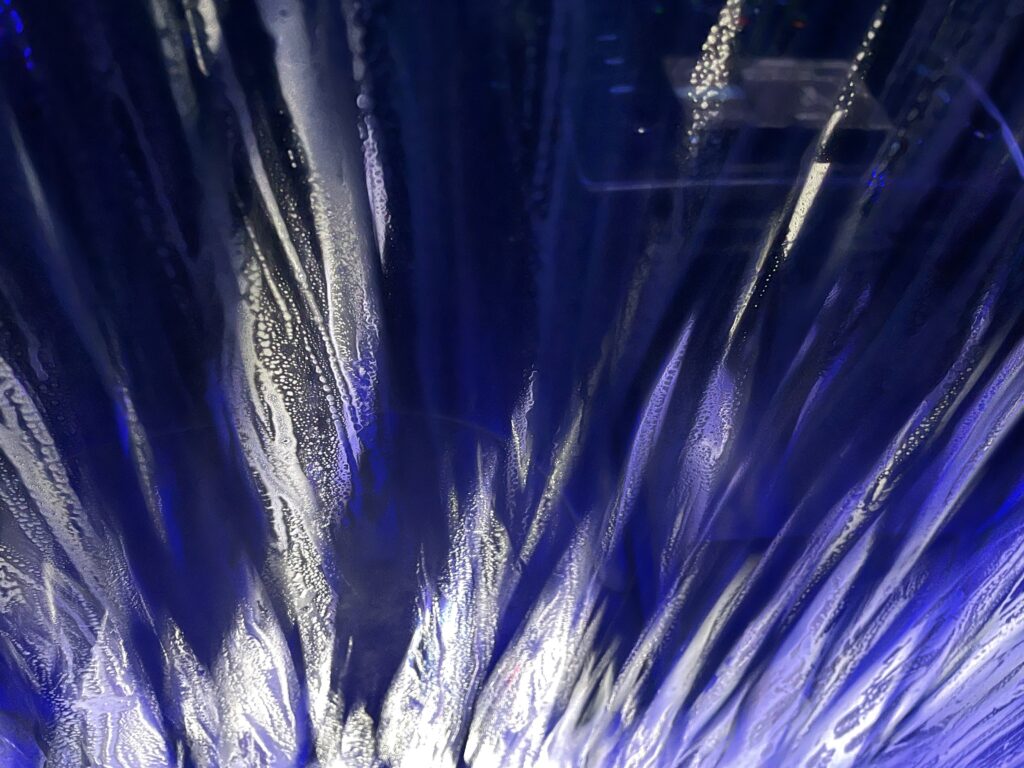
Water-covered car wash brushes create sweeping lines beneath blue and silver light.
Car Wash Photography: How to Create Abstract Art with Your Phone
Creative photography does not always require a special destination. Soap, water, moving brushes and colored light can turn an ordinary automatic car wash into a constantly changing abstract scene.
All three photographs in this guide were made through my windshield during one car wash. I simply noticed what the water and light were doing, picked up my phone and started photographing.
How Do You Take Abstract Photos in a Car Wash?
Stay safely inside the vehicle, photograph through the windshield and watch for changing patterns created by soap, water, colored lights and moving brushes. Tap a distinct droplet or soap line to focus, lower exposure if bright lights lose their color and capture several frames because each composition may last only seconds.
That is what makes car wash photography so much fun.
You are not arranging the scene. You are reacting to it.
The colors, patterns and textures are temporary, and no two moments look exactly the same.
Car Wash Photography at a Glance
Look for Creative Photographs in Ordinary Places
You do not need a beautiful destination or a carefully planned photo shoot to practice creative photography.
I discovered this idea while sitting inside an automatic car wash.
As soap began moving across my windshield, the familiar view outside disappeared behind swirling colors, distorted reflections and constantly changing textures.
I reached for my phone and started photographing.
Instead of photographing the car wash itself, I concentrated on the temporary patterns created by water, soap, brushes and light.
The lesson went far beyond the car wash: slowing down enough to notice color, texture and changing light can help you recognize compelling photographs in places other people overlook.
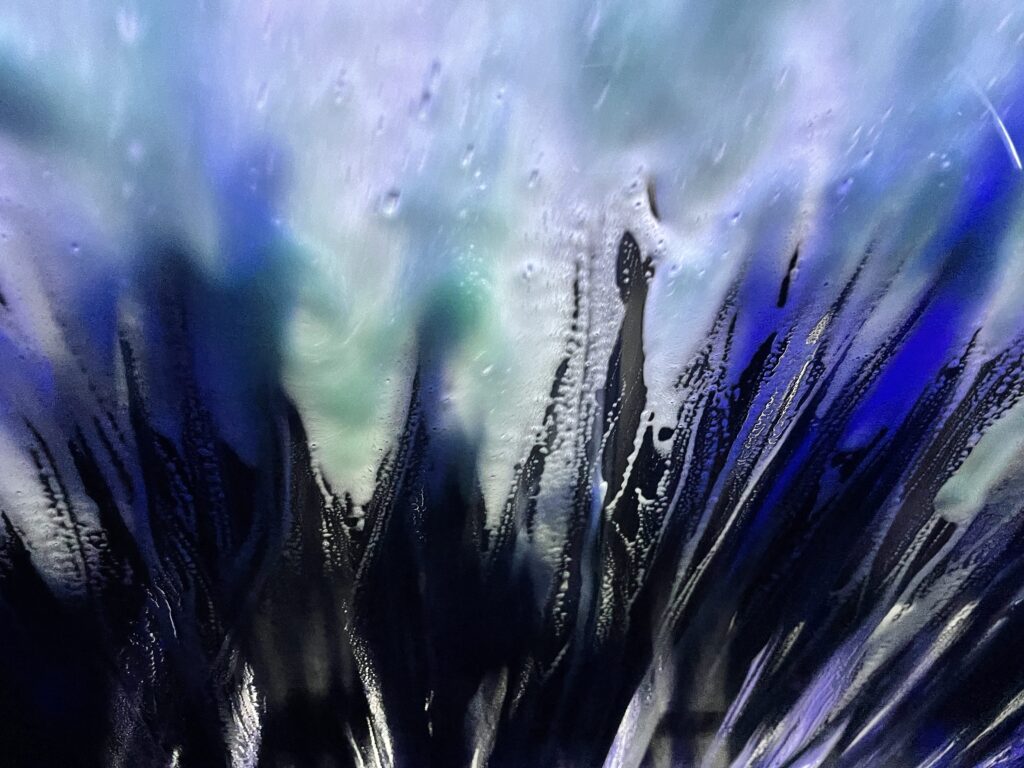
Soap and water transform the windshield into an abstract composition of blue, turquoise and black.
Let the Windshield Become the Canvas
This photograph reminds me of an abstract underwater wave.
The recognizable outside world almost disappears. What remains is primarily shape, color, movement and texture.
That is one of the advantages of photographing through soap-covered glass.
The windshield stops being a transparent barrier and becomes part of the image itself.
How Do You Photograph Through a Wet Windshield?
Give the phone something definite to focus on.
A distinct water droplet, soap trail or brush texture usually provides a stronger focus point than a smooth area of foam.
Tap that part of the screen to set focus.
Hold the phone close to the windshield without touching it. This can help reduce reflections from the interior of the vehicle.
If the lights look too bright, use the phone’s exposure control to darken the image slightly.
A darker exposure can preserve saturated blues, purples and reds that might otherwise become white highlights.
Simple Phone Settings That Work
Turn Off the Flash
Flash can reflect directly from the glass and create bright glare instead of revealing the colors outside.
Start at 1x
The standard camera is a reliable starting point and generally gives you better quality than excessive digital zoom.
Tap to Focus
Select a clearly defined droplet, soap line or brush edge instead of allowing the camera to choose randomly.
Lower Exposure When Needed
Bright car wash lighting can quickly lose color. Slight underexposure may preserve richer saturated light.
Use Burst or Live Photos
The strongest pattern may appear for only a fraction of a second, so capture more than a single frame.
Avoid Digital Zoom
Make the photograph at normal magnification and crop later when you need a tighter abstract composition.
Use Movement as Part of the Composition
The second photograph has icy blue streaks that reminded me of the Northern Lights.
The moving brushes, water-covered glass and artificial light create sweeping lines rather than a literal record of the machinery.
You can try to freeze the pattern sharply or allow some movement to remain.
Neither approach is automatically better. A sharp image emphasizes texture. A little blur can make the same scene feel softer, more fluid and more abstract.
Water-covered car wash brushes create sweeping lines beneath blue and silver light.
When Should You Take Photos During a Car Wash?
Different parts of the wash create different types of abstract photographs, so keep watching rather than concentrating on only one stage.
Soap Application
Look for thick foam, bubbles, broad fields of color and patterns forming across the windshield.
Moving Brushes
Watch for sweeping lines, blurred shapes and repeated movement across the frame.
Colored Lights
Slightly reduce exposure when necessary so saturated blue, purple or red lighting does not wash out.
Rinse Cycle
Focus on individual droplets, streams of water and distorted glimpses of the outside environment.
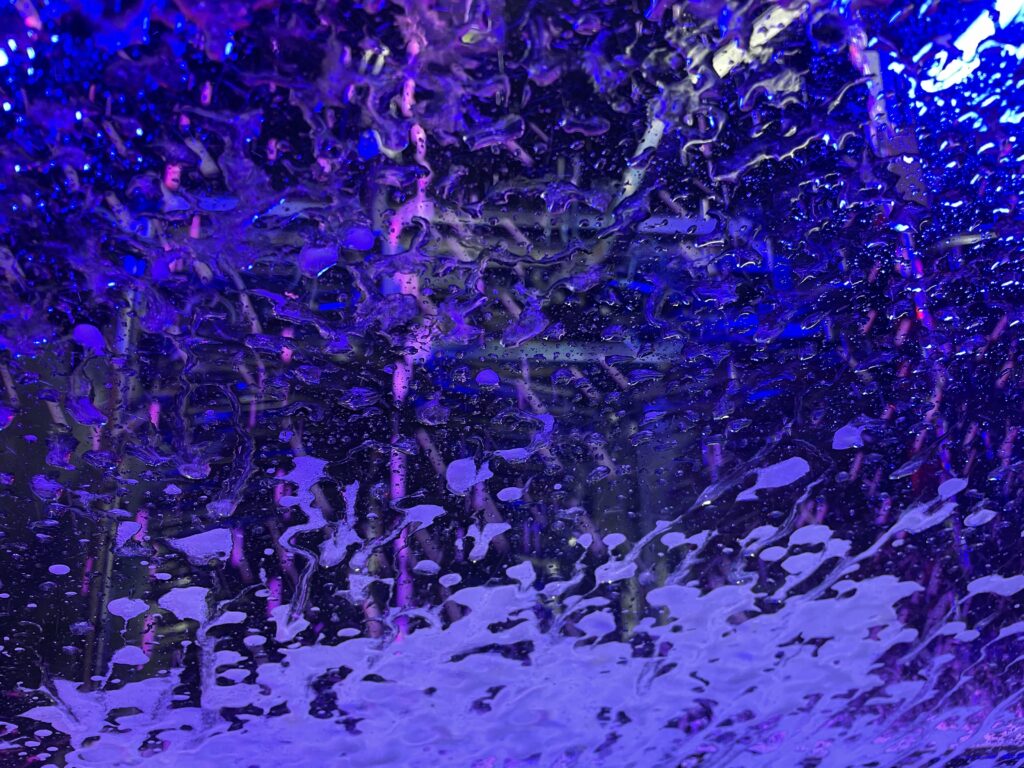
Purple and blue car wash lights glow through a windshield covered with water and foam.
Capture the Energy of Color and Water
The third photograph is less about a recognizable object and more about energy.
Color, water and light collide across the windshield, creating a frame that feels more like liquid paint than an ordinary car wash.
Abstract photography gives you permission to stop asking, “What is this?” and start asking, “What makes this frame visually interesting?”
Shape, contrast, texture and color may be enough.
Prepare Before the Car Starts Moving
The photograph is never more important than following the car wash instructions and controlling the vehicle safely.
Clean the inside of the windshield and open the camera before entering the wash.
Turn off the flash and choose Photo mode ahead of time.
Follow every posted instruction and any directions from employees.
Wait until the vehicle is correctly positioned before concentrating on photography.
Never use the phone when you need to steer, brake, shift, operate controls or otherwise manage the vehicle.
Think in Color, Shape and Texture
Once the windshield becomes covered with water and soap, stop looking only for recognizable subjects.
Follow the Light
Look for combinations of blue, turquoise, purple, red or white light as they move through soap and water.
Watch the Patterns
Curves, lines, waves, bubbles and brush shapes may create the strongest structure in the frame.
Move In Visually
Droplets, foam and streaked glass can become subjects of their own when you stop trying to photograph the entire scene.
Ordinary Surfaces Can Change the Photograph
Water-covered glass is one way to transform how a familiar scene appears.
For more ideas about using reflective surfaces and changing your viewpoint, read Reflecting on Perspective: Finding the Unexpected Through the Lens.
Common Car Wash Photography Mistakes
Using Flash
Flash can bounce directly off the windshield and overwhelm the abstract colors outside.
Trying to Focus on Smooth Foam
Give the camera a clearer edge, droplet or line when autofocus struggles.
Overexposing Colored Lights
Lower exposure slightly when saturated lights begin turning into bright white areas.
Taking Only One Frame
The pattern changes continuously. Capture several versions and choose the strongest one afterward.
Using Too Much Digital Zoom
Photograph at normal magnification and crop later when possible.
Trying to Make Everything Sharp
A little motion blur can support the abstract quality of the image instead of ruining it.
Overediting the Result
Enhance the color and contrast already present without replacing the natural water and soap textures.
Ignoring Vehicle Safety
Photography must stop whenever you need to operate or control the vehicle.
The Five-Photo Car Wash Challenge
The next time you safely move through an automatic car wash, challenge yourself to create five distinctly different photographs.
The point is observation, not perfection. The exercise helps train you to react to light, timing, texture and composition while the scene is constantly changing.
Quick Car Wash Photography Checklist
Car Wash Photography FAQ
Can you safely take photos inside a car wash?
Yes, provided you remain inside the vehicle, follow all posted instructions and do not use the phone when you need to steer or operate vehicle controls. Prepare your phone before entering the wash.
Do you need a professional camera for car wash photography?
No. A smartphone works very well because it is easy to handle inside the vehicle and can capture multiple frames quickly. The changing soap, water and lighting create most of the visual effect.
How do you get sharp photos through a wet windshield?
Tap a clearly defined droplet, soap line or brush texture so the phone has a distinct focus point. Hold the phone steady and capture several frames.
Should car wash photos always be sharp?
No. Sharp texture can work beautifully, but some motion blur can also create a softer and more abstract result. Choose the version that best supports the visual effect.
What phone camera setting should I use?
Start with the standard 1x camera, turn off flash, tap to focus and slightly reduce exposure if bright colored lights lose detail. Burst mode or Live Photos can help capture rapidly changing patterns.
Should you edit car wash photographs?
Light editing can help. Crop distracting edges, recover bright highlights and make small adjustments to contrast, clarity or color while preserving the original water and soap textures.
What should I photograph during the wash?
Look for foam, individual droplets, soap trails, colored lights, sweeping brush movement, reflected light and distorted views through the windshield.
Why is a car wash useful for practicing photography?
It forces you to react quickly to changing color, texture, light and movement. That makes it a useful exercise in observation and composition using an ordinary everyday setting.
Take the Same Observation Skills With You When You Travel
Car wash photography is one creative exercise in noticing light, texture and composition.
For broader guidance on making stronger photographs while traveling, visit my complete Travel Photography Tips guide.
Keep Improving Your Smartphone Photography
Want simple photography guidance you can carry on your next trip?
Download my free Smartphone Travel Photography Cheat Sheet for quick tips designed to help you create stronger photographs with the phone you already use.
Get the Free Photography Cheat SheetCreative Photography Can Begin During an Ordinary Errand
All three photographs in this article came from one routine trip through a car wash.
I did not plan the colors, arrange the soap or control the movement.
I simply noticed what was happening and started photographing.
That is the larger lesson behind the exercise.
Keep watching for light, shape, texture and moments that disappear almost as quickly as they arrive.
Your next creative photograph may be hiding inside something you normally consider completely ordinary.
About Angela
Angela Addington is the travel photographer and writer behind Lenses & Latitudes. She shares firsthand destination guidance and practical photography advice for independent and solo travelers, women over 50, road-trippers and weekend explorers. Learn more about Angela.