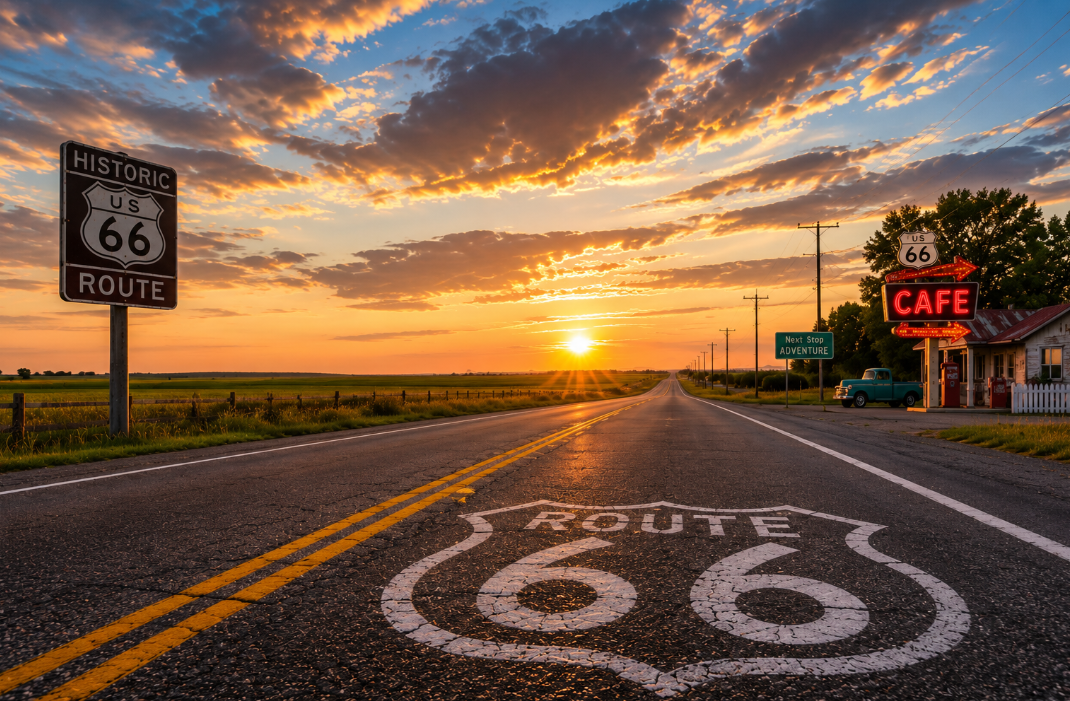
An open stretch of Route 66 sets the scene for a Midwest photography road trip.
Best Photo Stops on a Midwest Road Trip
From larger-than-life Route 66 landmarks to wildlife encounters, immersive art, colorful murals and historic interiors, the Midwest offers photographic subjects around nearly every corner.
Some of my favorite travel photographs happen when I least expect them.
I might stop for an unusual roadside attraction, notice a decorative detail in a hotel or discover a colorful mural that never appeared on my original itinerary.
In June 2026, my brother and I traveled through eight states on a Midwest road trip, with memorable photo stops in Illinois, Missouri, Kansas, Oklahoma and Arkansas.
This is not another day-by-day itinerary. It is a firsthand look at where I photographed, what caught my eye and how you can photograph similar scenes with an iPhone or DSLR.
What Makes a Great Midwest Road Trip Photography Stop?
I look for scale, color, historical texture, interesting light and opportunities to tell a story.
An enormous roadside sculpture invites a portrait for scale; a historic bridge encourages leading lines; a mural needs thoughtful framing; and an animal encounter rewards patience and timing.
Disclosure: Portions of this trip included hosted or gifted experiences and accommodations. My observations and photography recommendations are my own.
For the driving route and logistics, see my 8-Day Midwest Road Trip Itinerary → and complete Midwest road trip guide →


Pink Elephant Antique Mall
Play with scale, then look for the unexpected
The giant pink elephant outside Pink Elephant Antique Mall is exactly the sort of roadside attraction that makes Route 66 memorable.
Putting a person beside it tells the story of its size immediately.
But the stop also rewarded closer observation: inside, I noticed vintage cameras, a particularly fitting discovery on a photography trip.
Read my Pink Elephant Antique Mall guide → for more from this Route 66 stop.
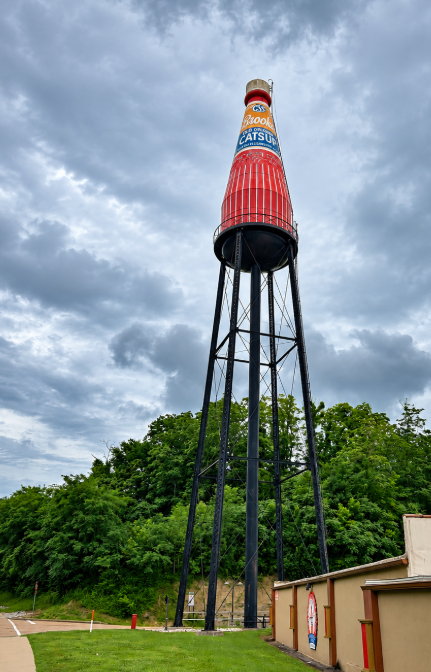
Brooks Catsup Bottle
Use a vertical frame for a larger-than-life landmark
The Brooks Catsup Bottle Water Tower turns a familiar everyday object into a surprising architectural landmark.
Because it rises high above its surroundings, the challenge is communicating its full shape without distracting backgrounds.
This is one of the stops featured in my first-day Route 66 travel story →

Old Chain of Rocks Bridge
Find leading lines and repeating patterns
Bridges naturally guide the viewer through an image.
The historic Old Chain of Rocks Bridge spans the Mississippi River between Illinois and Missouri, with a long structure that invites experiments in lines, rhythm and perspective.
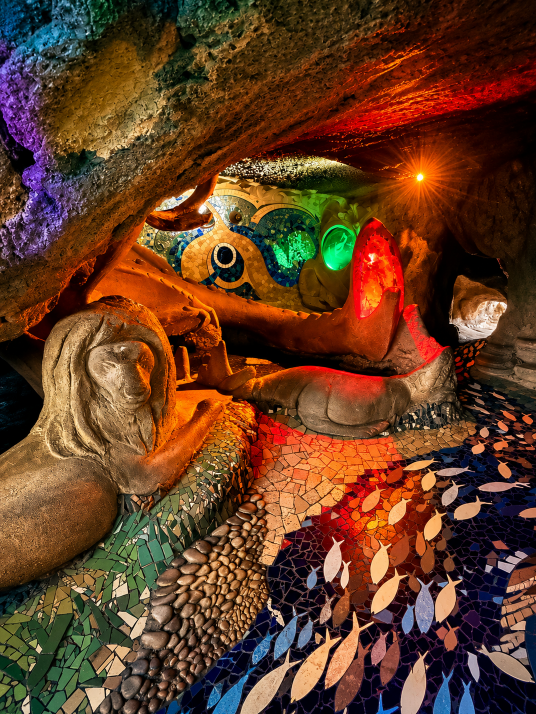
City Museum
Work with texture and dim available light
City Museum is nothing like a conventional museum interior.
Its imaginative cave-like passages and unusual surfaces prompted me to look for frames within frames, rough textures and pockets of light.
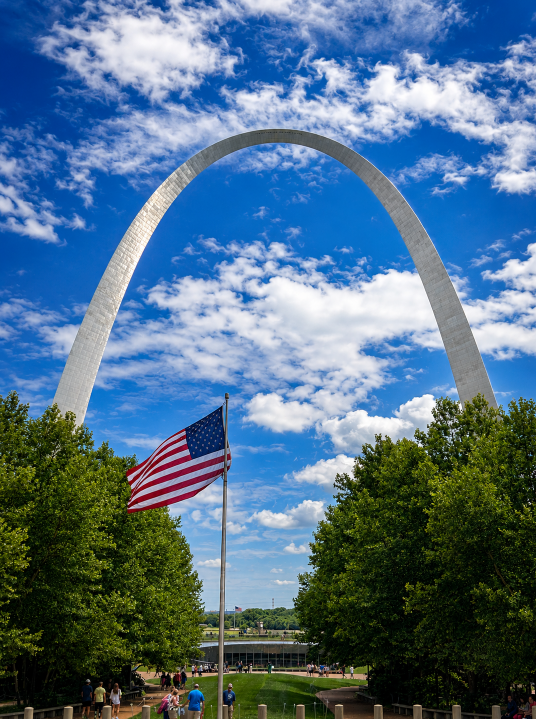
Gateway Arch
Explore curves, symmetry and monumental scale
The Gateway Arch is instantly recognizable, but that does not mean there is only one way to photograph it.
Centered symmetry produces one impression; a close view of its soaring curve creates another. Try both.
For the visitor experience, see my guide to riding the Gateway Arch tram →
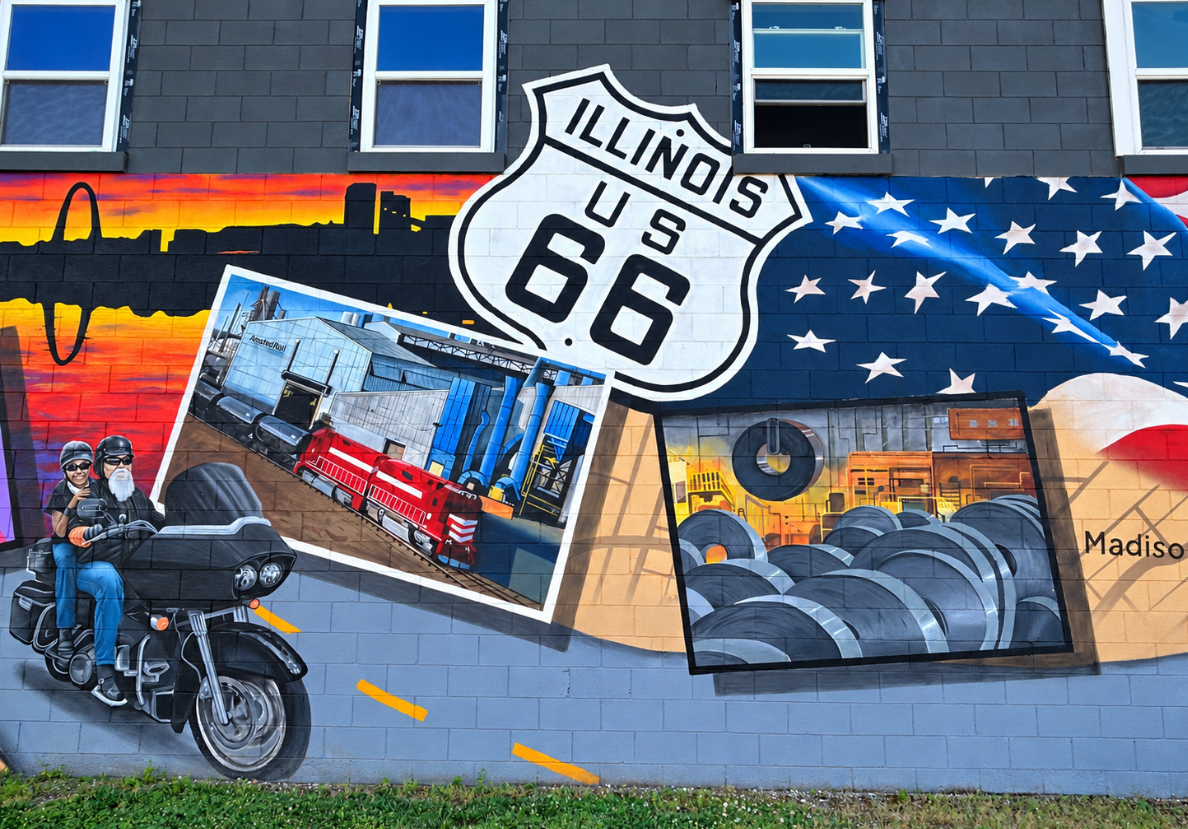

Route 66 Murals — Granite City & Collinsville
Document the art and the neighborhood
Murals reveal local identity through bold color and public storytelling.
I photographed Route 66 artwork in both Granite City and Collinsville.
One image can document the complete mural, while another can show how that artwork fits into its street setting.
See my dedicated Granite City Route 66 mural article →

The Cheshire
Tell a hotel story through stained glass and atmosphere
A hotel can make an excellent photography stop when its interior has distinctive character.
At The Cheshire, stained-glass windows and a quiet sitting area offered a way to capture the mood of the building without attempting to fit every detail into one shot.
The Cheshire also appears in my unique Midwest road trip accommodations guide →
Tanganyika Wildlife Park
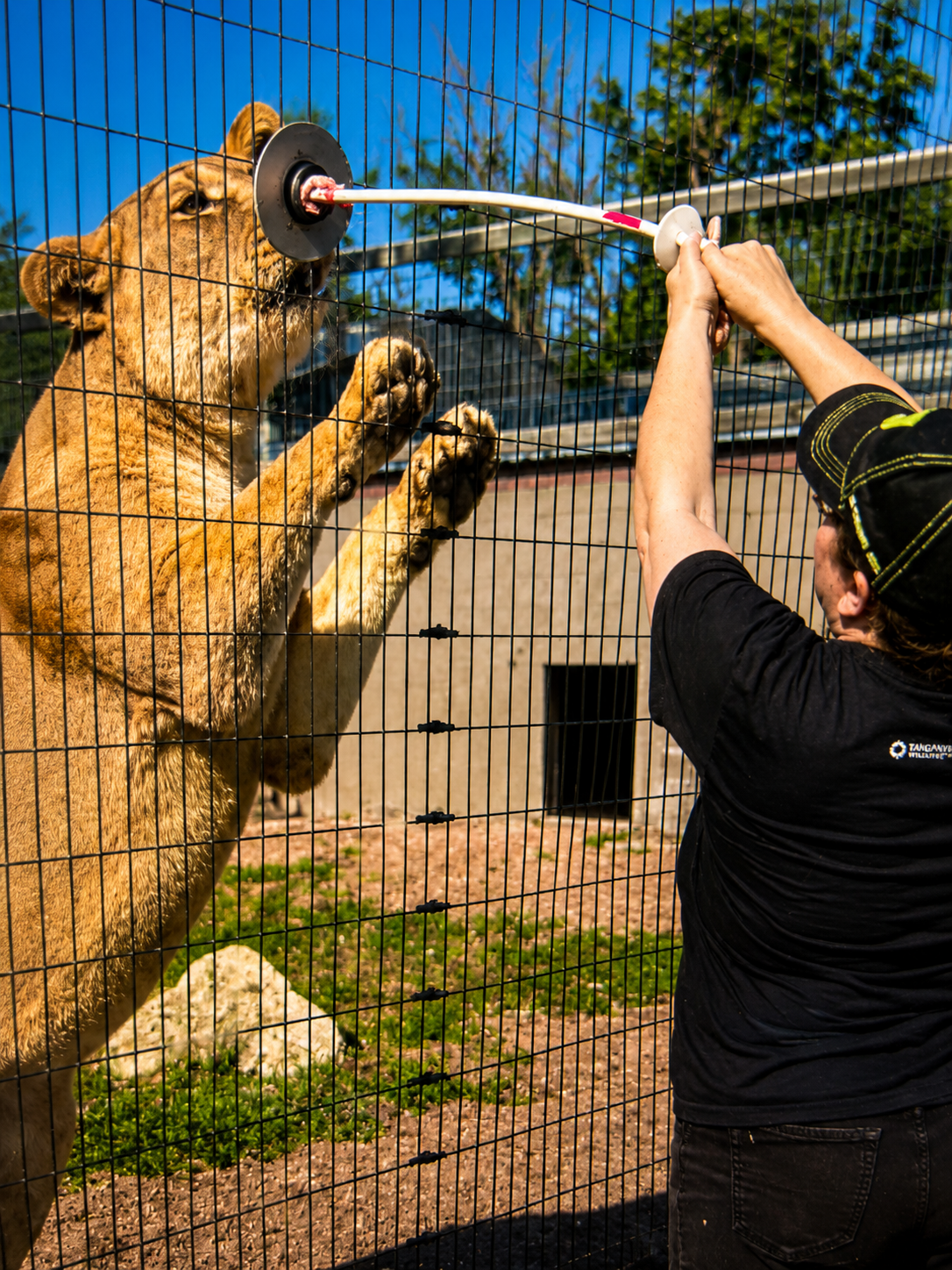
Focus on the eyes and anticipate the moment
Wildlife photography asks something different of you than photographing a building: patience.
During a supervised lion feeding experience at Tanganyika Wildlife Park near Wichita, I needed to pay attention to movement, expression and the moments between actions.
Read about my first day at Tanganyika Wildlife Park → and why one day was not enough →
Disclosure: My Tanganyika Wildlife Park visit was hosted.

Hotel at Old Town
Follow architectural lines toward the skylight
At Hotel at Old Town, a multi-story atrium drew my eye upward.
Exposed brick, repeated balconies and a glass skylight make an appealing architectural subject, with the added challenge of balancing a bright ceiling and darker interior.
Learn more about the stay in my Midwest hotels article →
Disclosure: My Hotel at Old Town stay was hosted.

Factory Obscura
Preserve the color of immersive artwork
Factory Obscura offered one of the most colorful scenes of the trip.
The glowing cloud installation shows why photographing light-based artwork calls for restraint: raising exposure too high can wash out the rich colors that create the experience.
Disclosure: My Factory Obscura visit was hosted. I have permission to use my photographs from the experience in my posts.
Pops 66
Photograph a roadside icon with room to breathe
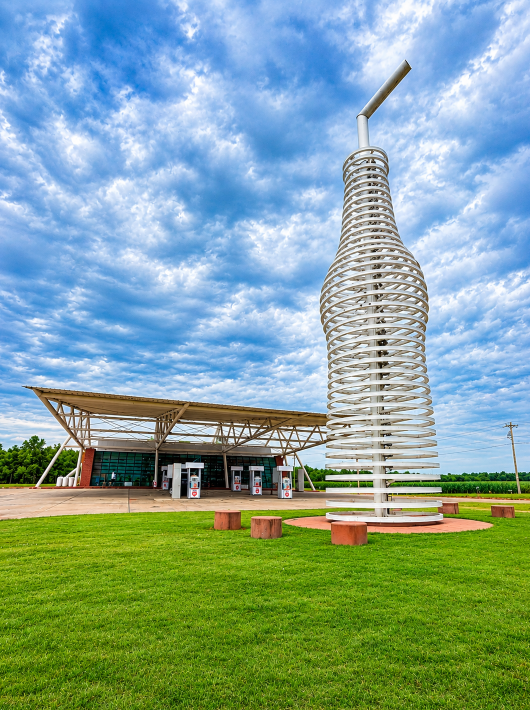
The giant soda bottle outside Pops 66 is a Route 66 landmark with a playful sense of scale.
Its tall shape rewards careful vertical framing and a little movement to clean up the background.
Arcadia Round Barn
Reveal the curve in a historic building
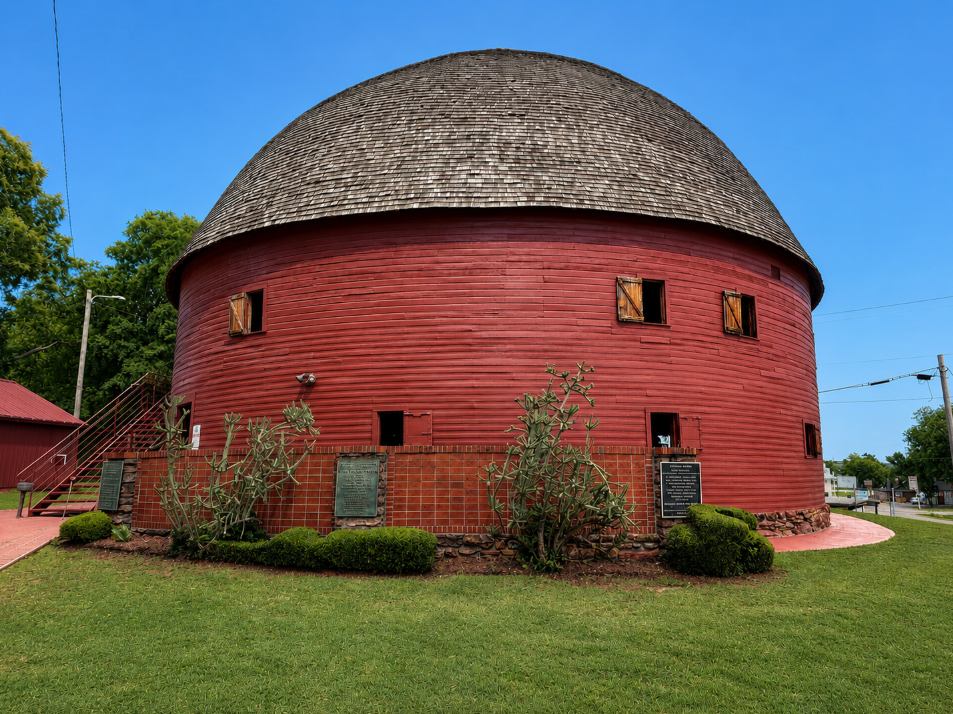
The historic Arcadia Round Barn is memorable because of its unusual circular form.
A straight-on photograph records the landmark, but moving slightly to one side can better reveal the shape of the building.
The Empress of Little Rock
Slow down for Victorian details
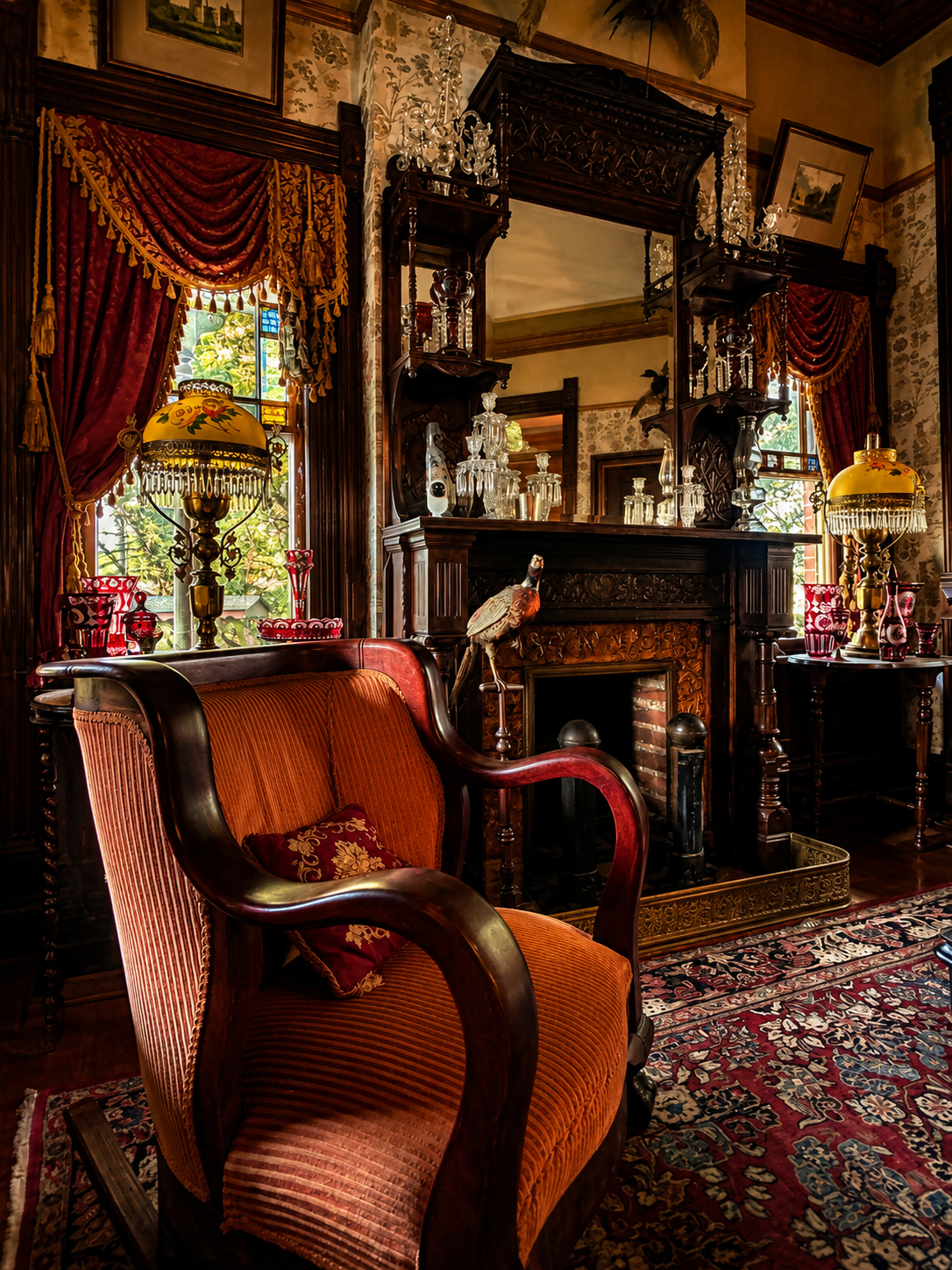
Inside the historic Hornibrook Mansion, home to The Empress of Little Rock, the parlor offered an entirely different challenge: photographing a richly decorated room while preserving its mood.
I looked for a balance between the overall setting and the individual details that give the space character.
Find more distinctive stays in my Midwest road trip hotel guide →
Seven Photography Habits I Used Along the Way
Planning Your Own Midwest Photo Road Trip
Choose one or two major stops each day and leave extra room for murals and roadside surprises.
Research opening hours and reservations, check any special photography conditions and build in time to stop safely.
My Midwest road trip planning guide → explains how I balanced the route and travel logistics.
The Best Photos Tell a Story
Looking back, the most memorable images are not all of famous places.
The Pink Elephant reminded me to have fun with scale; the bridge and Gateway Arch sharpened my eye for lines; wildlife encouraged patience; and historic interiors showed how much atmosphere lives in small details.
That is what I love about travel photography: curiosity often matters more than the camera in your bag.
Where would you stop first with your camera ready?
If you are designing your own route, start with my eight-day itinerary → or explore the full Midwest road trip guide →
See the World. Frame the Adventure.
About Angela
Angela Addington is the travel photographer and writer behind Lenses & Latitudes. She shares firsthand destination guidance and practical photography advice for independent and solo travelers, women over 50, road-trippers and weekend explorers. Learn more about Angela.